
A Good Girl’s Guide to Murder Season 2 review: Very few mystery shows understand that solving a crime is often the easy part. Living with the truth is much harder. That is the idea at the heart of A Good Girl’s Guide to Murder Season 2, a follow-up that is not only better than the first season but also far more emotionally mature.
When we first met Pip Fitz-Amobi (Emma Myers), she was a bright, slightly naive teenager solving a local murder for a school project. In most teen mysteries, that would have been the finish line—the case gets solved, the hero gets closure, and life moves on. But Season 2 understands that real life doesn’t work like that. The new season finds Pip struggling with the consequences of her first investigation. She is drowning in a sea of guilt over the fracturing of her friend’s family, haunted not by ghosts, but by the stark reality that uncovering the truth can destroy lives.
This emotional baggage quietly becomes the foundation of the season. As the town continues to deal with the fallout of the Andie Bell case, Pip finds herself drawn into another investigation when Jamie Reynolds (Eden H. Davies) mysteriously disappears. Running parallel to that mystery is the Max Hastings trial, forcing several characters to confront painful memories and seek justice for crimes that continue to cast a shadow over their lives.
The show’s greatest strength this time is that it is less interested in asking “Who did it?” and more interested in asking “What does constantly chasing justice do to a person?”
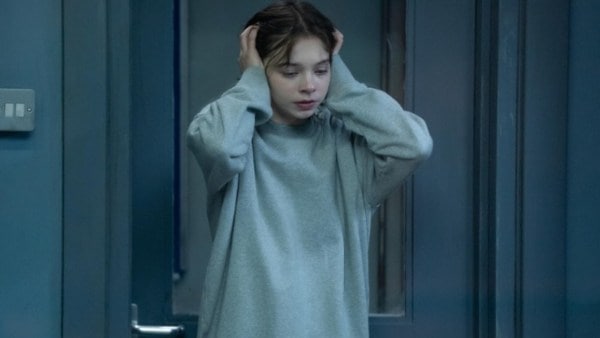
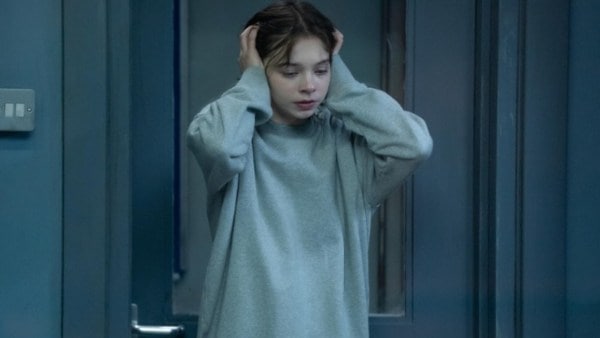
Pip has crossed a line she probably doesn’t even recognise. Solving crimes is no longer something she does; it has become part of who she is. She cannot let things go, walk away, or accept uncertainty. Every mystery feels like a personal responsibility. That makes her fascinating to watch, but it also makes her incredibly frustrating.
 A still from A Good Girl’s Guide to Murder Season 2.
ALSO READ: Virat Kohli dances with Anushka Sharma after RCB’s IPL 2026 triumph, declares: ‘We did it twice’
Pip has grown reckless. She shuts out the people who love her, ignores sound advice, and constantly puts herself and others in immediate jeopardy. Fueled by a toxic cocktail of self-loathing and a fierce, burning anger at a world that refuses to be fair, she believes she knows better than the police. Sometimes she is right; sometimes she is spectacularly wrong.
Story continues below this ad
What works in the show’s favour is that it never treats this behaviour as heroic. Too often, television romanticises obsessive investigators. Here, obsession comes with a heavy cost. Pip’s choices actively damage her relationships and her mental state, repeatedly begging the question of whether she is seeking justice or simply becoming addicted to the pursuit of it.
The season expertly juggles multiple threads, the fallout from last season, the Max Hastings case, and Jamie’s disappearance, but surprisingly never feels overloaded. Instead of competing, these storylines feed into the same larger conversation about power, accountability, and systemic failure.
The Max Hastings (Henry Ashton) storyline is particularly effective because it moves beyond the crime itself to focus on what survivors of sexual assault and rape endure long after the headlines fade. It offers a brutal, honest depiction of their trauma, shining a harsh light on the agonising ways the justice system routinely fails them. It understands that true justice is not simply about proving what happened, but about whether people are believed, supported, and protected.
 A still from A Good Girl’s Guide to Murder Season 2.
This systemic failure directly drives Pip’s descent into vigilantism. In a pivotal storyline involving Child Brunswick (Misia Butler), Pip deliberately keeps crucial information from the authorities when she realises his life is in danger. She operates under the grim, cynical assumption that the authorities simply do not care. It’s a dark, ethically grey choice, and the season ensures she bears the heavy consequences of that defiance.
Story continues below this ad
Emma Myers is a huge reason why this complex psychological portrait works. She doesn’t play Pip as a flawless detective or an inspirational young heroine; she plays her as a teenager carrying more emotional weight than she knows how to handle. Myers allows Pip to be stubborn, impulsive, angry, and self-destructive without ever losing the audience’s sympathy. There were several moments when I wanted Pip to stop and make a different choice, yet those exact moments made me even more invested in her journey.
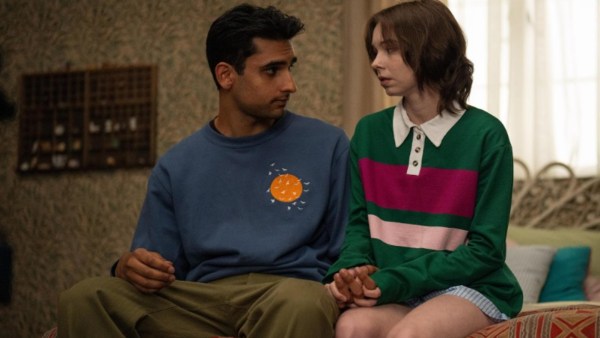
Ravi (Zain Iqbal) also gets far more to do this season. Instead of simply being Pip’s supportive partner, he becomes a vital anchor, trying to navigate a relationship with a person who is increasingly consumed by her own mission. Their dynamic adds a much-needed warmth and humanity to an otherwise bleak narrative.
 A still from A Good Girl’s Guide to Murder Season 2.
What makes this season truly remarkable is its structural discipline. All three complex storylines are brought to concrete, satisfying conclusions without rushing toward easy answers. It understands that solving a mystery does not magically repair broken people. By the time the finale arrives, the mysteries may be resolved, but the emotional damage remains and it also delivers a thrilling promise of what is to come, perfectly setting the stage for a third season.
Darker, more confident and far more emotionally layered than its predecessor, A Good Girl’s Guide to Murder Season 2 is the rare sequel that improves upon the original. More importantly, it’s the kind of show that turns ‘just one more episode’ into an entire evening, a perfect binge, watch from start to finish.
Story continues below this ad
A Good Girl’s Guide to Murder Season 2 cast: Emma Myers, Henry Ashton, Asha Banks , Misia Butler, Zain Iqbal, Jude Morgan-Collie
A Good Girl’s Guide to Murder Season 2 director: Asim Abbasi and Jill Robertson
A Good Girl’s Guide to Murder Season 2 rating: 3 stars