
Speaking on the impact of the government’s latest measures, Narayan described the tax change as the most important announcement from a long-term policy perspective. He said the move removes a major irritant that had made investing in Indian government bonds cumbersome for overseas investors.
“I have to commend the government once again for removing this massive irritant for investors, at least for government bonds,” Narayan said.
He explained that foreign investors often faced practical difficulties in claiming tax benefits under double taxation treaties. In many cases, investors ended up paying taxes in India even when they had no corresponding tax liability in their home country. The process also created operational hurdles when funds were moved in and out of the country.
Also Read | Why a deeper correction in stock markets is likely, explains a hedge fund manager
According to Narayan, the reform addresses one of the concerns that had prevented India from being included in the Bloomberg Global Aggregate Bond Index. He said such inclusion could eventually bring passive inflows of $25-30 billion, apart from attracting investments from global pension funds, insurance companies and sovereign wealth funds.
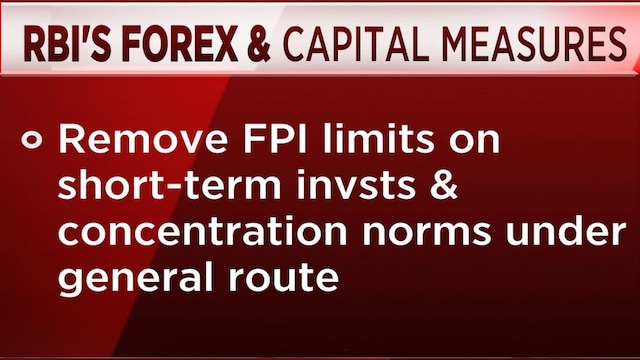
Alongside the tax changes, both experts highlighted the Reserve Bank of India‘s recent measures to support foreign currency deposits and improve confidence in the rupee. Naren said these steps are aimed at breaking the negative cycle around expectations of rupee depreciation.
“What we have learnt is when you have vicious cycles, you have to break vicious cycles,” he said.
Naren believes the latest policy actions improve the outlook for foreign investment in Indian debt markets. With concerns around taxation and currency stability being addressed, he expects global investors to view Indian bonds more favourably.
Also Read | Markets are underpricing oil risks, crude could stay near $90 well into 2027: Kpler
However, both experts cautioned that the reforms should not be seen as a trigger for immediate capital inflows. Narayan noted that the measures are primarily intended to create the right conditions for investment over time rather than open the floodgates overnight.
Click here to watch the video

“The steps which have been announced on the fifth, first on taxation, this is a medium-term correction which had to happen,” he said.
Naren also pointed out that India now competes in a very different global bond market environment. Rising yields in the US and Japan mean foreign investors have more options than they did a decade ago, making capital flows less automatic despite India’s improving fundamentals.
Catch all the latest updates from the stock market here