
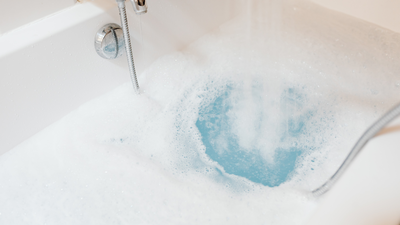
At first glance, the soap foam appears to be quite simple: it is light, airy, and most often white. However, there is a great deal going on behind the scenes, with many tiny bubbles and a great amount of physics and light. If you have ever noticed that a solution of soap appears to be quite clear until it is foamy, at which point it becomes opaque and white, you are not alone. This is a phenomenon that has been puzzling scientists for many years. However, it is not related to colour at all, but rather the way in which light interacts with many surfaces. By understanding the reason behind the white colour of soap foam, we can gain a deeper understanding of many other concepts.
What makes soap foam white: The science of light scattering
The reason the white foam of soap has that colour is because of the way that it scatters the light. Light scatters when it hits an object in the following ways: it may be absorbed, it may be sent back in the direction it came, or it may be scattered in all directions. But in the case of soap suds, it’s not just that the light is passing through or bouncing off in just one direction. It’s as if the soap suds are scattering the light in all directions, or rather, several times over.According to the American Physical Society, when the light bounces around in all directions several times, the colours all mix, and it becomes white. As the physicists put it, when the light scatters in all directions across the spectrum, that’s when it appears white to the eye. That’s also the reason that clouds and milk appear white, even though they’re not really colored.
Why is the soap solution clear, but the foam turns white
One of the most interesting differences that we notice is the difference between the two states: that of the liquid soap, when it’s just in your hand or in the soap bottle, and that of the foam, when it’s shaken and comes in contact with air, as happens when you wash your hands. The soap solution, when in your hand or in the soap bottle, is quite transparent, meaning that the light rays are able to pass through it easily without much scattering. However, when the solution comes in contact with air, as it does when you wash your hands, it forms foam, and this changes everything:
- The soap solution turns into a network of air bubbles
- Films form around the bubbles
- The light rays hit these films
It’s the foam that makes the soap look white, and it’s all because of the refraction and reflection of the light rays as they hit the different surfaces. According to an article published in the Journal of Colloid and Interface Science, foam consists of “a complex arrangement of gas bubbles separated by liquid films, resulting in increased scattering of light.” Simply put, the soap solution, when it’s in the form of foam, appears white because the light rays get trapped in the foam before they get to your eyes.
The role of bubble size in foam colour
Not all foam looks exactly the same. Sometimes it appears bright white, while other times it may look slightly grey or even iridescent. This variation depends largely on bubble size.
- Smaller bubbles → more scattering → brighter white
- Larger bubbles → less uniform scattering → slightly darker appearance
This behaviour relates to Mie Scattering, which is the concept that different-sized particles interact with light in unique ways. It has been shown that as the size of the bubbles approaches the wavelength of visible light, the rate of scattering increases exponentially. This increased rate of scattering is what makes thick foam appear so brightly colored. In the work done on optical physics at the University of St. Andrews, it is noted that “the intensity and uniformity of scattered light increase with the number of interfaces,” thus explaining why thick foam appears whiter than thin foam.
Why do some bubbles show rainbow colours
If you have ever carefully observed a single bubble, especially a soap bubble, you may notice that it has swirly colours of the rainbow. This may seem at first like it is not in agreement with the idea that the bubble itself is white, but it is.A single bubble is different from a foam of many bubbles; however, as the film is very thin, causing what is known as thin film interference. This is when light bounces off the inside and the outside of the film, combining and mixing.With the foam, however, this is not the case, as the light is constantly scattering, causing the interference effect not to occur, which is why the foam is not the same, with the colours not showing, causing the foam to appear white.As the Royal Society of Chemistry at the University of Cambridge states, the interference colours are only shown when the films are isolated, which is not the case with the foam.
Everyday examples of the same phenomenon
Soap foam isn’t the only thing that appears white due to light scattering. Several everyday materials behave similarly:
- Milk (fat droplets scatter light)
- Clouds (water droplets scatter sunlight)
- Sea foam (air bubbles in water)
All of these examples are based on the same principle: tiny structures bending and mixing with light in complex ways. This is the textbook example of diffuse reflection, where the light is scattered in many different directions instead of one.
Why this matters beyond curiosity
Understanding why soap foam is white isn’t just a fun fact—it has real-world applications. Scientists and engineers study foam behaviour in industries like:
- Food science (e.g., whipped cream texture)
- Materials science (lightweight foams)
- Environmental science (ocean foam analysis)
By examining the way light interacts with the foam, scientists can also improve the design of the product and can even learn more about nature itself. Colloid science also points out that the importance of foams can be seen beyond the practical uses of the products, as they are considered one of the ways to study complex interfaces and the way light interacts with them.
A simple wonder explained
What appears to be an ordinary, simple sight, white soap foam, is, in fact, an impressive example of physics in action. It’s not the colours that are important, but rather the structure, the light, and the way they combine.So the next time you wash your hands or see soap bubbles rising to the surface, remember that in all the complexity, there’s something simple, universal, and white.