
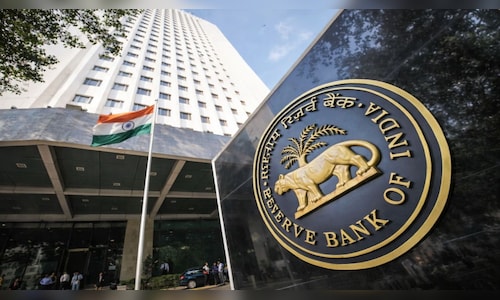
The central bank, on June 8, announced that authorised dealer banks can access the RBI’s swap facility for Foreign Currency Non-Resident (Bank) (FCNR (B) deposits with maturities ranging from 3-5 years till September 30. The facility would allow banks to swap US dollar deposits with the regulator and manage currency risks.
The slew of measures announced by the RBI to shore up foreign capital inflows includes a concessional forex swap facility to encourage PSUs to raise ECBs until September 30.
Ind-Ra said FCNR (B) is likely to play a key role in mobilising foreign capital, with the RBI bearing hedging costs, and banks can offer better returns to overseas depositors.
”Ind-Ra expects the arrangement to generate sizeable inflows, potentially in the range of $60-70 billion, providing a meaningful buffer to the rupee while easing broader funding pressures within the financial system,” the agency said in a statement.
Against this backdrop of robust inflows, the currency is likely to recover to the sub ₹95/$ level before appreciating close to ₹90/$, and eventually average around ₹93.10 in FY27. The currency movement would track the evolving trajectory of inflation, interest rates, and flows.
The success of FCNR (B) deposits and ECBs will be important for near-term rupee movement.
The ongoing West Asia conflict has pushed up energy prices, widening the trade deficit and putting pressure on the rupee. Large capital outflows have also led to a weaker currency, adding to the depreciation cycle.
Policymakers have responded with measures to attract foreign capital and strengthen forex reserves, aiming not just to stabilise the rupee but also to improve external balances and deepen global market integration.
Besides the RBI, the government, on June 8, introduced a series of reforms to increase Foreign Portfolio Investor (FPI) participation in the government securities (G-Secs) market.
Key measures included tax exemptions on interest income, long-term capital gains (LTCG) and short-term capital gains (STCG), expansion of specified securities under the Fully Accessible Route (FAR), and streamlined investment norms.
The government hopes that the steps taken last week on G-secs will help G-Secs get included in the Bloomberg Global Aggregate Bond Index, which would not only deepen the bond market but also increase the inflow of passive funds.
”Well-coordinated (government and RBI) measures provide a buffer, but the backdrop of a tightening global environment and weak exports keeps risks alive.
”While this may provide relief in the interim, strong capital flows in the medium to long term may provide sustained relief. Oil volatility could unsettle currencies, while fear of higher rates could strain growth,” Ind-Ra Chief Economist Devendra Kumar Pant said.
Ind-Ra believes the coordinated policy framework strengthens India’s external financing position and enhances its attractiveness for global capital. The trajectory of oil prices and global interest rates will remain key in shaping how effectively these measures translate into sustained external stability, it added.
Also Read: Vascon Engineers secures ₹347 crore order for RBI quarters redevelopment in Guwahati