
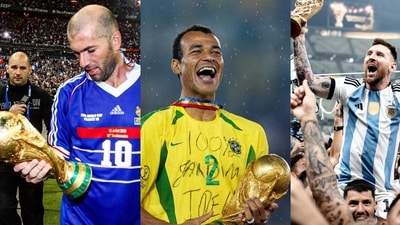
The 2026 FIFA World Cup will not just be bigger. It will be a different animal. Forty-eight teams, 104 matches, a Round of 32 and a tournament stretched across the United States, Canada and Mexico. For the first time, the champion will need to survive five knockout rounds instead of four. Brilliance for a month will no longer be enough. The winner will have to manage a longer road, a wider spread of opponents and one extra night where everything can end.
That expansion forces a new question onto an old debate. The World Cup has always made room for myth. Pele in 1970, Maradona in 1986, Ronaldo in 2002, Zidane in 1998, Iniesta in 2010, Messi in 2022. But as the tournament grows, the most useful question is no longer which champion is remembered most fondly. It is which champion built the most complete campaign?
Answering that takes more than nostalgia. It takes numbers, context and a working football memory. Goals matter. Defensive records matter. The quality of the teams beaten matters. So does the shape of the route itself: whether a champion strolled through the tournament, survived it, or kept walking into fire and emerged with the trophy anyway.
This ranking is based on five markers: dominance, attacking output, goals conceded, knockout authority, and strength of opposition. Legacy is not ignored, but it does not run the table on its own. A great story can lift a team. It cannot hide every flaw.
The teams that changed the imagination
Some champions sit beyond ordinary measurement because their football entered the sport’s permanent vocabulary. Brazil 1970 are where every conversation starts. Six matches, six wins, 19 goals, and a final that ended Italy 4-1. The route had substance to match the style: defending champions England in the group, Uruguay in the semi-final, and Italy at the end. With Pele, Jairzinho, Tostão, Gerson, Rivellino and Carlos Alberto, they stopped looking like a team and started looking like an argument for what football could be.
Brazil 1958 belong in the same room. They scored 16, conceded four, and put five past both France in the semi-final and Sweden in the final. Pele was 17, but this was no one-boy miracle. Garrincha, Didi, Vava, Nilton Santos and Djalma Santos gave the side balance, invention and authority. The achievement carried geography too: no team had ever won a World Cup outside its own continent. Brazil did it first.
Argentina 1986 are statistically messier and historically untouchable. They scored 14, conceded five and never lost, but the tournament belongs to Diego Maradona in a way few World Cups have ever belonged to one man. Against England, against Belgium, against West Germany in the final, his influence bent matches out of shape. The team around him had structure and bite. The immortality came from him.
These are reference points, not just winners. But reference points still have to sit beside champions who dominated in colder, less romantic ways.
The champions built on control
France 1998 produced one of the most balanced profiles of any World Cup winner. Fifteen scored, two conceded, and a 3-0 dismantling of Brazil to finish. Zidane‘s two headers became the postcard, but the foundation was behind him: Thuram, Desailly, Blanc, Lizarazu, Deschamps, Barthez. France could grind through suffocating knockout ties and still close the tournament with a statement.
Italy 2006 took defensive resistance to an almost absurd extreme. Seven matches, two goals conceded, and neither from open play against them in any meaningful sense: one was an own goal, the other a penalty. They beat Germany in Dortmund in the semi-final, then outlasted France on penalties. The attack never set the tournament alight, but the discipline and the squad depth make them one of the strongest winners any data-led ranking will produce.
Spain 2010 were control distilled to its purest form. Two goals conceded all tournament, none in the knockout rounds. Portugal, Paraguay, Germany and the Netherlands were each beaten 1-0. Spain did not bury opponents. They suffocated them, draining matches of oxygen one pass at a time. The ceiling is just as visible: eight goals in seven games. It was the dominance of territory and rhythm.
The modern-era machines
The 32-team era raised the workload. From 1998 onward, champions had to win seven matches and survive four knockout rounds. Clean campaigns became rarer, and therefore more valuable.
Germany 2014 own one of the strongest modern cases. Eighteen scored, four conceded, Portugal beaten 4-0, and Brazil destroyed 7-1 in Belo Horizonte before Argentina fell in the final. The 7-1 was not a statistical freak. It happened to Brazil, in Brazil, in a World Cup semi-final. The campaign had tremors, a draw with Ghana, extra time against Algeria, but the peaks were seismic.
France 2018 were engineered for tournament football rather than aesthetic worship. Pace, midfield security, set-piece menace, tactical flexibility. They scored 14 goals, conceded six, and beat Argentina, Uruguay, Belgium, and Croatia in succession through the knockouts. The defensive leakage keeps them out of the very top group, but the route was genuinely hard, and the game management almost never cracked.
Argentina 2022 are the great emotional outlier. As a story, they sit near the summit of World Cup history: Lionel Messi completing his legend, the shock against Saudi Arabia, the chaos of the Netherlands tie, the calm against Croatia, the epic against France. As a campaign, the ledger is messier. Eight goals conceded, two penalty shootouts needed. Their place in history is untouchable. In a performance ranking, the turbulence counts.
The difficult cases
Italy 1982 are the proof that champions cannot be judged on group-stage polish. They opened with three draws and looked entirely ordinary. Then they beat Argentina, Brazil, Poland and West Germany in a row. Few champions have ever taken a harder road. Paolo Rossi’s goals supplied the drama. The list of victims supplies the weight.
West Germany 1974 carry a different sort of value. Beckenbauer, Müller, and Maier beat Johan Cruyff’s Netherlands in the final, and that result has only grown in stature, because the Dutch became the most famous team never to win the tournament. But the campaign was not spotless. The defeat to East Germany keeps their dominance score below the very highest winners.
Brazil 1994 are routinely filed under functional rather than beautiful, and the filing undersells them. Romario and Bebeto provided the cutting edge. Dunga and Mauro Silva provided the spine. They conceded only three goals all tournament and won the final on penalties. Not Brazil at their most dazzling, but efficient, controlled and almost impossible to break.
Also Read: FIFA World Cup 2026: How the new 48-team format changes group-stage qualification and knockouts
The final ranking
Weigh the numbers, the routes and the tournament control together, and the ranking settles like this:
The order rewards different species of supremacy. Brazil 1970 bring attacking imagination and historical gravity. France 1998 brought defensive steel, capped by a thunderous finish. Germany 2014 brought the most violent single performance by any modern champion. Brazil 1958 brought breakthrough value and balance. Argentina 1986 brought the greatest individual World Cup ever played.
The team at the top folds several of those qualities into one campaign. Brazil 2002 won all seven matches, scored 18 goals, conceded four, and completed every knockout assignment inside 90 minutes. The group stage had goals and swagger. The knockouts had control: Belgium, England, Turkey and Germany were all dispatched without penalties, without extra time, without panic.
Ronaldo was the engine, with eight goals in total and two in the final. Rivaldo added five. Ronaldinho turned the quarter-final against England with one moment of audacity. Cafu and Roberto Carlos supplied width and thrust from wing-back, while Gilberto Silva and Kleberson stopped the midfield from becoming a loose carnival. It was a superstar side that never once played like a reckless one.
That blend is exactly why this ranking matters before 2026. A bigger World Cup may produce more early mismatches, but it will demand more durability from whoever wins it. One extra knockout round means one extra night of risk. Squad depth will matter more. Rotation will matter more. Defensive calm will matter more. So will the ability to change register: to win one match with fire and the next with patience.
Each past champion offers a piece of the blueprint. Brazil 1970 show the value of attacking certainty. France 1998 and Italy 2006 show the power of structure. Spain 2010 show how control can strangle a tournament. Germany 2014 show the force of a settled system with elite depth. Brazil 2002 show what happens when great attackers are protected by tournament discipline.
The 2026 winner will not need to copy any of them. But in a larger World Cup, it will take more than a great XI or one golden month from one golden player. It will take goals, control, depth, defensive calm and just enough individual brilliance to decide the night that planning cannot solve.
The World Cup is getting bigger. The standard for greatness is growing with it.