
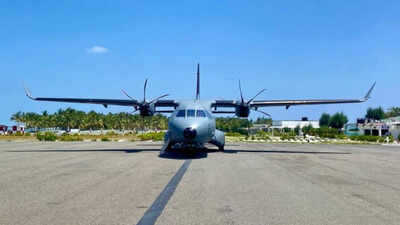
The rollout and first flight of the India-assembled C-295 aircraft from Tata Advanced Systems’ facility in Vadodara marks a major milestone for India’s aerospace sector. The plant, inaugurated in October 2024 by Prime Minister Narendra Modi and Spanish Prime Minister Pedro Sanchez, is at the heart of the $3.5 billion C-295 programme signed between India and Airbus in 2021.Under the agreement, 16 aircraft are being delivered in fly-away condition from Spain, while the remaining 40 will be assembled in India. Deliveries are expected to be completed by 2031. The programme also includes the establishment of a Maintenance, Repair and Overhaul (MRO) hub in India.
Why the C-295 matters
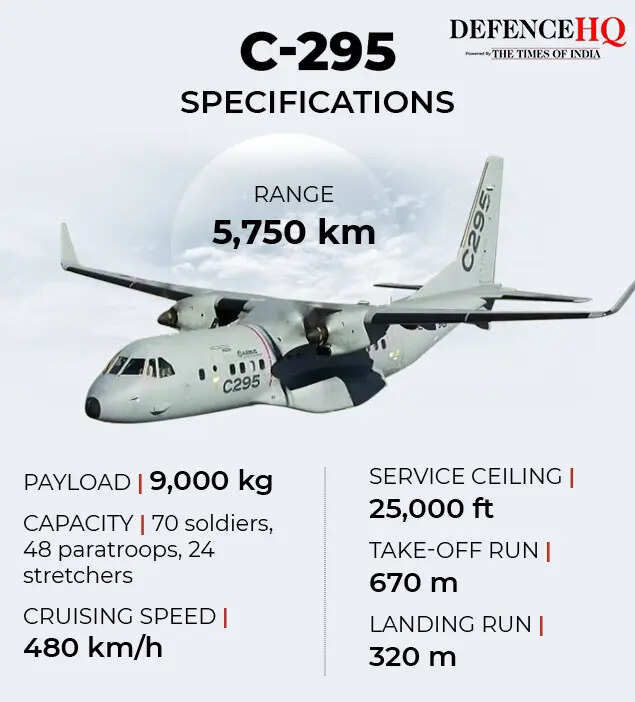
The Airbus C-295 offers several advantages over the Indian Air Force‘s ageing An-32 fleet, making it a strong contender to replace the Soviet-era transport aircraft.Its biggest advantage is payload capacity. The C-295 can carry up to 9,000 kg of cargo, compared to the An-32’s 6,700 kg, allowing it to transport more troops, equipment and supplies in a single sortie. The aircraft also features modern avionics and a digital cockpit, providing improved safety, situational awareness and operational efficiency compared to the An-32’s older systems.Unlike the An-32, which primarily serves as a transport aircraft, the C-295 is a multi-role platform capable of undertaking maritime patrol, surveillance and medical evacuation missions. Lifecycle support is also expected to improve significantly, with Airbus establishing an MRO ecosystem in India.The Indian Air Force is expected to place additional orders as the An-32 fleet, inducted in the 1980s, approaches retirement. For decades, the aircraft has served as the backbone of the IAF’s tactical airlift capability, operating in diverse environments ranging from the Andaman and Nicobar Islands to the high-altitude Himalayan region.
Additional orders for Navy and Coast Guard
India has already expanded the programme beyond the original order of 56 aircraft by approving the procurement of an additional 15 C-295s worth $3.1 billion.Of these, nine aircraft will be delivered to the Indian Navy under the Medium-Range Maritime Reconnaissance Aircraft programme and will operate alongside the Navy’s P-8I fleet. The remaining six aircraft will be supplied to the Indian Coast Guard under the Multi-Mission Maritime Aircraft programme.
Boost to India’s defence manufacturing ecosystem
The programme has significantly strengthened India’s defence manufacturing ecosystem. Around 13,400 parts and 4,600 sub-assemblies are now being sourced domestically. According to programme officials, more than 96% of the work that was previously carried out in Spain is now being undertaken in India, reflecting the growing localisation of aerospace manufacturing.Looking ahead, the Indian Air Force is considering the procurement of 40 to 80 aircraft under its proposed Medium Transport Aircraft programme, which is expected to require a payload capacity of around 20 tonnes. With its proven versatility, expanding production ecosystem and growing indigenous content, the C-295 is well positioned to play a central role in India’s future military transport fleet.