
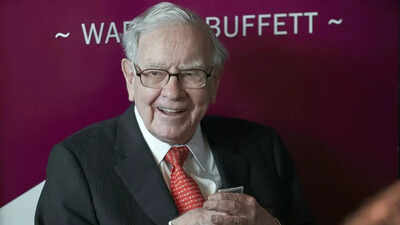
Warren Buffett’s philosophy stretches far beyond the balance sheets of Berkshire Hathaway. Over decades of writing his legendary annual shareholder letters and speaking to students, he has created a framework for living a rational, deliberate, and high-integrity life. Here are 10 life lessons extracted from his huge body of work.
1. Guard your reputation fiercely
Buffett frequently reminded his employees that integrity is irreplaceable. In his 1991 testimony to Congress regarding Salomon Brothers, and summarized often to his managers, he stated: “Lose money for the firm, and I will be understanding. Lose a shred of reputation for the firm, and I will be ruthless.” He said that it takes 20 years to build a reputation and only five minutes to ruin it. If you think about that, you will do things differently.
2. Operate within your “circle of competence”
You don’t need to be an expert on everything to succeed, but you must be deeply honest about what you do not know. Buffett models this by avoiding industries he does not understand, regardless of how popular they are. Knowing the perimeter of your own ignorance is far more valuable than having a high IQ As he famously observed, if you have an IQ of 160, you should sell 30 points to someone else because you don’t need them to excel in investing or life; you just need to know your boundaries.
3. Price is what you pay; value is what you get
This core principle applies to both consumer goods and corporate acquisitions. Derived from his mentor Benjamin Graham, Buffett wrote that whether we are talking about socks or stocks, he liked buying quality merchandise when it is marked down. In life, separate the superficial cost of an experience or item from its intrinsic worth. True value sustains you; price is merely a temporary transaction.
4. Remember that your best investment is yourself
When asked by students about the best way to prepare for economic uncertainty, Buffett’s answer was always internal rather than external. He maintained that modifying your talents and maximizing your skills is an un-taxable, un-stealable asset. “Nobody can take away what you’ve got in yourself, and everybody has passive potential they haven’t used yet.”
5. Practice strict emotional discipline
The stock market, much like daily life, is designed to test your emotional baseline. Buffett views the market not as a teacher, but as a facilitator. He pointed out that the stock market is a highly efficient mechanism designed to transfer money from the impatient to the patient. Success requires an emotional temperament that derives no pleasure from being with the crowd or against the crowd.
6. Keep your focus concentrated
While modern financial theory advocates for broad diversification, Buffett viewed it differently for those who know what they are doing. He famously noted that diversification is merely protection against ignorance. If you want to achieve extraordinary results in your career, relationships, or investments, it is safer and more effective to pour your energy into a few high-conviction paths you understand deeply rather than scattering your focus thinly across fifty avenues.
7. Build a “margin of safety” into life
Never operate on assumptions that require perfect conditions to survive. When investing, Buffett demands a cushion — a difference between the purchase price and the company’s long-term value — so that even if a business hits a rough patch, the investment doesn’t collapse. Translating this to life means managing your time, finances, and health so that unexpected crises do not completely derail you.
8. Associate only with people better than yourself
The company you keep inevitably shapes your trajectory. Buffett advises people to look closely at their peers and mentors, noting that it is always better to hang out with people who are better than you. If you pick associates whose behavior is slightly better than yours, you will drift automatically in that direction.
9. Write and communicate with radical clarity
Buffett wrote his annual reports with a specific audience in mind: his sisters. By aiming for absolute transparency and avoiding corporate jargon, he ensured that the underlying truth of the business was never obscured. Speaking and writing clearly forces you to think clearly. If you cannot explain an idea simply, you do not understand it well enough.
10. Measure success via your ‘inner scorecard’
Buffett made a sharp distinction between the outer scorecard (how the world sees you) and the inner scorecard (how you see yourself). He often posed a thought experiment: Would you rather be the world’s greatest lover but have everyone think you’re the worst, or the world’s worst lover but have everyone think you’re the greatest? True fulfillment comes from satisfying your own high standards, not chasing public applause.