
While growth has remained resilient so far, aided by strong manufacturing activity and inventory build-up, Bhandari expects the real impact of these shocks to become visible from the July-September quarter of 2026 (Q2FY27).
At the same time, Reserve
Bank of India (RBI) measures aimed at attracting foreign capital could provide an important cushion. Bhandari believes the central bank’s foreign currency non-resident (FCNR) and external commercial borrowings (ECB) initiatives could fund a large part of India’s projected balance of payments deficit, improve banking system liquidity and support the formal economy, even as higher food and fuel prices weigh on the informal sector.
This is an edited transcript of the interview.Q: It looks like a summer of discontent. Oil prices remain elevated, and there are concerns around El Niño. How are you reading the situation?
A: There is good and bad news every day. But I worry that there are two big shocks simultaneously this year: the energy shock, which is not just about high oil prices but also shortages of industrial feedstocks, and the El Niño shock.
It is not a comfortable situation when two large shocks hit at the same time. We have had some positive developments, such as the authorities announcing a large FX package, but that can only provide temporary relief when global shocks remain so frequent and significant.
Q: But oil prices can change very quickly. Doesn’t that alter the outlook?
A: Absolutely. Oil prices are currently below $100 a barrel, which is encouraging. But even if the Strait of Hormuz reopens, countries that have been drawing down strategic reserves will likely start replenishing them.
Also, the issue is not just oil and gas. It extends to fertilisers, ammonia, chemicals and petrochemicals. I sense that commodity prices could remain elevated for some time. Even if oil prices fall sharply today and stay low, the inflationary effects of the energy crisis will linger for the next few months.
Q: Growth has held up well so far. Do you expect that to change?
A: Yes. Growth is currently surprising on the upside. Many companies with access to energy are front-loading production and building inventories. In fact, finished goods inventories are at their highest level in a decade.
That is supporting output and employment today. My concern is the September quarter. By then, much of this manufacturing front-loading will be behind us, and the impact of El Niño will start becoming visible. We could then see both shocks hitting at the same time.
I think the data will continue to look strong until then, but there could be a sudden slowdown when the September quarter numbers arrive.
Q: Your growth forecast is around 6%. Are you among the more cautious economists?
A: Perhaps, but more economists are now lowering their forecasts from above 6.5% to below 6.5%.
I am particularly concerned about El Niño. The historical models may underestimate their impact because every successive El Niño is occurring in a warmer climate. Earlier, El Niño mainly affected fruits and vegetables. Today it affects edible oils, pulses, poultry, milk, meat and fish as well. That means a much broader economic impact.
As these effects become visible, I believe further downward revisions to gross domestic product (GDP) forecasts are possible.
 Q: Could this “super El Niño” affect sectors beyond agriculture?
A: Absolutely. We are dealing with both a fuel shock and a food shock. Together, they account for close to 70% of the consumer price index (CPI) basket and a significant portion of GDP.
I sense that inflation could rise sharply while growth slows from the July-September quarter onwards. We should be prepared for that possibility.
That said, there is a positive development. The large FX package should bring in capital inflows, improve banking system liquidity and ease financial conditions. Many banks were struggling to raise deposits, with credit-deposit ratios rising sharply.
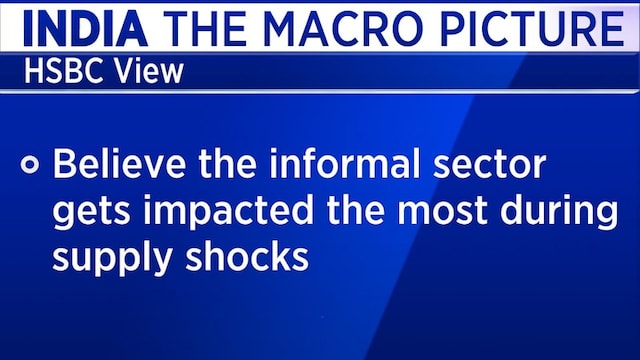
This creates an interesting situation. Food and fuel shocks tend to hurt the informal sector, while improved liquidity and easier financial conditions support the formal sector. As a result, we could see a two-speed economy over the next few months.
Q: How much money could the FCNR and ECB measures attract?
A: It is difficult to put an exact number on it. But considering the combination of FCNR deposits, ECB measures, tax changes and bank borrowing, I sense that a large portion of the $65 billion balance of payments (BOP) deficit that I was forecasting could now be financed through these inflows.
Global interest rates are much higher today, so there are reasons for caution. However, the RBI is effectively subsidising the programme by bearing the hedging costs. If banks make full use of the available leverage, they can offer attractive returns to Non-Resident Indians (NRIs).
There are still operational questions that banks have for the RBI, but I expect that the central bank will provide supportive clarifications and make necessary adjustments to ensure the scheme succeeds.
Q: What about India’s chances of joining the Bloomberg Global Aggregate Bond Index?
A: The two key issues were market access and taxation. India has made substantial progress on both fronts, particularly taxation over the last week or so.
There are now more boxes ticked than ever before. The review committee is expected to meet in June, and we could hear something then. Even if not immediately, I think the outlook has improved significantly.
Watch the full conversation here

The assets tracking this index are roughly $2.5 trillion. If India receives a weight of around 0.7%, inflows could be around $20 billion, give or take. Importantly, these would likely come next year rather than this year.
What makes these inflows particularly valuable is that they are more permanent. FCNR and ECB inflows need to be repaid after a few years, but bond index-related inflows are much stickier. That is the kind of capital India needs more of.
Also Read: Sugar industry seeks dual pricing as industrial users consume most of India’s sugar