
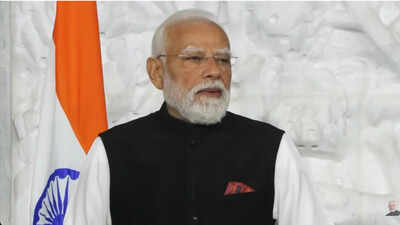
NEW DELHI: Prime Minister Narendra Modi on Monday welcomed the understanding reached between the United States and Iran to end months of conflict in West Asia, expressing hope that its implementation would restore regional stability, safeguard global commerce. In a post on X, PM Modi said the conflict had caused widespread economic disruption and loss of life across several countries.“I welcome the understanding reached between the United States and Iran on ending the conflict in West Asia, which has caused serious economic disruption across the world and led to loss of life in many countries.India hopes that the implementation of this understanding will help restore peace and stability in the region and ensure the freedom of navigation and commerce.We look forward to deliberations on the remaining issues reaching a sustainable final agreement.”PM Modi’s remarks came hours after US President Donald Trump announced that Washington and Tehran had reached a framework agreement aimed at ending the war, lifting the US blockade of Iran and reopening the Strait of Hormuz, one of the world’s most important energy shipping routes.“The Deal with the Islamic Republic of Iran is now complete,” Trump wrote on Truth Social on Sunday.The agreement, brokered with mediation support from assistance from regional partners, is scheduled to be formally signed in Switzerland on Friday.The breakthrough comes after more than three months of conflict that began when US and Israeli forces launched strikes on Iran on February 28. The fighting subsequently spread across the region, with Iran targeting Israel and Gulf states hosting US military bases, while also disrupting shipping through the Strait of Hormuz.Trump said the strait would reopen on Friday and announced the end of the US naval blockade of Iranian ports.“Ships of the World, start your engines. Let the oil flow!” Trump wrote.Global markets responded positively to the development. Brent crude futures fell 4 per cent in early Monday trading, while US West Texas Intermediate crude dropped more than 4.6 per cent amid expectations that energy supplies through the Gulf would normalise.While the framework agreement has been welcomed by several countries, major issues remain unresolved. Iranian Deputy Foreign Minister Kazem Gharibabadi said a broader agreement covering sanctions relief and Iran’s nuclear programme would be negotiated during a 60-day ceasefire period.The future of Tehran’s nuclear activities remains one of the most contentious issues in the negotiations. Before the agreement was announced, Iranian and US officials offered differing interpretations of how the matter would ultimately be resolved.The agreement was reached despite tensions over an Israeli strike on Lebanon on Sunday. Trump publicly criticised the attack, saying: “This morning’s attack on Beirut should not have happened, particularly on a special day when we are so close to a Peace Deal with Iran.”Israeli Prime Minister Benjamin Netanyahu has reportedly differed with Trump over US efforts to secure a broader settlement with Iran, particularly regarding military operations in Lebanon.Meanwhile, the United Kingdom, France, Germany and Italy signalled support for the diplomatic breakthrough and said they were prepared to lift sanctions on Iran if Tehran takes verifiable steps regarding its nuclear programme.“Iran must never acquire a nuclear weapon. We stand ready to work with the US, Iran and the IAEA to this end,” the four countries said in a joint statement.Attention is now focused on the formal signing ceremony in Switzerland on Friday and the subsequent negotiations, which are expected to determine the future of Iran’s nuclear programme, sanctions relief and long-term regional security arrangements.