
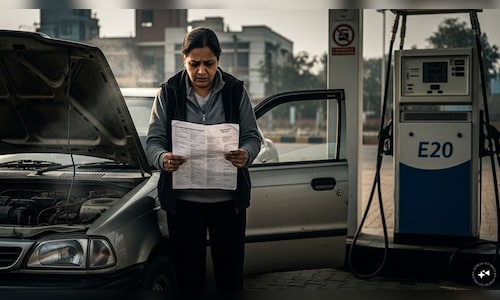
In a blog post published on June 9, the insurer said that if a vehicle was not designed to run on E20 fuel, the use of the higher ethanol blend could be viewed as “improper use” or “negligence”, potentially affecting claim admissibility.
The insurer noted that while the government has clarified that using E20 fuel does not invalidate a motor insurance policy, this does not automatically mean that all damage claims linked to E20 usage will be approved.
According to ICICI Lombard, standard motor insurance policies generally exclude “consequential damage”, damage that develops gradually over time rather than resulting from a sudden and accidental event. The company said engine protection add-ons are typically meant for issues such as water ingress or oil leakage and generally do not cover chemical corrosion caused by fuel.
The issue has gained prominence because E20 became the baseline petrol blend across the country in April 2025, leaving motorists with limited alternatives. Industry estimates suggest a substantial number of vehicles currently on Indian roads were manufactured before the mandatory introduction of E20-compatible vehicles in April 2023 under the BS-VI Phase II emission norms.
The insurer’s comments have also drawn attention to future ethanol-blending plans. The government has indicated that it may raise the ethanol content in petrol further, with studies underway to assess the impact of higher blends, including E25, on existing vehicles. If the baseline blend is increased in the future, concerns around compatibility and insurance coverage could potentially extend to a wider pool of vehicle owners.