
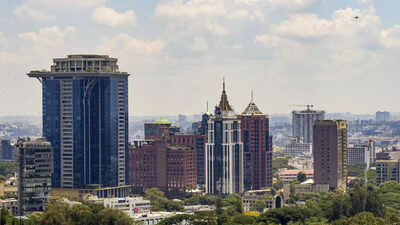
House-hunters looking for rental accommodation in Bengaluru may have to contend with higher rents, with a report indicating continued demand across the city’s residential market.According to the Magicbricks Rental Index for January-March 2026, Bengaluru remained among India’s most active rental housing markets, supported by its position as a major technology and startup hub. The report attributed demand to a steady inflow of professionals, entrepreneurs and students.Areas such as Whitefield, Sarjapur Road and Marathahalli recorded strong rental demand due to their proximity to IT hubs and expanding metro connectivity. The report said demand could remain supported by upcoming infrastructure projects, including the Peripheral Ring Road and new technology parks.Size-wise, 41% of Bengaluru’s rental demand came from homes measuring 1,000-1,500 sq ft, followed by 500-1,000 sq ft homes at 34%.In terms of configurations, 2BHK and 3BHK units accounted for 72% of total demand, reflecting a preference for mid-sized homes.Like most major Indian cities, Bengaluru’s rental market remained dominated by semi-furnished properties. The report noted that 73% of demand was for semi-furnished homes, closely matching the 74% share of available supply. Furnished and unfurnished options remained relatively limited.The report showed rents rising nearly 10% during the quarter and 16.4% compared with a year earlier. Rental homes with monthly rents of up to Rs 50,000 accounted for nearly half of total demand.The average monthly rent for a 2BHK apartment in prominent residential localities ranged between Rs 41,000 and Rs 70,000.Bengaluru also recorded growth in rental housing supply during the quarter, with available rental accommodations increasing 9.5% quarter-on-quarter.Supply growth was stronger in peripheral markets, which registered a 15% quarterly increase compared with 7% growth in core residential locations.Sarjapur Road led the expansion with an 18% increase in supply, followed by Kanakapura Road and Thanisandra, which recorded growth of 12% each.According to the report, the trend reflects the increasing concentration of residential development in emerging corridors supported by improving infrastructure and connectivity.