
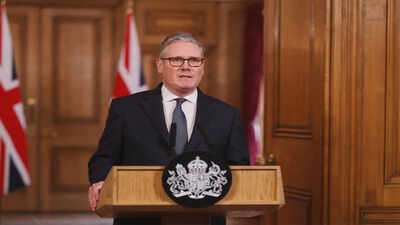
LONDON: UK Prime Minister Keir Starmer on Monday announced a ban on social media for under-16s in the UK “to give children their childhood back”.The ban will be modelled on the one in Australia and be on platforms including Snapchat, TikTok, YouTube, Instagram, Facebook and X, but not on services like WhatsApp and Signal. It is expected to come into force in spring 2027. Children will still be able to go online for learning, news, games and staying in touch with friends and family.AI “romantic companion” chatbots will have to enforce a minimum age of 18 and under-16s will be banned from live-streaming themselves and from making contact with strangers, including on gaming platforms.YouTube was among the first companies to criticise the ban. A spokesperson said: “YouTube is a vital resource for young people, educators and parents. Blanket bans push kids out of such curated, supervised, beneficial experiences, and towards anonymous, less safe services.”A Meta spokesman said: “As we’ve seen in Australia, bans risk isolating teens from online communities and information, and driving them to unregulated alternatives that lack built-in protections and parental controls.”Snapchat said: “Because the majority of time spent on Snapchat is in private messaging between friends and family, an outright ban that disconnects teens from those relationships doesn’t make them safer — it may simply push them to less safe platforms.”Young people in the UK told TV channels they were unhappy with the ban as they found it patronising and many used social media to communicate with friends, though govt said nine out of 10 parents supported it.Dr Ysabel Gerrard, senior lecturer in digital communication, University of Sheffield, said: “Emerging evidence from Australia indicates that under-16s are still on social media, but now they are using it without the necessary safeguarding measures.”Dr Lizzy Winstone, senior research associate at the University of Bristol Medical School, said: “The digital environment will still exist when young people turn 16, and risks will not disappear simply because access is delayed. There is a risk that young people may enter these spaces later but with less experience, less digital literacy, and less adult guidance.”Prof David Ellis, chair of behavioural science, University of Bath, said a ban “lets social media companies off the hook: they can divert resources away from making platforms safer.”