
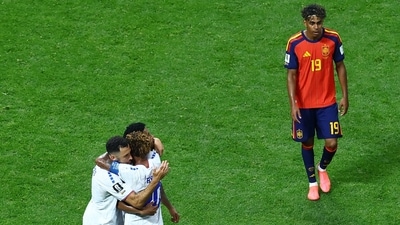
The 2026 FIFA World Cup has already delivered an early shock. Spain, widely tipped as one of the favourites for the title, were held to a 0-0 draw by 67th-ranked Cape Verde in a result few saw coming before kick-off. Fresh from their European Championship success and armed with a squad full of established stars, Spain were expected to begin their campaign with a statement victory. Instead, they were frustrated for 90 minutes by a side that refused to be intimidated by the occasion.
Cape Verde approached the contest with clear intent. They stayed compact, defended in numbers and made life difficult for Spain in and around the penalty area. Despite dominating possession for long spells, Spain struggled to create the kind of clear-cut opportunities needed to break the deadlock. The standout performer was goalkeeper Vozinha. At 40 years old, he rolled back the years with a series of important saves, standing firm whenever Spain threatened to find a breakthrough. His performance helped Cape Verde secure one of the most memorable results in their football history.
For La Roja, it was a frustrating evening and an early reminder that World Cups rarely follow the script. Rankings, reputations and pre-tournament predictions often mean little once the action begins, and Cape Verde proved that organisation, discipline and determination can trouble even the strongest teams.
Spain’s frustrating draw with Cape Verde was not just about the opposition’s defensive discipline; several of Luis de la Fuente’s selection calls also came under scrutiny. While leaving Lamine Yamal on the bench was understandable given his recent injury concerns and the need to manage his workload during a long tournament, some of the other decisions were far harder to justify.
The most puzzling was Ferran Torres being deployed on the right wing, a role that has largely belonged to Yamal in recent years. Spain’s success under De la Fuente, including their European Championship triumph, was built around the direct threat and creativity provided by their wide players. Yamal and Nico Williams stretched defences, created Cape for the midfield and supplied opportunities for striker Mikel Oyarzabal. Against CapeVerde, that spark was missing. Torres struggled to influence the game from the flank, while Oyarzabal was left isolated for long periods and barely saw meaningful involvement during the opening half hour.
Also Read – Morocco disaster is a wake-up call for Brazil: Without Neymar, the Selecao look hopeless
The decision to start Gavi also raised questions. The Barcelona midfielder remains an important player, but he spent much of the season recovering from injury and lacked consistent game time. Dani Olmo, by contrast, was one of Spain’s standout performers during their Euro-winning campaign and offered a greater attacking threat between the lines. Without the usual balance between midfield and attack, Spain looked predictable and short of ideas, allowing Cape Verde to remain comfortable for large spells of the match.
Spain forgot the formula
What Spain lacked more than anything against Cape Verde was attacking bravery. Their dominance in possession rarely translated into genuine danger because too few players were willing or able to take defenders on. Ferran Torres and Gavi both attempted to drive at opponents, but neither managed to make a meaningful impact. Instead, much of Spain’s creativity came through Pedri, whose close control and dribbling were often the only things unsettling Cape Verde’s disciplined defensive shape.
The contrast became obvious when Yamal was introduced in the 71st minute. Spain immediately looked sharper, quicker and far more threatening. The teenager brought urgency to every attack, constantly looking to run at defenders and force openings. Despite playing barely 20 minutes, Yamal completed five dribbles, more than any other player on the pitch. By then, Cape , Cape Verde had fully committed to protecting their point. Having frustrated Spain for over an hour, they dropped even deeper and defended their penalty area with complete conviction.
The statistics highlighted just how well the underdogs executed their plan. Spain enjoyed 74 per cent possession but struggled to break through a compact and organised defence. Remarkably, Cape Verde conceded only one foul throughout the entire match, the fewest by any team in a World Cup game since records began in 1966. There was no panic, no reckless challenges and very few mistakes. Every player understood his role, while 40-year-old goalkeeper Vozinha delivered a performance that will be remembered for years.
For De la Fuente, there is a lesson to be learned. Spain’s decline after the glory years that brought the 2008 European Championship, the 2010 World Cup and the 2012 European Championship was often linked to a lack of pace, directness and attacking unpredictability out wide. Opponents gradually learned how to contain Spain’s possession-heavy approach, and without explosive wingers, their dominance faded on the biggest stages. The emergence of Yamal and Nico Williams has helped restore that missing dimension and was a major factor in Spain’s recent European Championship success. Their ability to stretch defences, beat opponents one-on-one and create chances changes the entire dynamic of the team. Spain have the talent to challenge for another major title, but De la Fuente must ensure those strengths remain at the centre of his plans. Otherwise, they risk repeating the mistakes that followed their golden era and turning a promising campaign into another missed opportunity.