
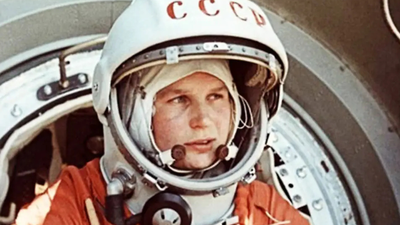
On the morning of June 16, 1963, a 26-year-old textile worker from the Yaroslavl region of Russia climbed into a capsule called Vostok 6 and, within hours, became the first woman to leave Earth.Valentina Tereshkova was not a military pilot. She had no engineering degree. What she had was nerve, a parachute licence, and the attention of Soviet premier Nikita Khrushchev, who had decided that the stars, too, should reflect the promise of the Soviet state.Her origins were ordinary by any measure. Born on March 6, 1937, the second of three children, Tereshkova grew up in a household shaped by labour, her father drove tractors, her mother worked the looms of a textile plant. She started school at eight, left at sixteen, and kept her education going through correspondence courses while her hands stayed busy on the factory floor. It was not the biography of someone the world expected to see hurtling through orbit.
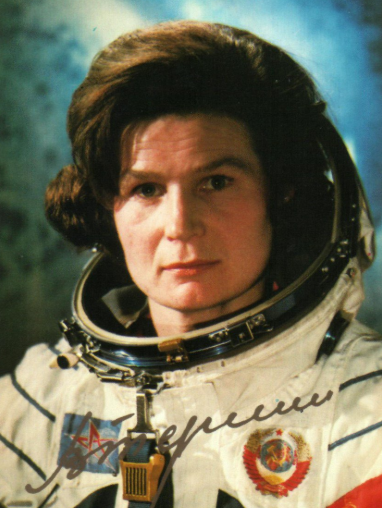
Image: X@/Russia
But Tereshkova had been throwing herself out of aircraft since her teens. Her proficiency as an amateur parachutist was precisely what caught the eye of Soviet recruiters, who in the early 1960s were quietly assembling a shortlist of women for a one-time spaceflight programme. Four candidates were selected and trained. Only one would fly.Aboard Vostok 6, Tereshkova spent 70 hours and 50 minutes in space, completing 48 orbits of Earth.She communicated with Vostok 5 cosmonaut Valery Bykovsky, who was orbiting simultaneously, and with Khrushchev himself from space.When she landed by parachute on the Kazakh steppe, she was met with the title Hero of the Soviet Union.She never flew again. The women’s programme was quietly wound down. But for three days in June 1963, Valentina Tereshkova, factory girl, parachutist, daughter of a tractor driver, had been the only human being in space.
Three days that defined a lifetime
In February 1962, five women were chosen from a pool of 400 applicants to join the cosmonaut corps: Tatyana Kuznetsova, Irina Solovyova, Zhanna Yorkina, Valentina Ponomaryova, and Valentina Tereshkova. They trained for months: centrifuge tests, isolation chambers, near-weightlessness simulations, jet aircraft, and 120 parachute jumps. Four passed their exams in November 1962 and were commissioned as lieutenants in the Soviet Air Force, though the rank was honorary. Tereshkova went into space as a civilian.The selection of Tereshkova over more technically qualified candidates was, by most accounts, a political calculation. She fit the image of the Soviet proletariat, a factory worker, the daughter of labourers, self-educated. Khrushchev wanted to send a message, and Tereshkova was it.On the morning of June 16, she and her backup Solovyova rode a bus to the launch pad at Baikonur. She had watched Vostok 5 lift off two days earlier with Bykovsky aboard. Now it was her turn. After a two-hour countdown, Vostok 6 lifted off without fault. Flying under the call sign Chaika “seagull” she was soon in contact with Bykovsky, their two capsules drifting to within three miles of each other before separating. She spoke to Khrushchev by radio. Her image was broadcast across Soviet television.She kept a detailed flight log, recorded her body’s physical responses, and photographed the Earth, images that would later help scientists identify aerosol layers in the atmosphere. Vostok 6 was guided entirely by an automatic control system; Tereshkova never took manual control of the craft.The mission lasted two days, 23 hours, and 12 minutes, more flight time than all the US Mercury astronauts who had flown to that date combined. On June 19, Vostok 6 re-entered the atmosphere. Tereshkova ejected at 20,000 feet and parachuted to the ground, the same way she had always come down.
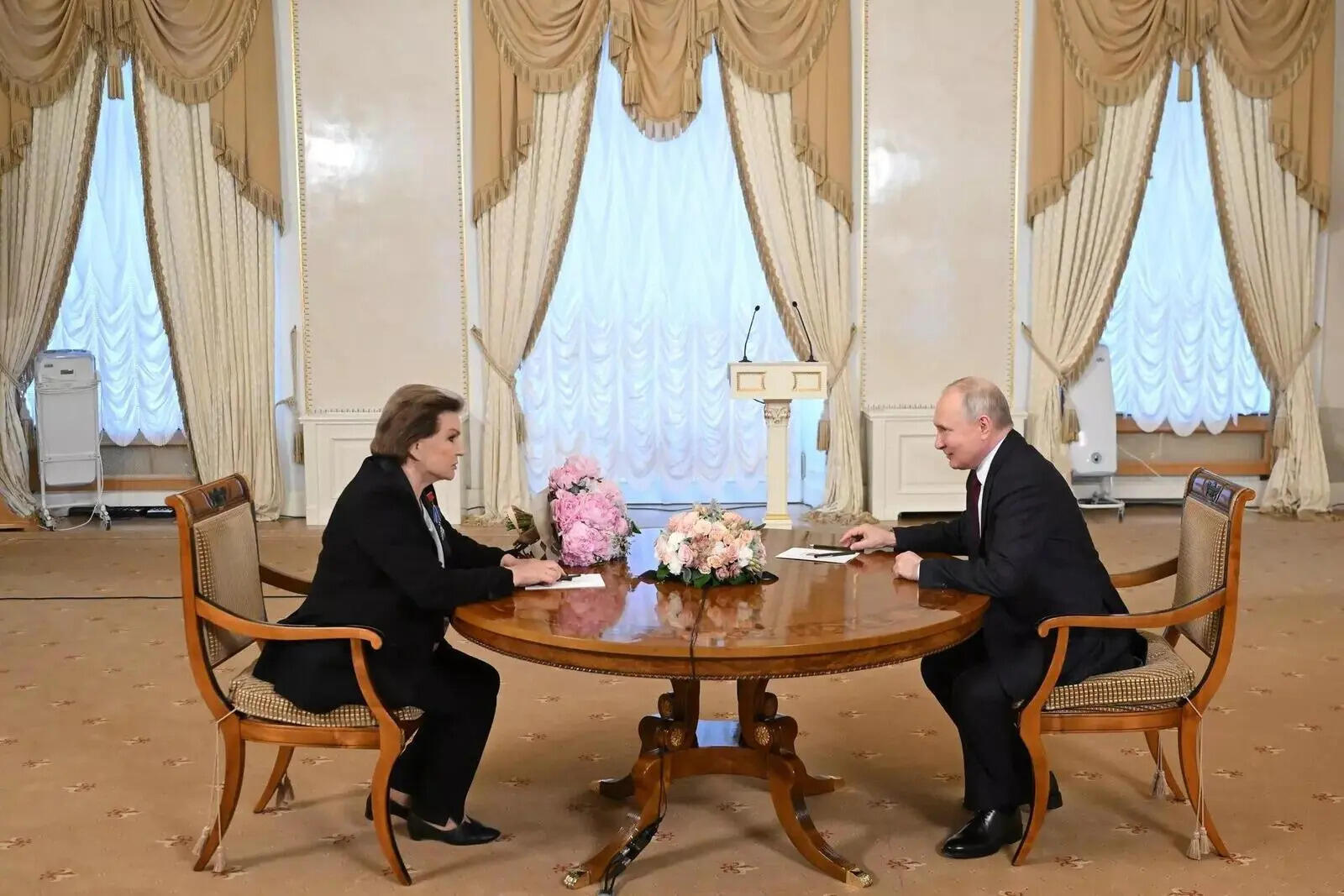
Russian President Vladimir Putin with Valentina Tereshkova
She returned to Earth with the Order of Lenin and the Hero of the Soviet Union, and was almost immediately put to work as a face of the state. In November 1963, she married fellow cosmonaut Andrian Nikolayev. The following year, the couple had a daughter. She rose through the Communist Party and represented the Soviet government at international women’s forums, including the UN Conference for the International Women’s Year in Mexico City in 1975. The recognition that followed was global: the United Nations Gold Medal of Peace, the Simba International Women’s Movement Award, the Joliot-Curie Gold Medal.She had spent less than three days in space. She would spend the decades that followed representing what those three days were supposed to mean.
Women who have been instrumental in space exploration
Tereshkova was not alone. Across the decades, women shaped the course of space exploration, often without ever leaving the ground.Katherine Johnson joined Nasa’s precursor, the National Advisory Committee for Aeronautics, in 1953, working in its segregated West Area Computing section. When trajectory calculations for the Friendship 7 orbital mission in 1962 were programmed into IBM computers, astronaut John Glenn refused to fly until Johnson had verified the numbers by hand. She went on to calculate the trajectory for the Apollo 11 mission to the Moon in 1969, retired from NASA in 1986, and was awarded the Presidential Medal of Freedom in 2015. She died in 2020 at 101.Nancy Grace Roman joined Nasa in 1959, six months after the agency was formed, and by 1960 was its Chief of Astronomy and Relativity, the first woman to hold an executive position there. Through the 1960s and 1970s, she lobbied Nasa and Congress to fund a large telescope above the atmosphere, writing testimony to justify a $500 million budget. She retired in 1979. The Hubble Space Telescope launched in 1990. Roman died in 2018, widely known as the Mother of Hubble.Kalpana Chawla, born in India, flew her first mission aboard the space shuttle Columbia in 1997. Her second flight, in 2003, carried a crew of seven and ran more than 80 scientific experiments over 16 days. On February 1, Columbia broke apart during re-entry. Chawla was 40 and had logged over 720 hours in space. She was posthumously awarded the Congressional Space Medal of Honor.
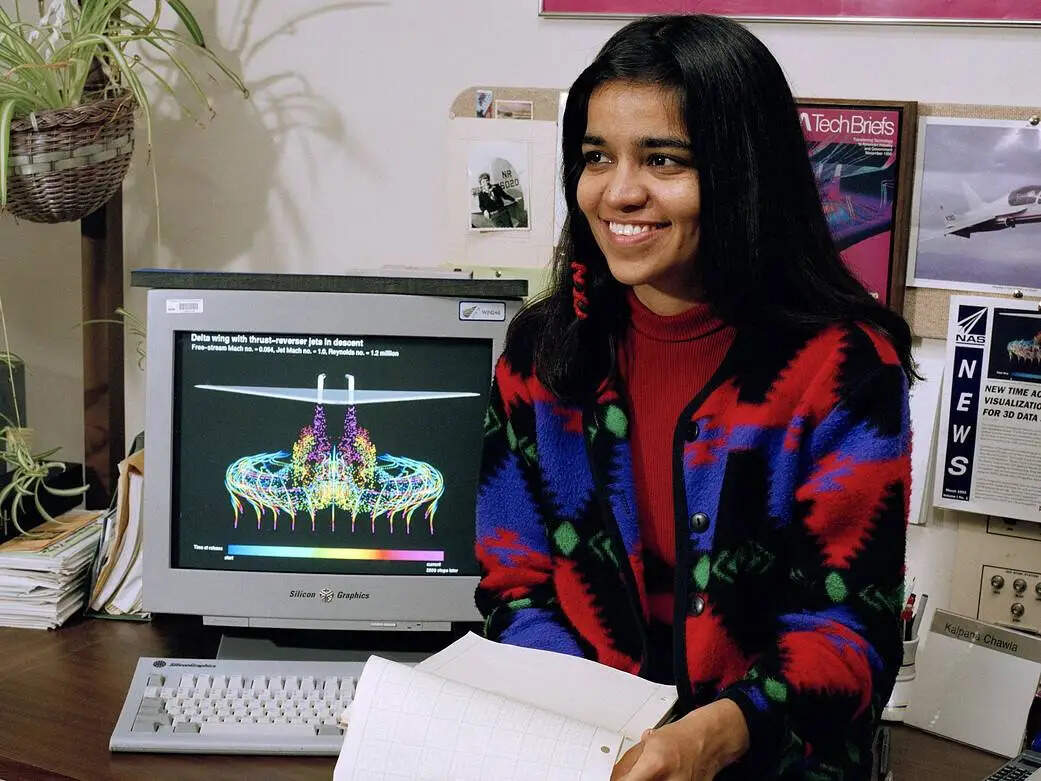
Image: Nasa
Vera Rubin’s doctoral dissertation in 1954 argued that galaxies clustered rather than distributed randomly through the universe. Working later at the Carnegie Institution, she studied galaxy rotational curves and in 1970 published findings that pointed to the existence of vast invisible mass behaving gravitationally within galaxies, what is now called dark matter. Her work reshaped the understanding of how the universe is structured.Patricia Cowings joined Nasa in 1971 and became the first American woman to receive astronaut training. She never flew, but as a research psychologist at Ames Research Center she developed a patented biofeedback programme teaching astronauts to regulate up to 26 physiological responses to motion sickness. The method, known as autogenic-feedback training, remains in use. At 75, she continues to work at Nasa.