
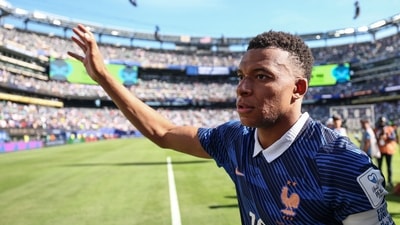
France opened their FIFA World Cup 2026 campaign with a 3-1 win over Senegal, but the scoreline told only half the story of a match that demanded patience, nerve and a late assertion of class from Didier Deschamps’ side.
For almost an hour, Senegal made France uncomfortable. They were organised without the ball, brave in transition and sharp enough to remind the former world champions of another painful World Cup memory from 2002. Nicolas Jackson struck the base of the post in the first half, Ismaila Sarr found space in dangerous areas, and Sadio Mane repeatedly tried to stretch the French defence with direct running and clever movement. At half-time, with the match still goalless, Senegal had done enough to suggest that this would not be a routine evening for France.
France, for their part, struggled to impose rhythm early on. Kylian Mbappe was lively but not yet decisive, Ousmane Dembele was crowded out, and Senegal’s midfield worked hard to deny Michael Olise clean possession between the lines. The opening 45 minutes carried tension rather than fluency, with France holding more control but Senegal creating the clearer anxiety.
Mbappe and Olise turn pressure into punishment
The match changed after the interval as France began to move the ball quicker and push Senegal deeper. Olise, increasingly influential from the right and inside channels, became the player who altered the tempo of the contest. He forced Senegal’s defence to retreat, linked midfield to attack with cleaner touches, and eventually produced the pass that broke the game open.
In the 66th minute, Olise slipped a precise ball into Mbappe, who finished with the certainty of a player built for the biggest stages. It was a ruthless moment: one opening, one finish, and Senegal’s excellent defensive work was finally breached.
Senegal briefly thought they had found an immediate response when Jackson put the ball in the net, but the effort was ruled out for offside. That proved to be a damaging moment. France, now ahead, looked calmer and more dangerous, while Senegal were forced to take risks.
Deschamps’ bench then made the difference. Bradley Barcola, introduced late in the second half, needed only two minutes to make an impact. In the 82nd minute, Adrien Rabiot picked him out, and Barcola finished to make it 2-0, giving France the cushion they had been chasing.
Senegal did not disappear. Ibrahim Mbaye pulled one back in stoppage time after good work from Iliman Ndiaye, briefly reopening the contest and rewarding Senegal’s persistence. But France killed the drama almost immediately. Olise again turned provider, setting up Mbappe for his second goal in the 96th minute to complete a 3-1 win.
For France, this was not a perfect performance, but it was an ideal result. They survived Senegal’s best spell, grew into the game, and saw their biggest forward deliver when required. For Senegal, there was enough quality to take encouragement, but also frustration: they had the openings before France found their edge. On nights like these, against teams like France, missed windows are punished brutally.