
G7 leaders on Wednesday agreed to strengthen cooperation to reduce their dependence on China for critical minerals, unveiling plans to coordinate stockpiling, boost recycling and create a new platform with an expanded role for the International Energy Agency (IEA).The move comes as Western nations seek to secure supplies of minerals crucial for defence, artificial intelligence, electric vehicles and renewable energy technologies.The push gained urgency after China’s export restrictions on permanent magnets last year disrupted global industries and highlighted the risks of relying on a single dominant supplier.Without directly naming China, G7 leaders said they aim to reduce reliance on any one supplier outside the group and partner countries for rare earth elements and permanent magnets to below 60 per cent by 2030, with a long-term goal of bringing it down to 50 per cent “as soon as possible”.
G7 plans critical minerals platform with IEA support
The leaders said they would work towards creating “harmonised, interoperable mechanisms” for critical mineral supply chains, beginning with pilot projects focused on lithium and nickel.“These mechanisms would start with two pilot critical minerals – lithium and nickel – and aim to avoid undermining competitiveness or imposing excessive cost burdens,” the G7 leaders said in a joint statement.The initiative will later expand to include five additional minerals each year, with a particular focus on rare earth elements, according to Reuters.The G7 will also establish a platform to coordinate policies, improve data sharing and respond to supply disruptions.The International Energy Agency will support the initiative by monitoring markets and providing “early warnings of market distortions”, the group said.
Reducing China dominance remains a major challenge
Analysts warned that achieving the diversification target would be difficult, particularly for processed rare earths and permanent magnets, where China currently controls around 90 per cent of global production.“The G7 statement is an important signal of intent, but the pace of diversification will ultimately depend on whether policy support translates into investment across the midstream and downstream parts of the value chain,” Neha Mukherjee, research manager at Benchmark Mineral Intelligence, said, as quoted by Reuters.Building alternative supply chains from mining to processing and final products will require billions of dollars in investment.The G7 said development finance institutions, export credit agencies and private companies should work together to support new projects and infrastructure.Countries have announced 195 critical minerals projects since the start of 2026, involving around €64 billion ($74 billion) in investment.
Stockpiling, recycling efforts gain momentum
The G7 also committed to increasing domestic stockpiles of critical minerals across industrial and public sectors to protect against future supply shocks.The United States launched its $12 billion critical minerals reserve, Project Vault, earlier this year, while the European Union has shortlisted tungsten, rare earths and gallium for its first joint stockpile, sources told Reuters.The leaders further pledged to expand recycling capacity, aiming for G7 recycling systems to account for a “significant share” of annual critical mineral consumption by 2030.The statement also mentioned possible measures such as price-gap subsidies, joint procurement mechanisms, quotas and price floors through multilateral trade agreements.However, some G7 allies remain sceptical about proposals from the Trump administration to support mineral production through price regulation.
G7 summit focuses on AI, Ukraine and Iran deal
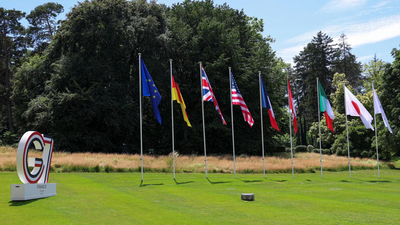
The critical minerals agreement was among several outcomes from the three-day G7 summit hosted in France.Leaders also discussed artificial intelligence, the Russia-Ukraine war and a tentative agreement between the United States and Iran aimed at ending the conflict and reopening the Strait of Hormuz.The summit in Évian-les-Bains brought together leaders of the G7 countries, Canada, France, Germany, Italy, Japan, the United Kingdom and the United States, along with guest nations including India, Brazil, Egypt, Kenya, South Korea, Qatar, Ukraine and the United Arab Emirates.French President Emmanuel Macron said the summit produced progress on major global issues, while also stressing the need for regulation of artificial intelligence.“No one — neither political leaders nor business leaders — can any longer ignore the impact of AI on our democracies, on our societies,” Macron said, adding that regulation had become necessary.The critical minerals agreement reflects a broader effort among Western nations to reduce strategic vulnerabilities in areas ranging from energy security to advanced technologies amid growing geopolitical competition.