
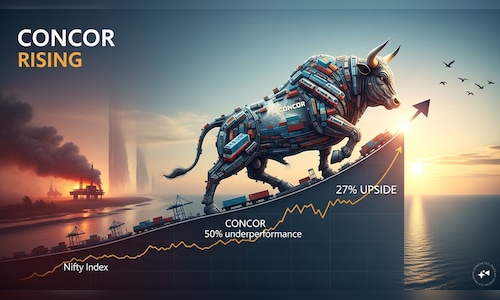
The brokerage has a ‘buy’ rating on the stock with a target price of ₹600 per share, implying an upside of over 27% from Friday’s closing price of ₹471.75. CONCOR shares were trading around ₹474.65 on Monday morning, up about 0.6%.
According to Jefferies, the stock has underperformed the Nifty by nearly 50% since June 2024, weighed down by weak growth in the container rail industry and the lack of progress on the government’s divestment plans.
Also read: Delhivery shares close in on IPO price yet again after Motilal Oswal projects 26% upside
Shares of the company are trading just over 12% above their 52-week low of ₹421.45, seen on March 23 this year, while standing about 25% below the 52-week high of ₹634.56, which it hit in June 2025.
The brokerage believes much of the negative sentiment is already reflected in the stock price. It noted that CONCOR is currently trading at a valuation that is one standard deviation below its historical average, with limited benefits from the Western Dedicated Freight Corridor (WDFC)-Jawaharlal Nehru Port connectivity factored into current valuations.
Jefferies expects the June quarter to remain weak due to an industry-wide slowdown. The brokerage cited data showing Indian Railways container volumes declined 1% in May 2026 from last year despite strong port activity, while June volumes have so far fallen 6% from a year earlier amid disruptions linked to tensions in West Asia.
However, it believes the weakness may prove temporary. India’s port container volumes grew 8% in May from the previous year, while containerisable export-import trade rose 20% despite tensions in West Asia.
According to Jefferies, improving trade flows and the potential recovery in container volumes could act as key catalysts for the stock going forward.
Street sentiment on the stock remains mixed, with 13 of the 20 analysts covering CONCOR giving it a ‘buy’ rating, while two suggest ‘hold’ and five have a ‘sell’ recommendation.
The average analyst target price stands at ₹532.17, implying a potential upside of about 12.2% from current levels.