New Delhi: Japan’s striker corps at the 2026 World Cup features a new “egoist” mentality. If you don’t quite get what that means then you need to watch Blue Lock, a football anime set in the aftermath of the 2018 World Cup.
The premise, of the series which first debuted as a manga in 2018, revolves around an extreme, controversial training programme designed to isolate 300 young strikers and forge the most “egoistic” and ruthless goal-scorer in the world. In a sense, it has already had an impact.
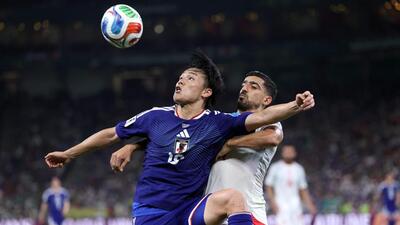
Striker Ayase Ueda, who plays for Feyenoord, was the leading scorer in the Dutch Eredivisie with 25 goals. Daizen Maeda enjoyed a prolific 2025–26 campaign for Celtic, tallying 14 league goals in 36 appearances. Ritsu Doan scored five goals in the 2025/2026 Bundesliga season for Eintracht Frankfurt. Takefusa Kubo, known as the Japanese Messi, made 24 appearances for Real Sociedad, scored 2 goals and provided four assists.
Very rarely has Japanese football had such an abundance of strikers, and they all play in Europe. The current generation of strikers is reaping the benefits of the structures that were put in place by the Japanese Football Federation. They first started out in 1992 with a 100-year plan to win the World Cup. That target was then revised to 2050 and now they whisper 2030.
Having clarity has helped but you still need something to inspire youngsters to get into the game, and that is the gap that anime are slotting into. They are fun and don’t seem like a lesson. Perhaps, that does the trick.
When the Captain Tsubasa anime first aired in the country in 1983, Japan did not have a professional league, but it got everyone dreaming. Generations of international stars (including Hidetoshi Nakata, Lionel Messi, Zinedine Zidane and Andres Iniesta) grew up watching the show, citing it as the reason they fell in love with the game and attempted to recreate its spectacular bicycle kicks and “drive shots” on the pitch.
The effect in Japan was even greater. The J.League officially kicked off its inaugural professional season on May 15, 1993, replacing the amateur Japan Soccer League. There has always been a buzz around baseball in Japan and the Koshien Stadium, where the national high school final was played.
But football was just kicking off and through those initial years, Captain Tsubasa gave the sport a much-needed push. The series initially ran from 1983–1995. There were also multiple other iterations – Captain Tsubasa J (1994-95), Captain Tsubasa: Road to 2002 (2001-2002) and Captain Tsubasa: Junior Youth Arc (2018–2024).
It has inspired footballers while it has also inspired other manga authors to up the game, and they have. If Captain Tsubasa seems a little kiddish, then Aoashi, a series celebrated for its realism, is one to watch.
The anime focuses on youth academy football and looks at actual footballing IQ, positioning, and the harsh realities of making a career as a pro.
If that isn’t your thing, then head over to Giant Killing. It is the ultimate “manager” anime. It follows Takeshi Tatsumi, who returns to manage his former struggling club, and the focus is on tactics, team chemistry, psychology, and how a clever underdog can defeat much stronger teams.
But the one that has overtaken all others in recent times is Blue Lock. It is being discussed at schools all over the world and is a massive hit. The unique visual metaphors for “awakening” skills and fast-paced action set it apart but it is the search for the “ultimate selfish striker” that has truly captured the imagination of many.
In a world where sharing is caring, this series is going the other way and that’s alright. It struck a chord with many in Japan who felt their strikers weren’t ruthless enough. Recently the JFA, inspired by the series, started a new global initiative to develop talented Japanese players living overseas, expanding Japan’s football future beyond its borders.
Called Future Camp, it will start in California in August 2026, and will recruit 15-year-old youths of Japanese heritage. The manga’s creator, Muneyuki Kaneshiro, gave the green light and invited “pure egoists who want to win the World Cup” to participate, seeking to give birth to a monster capable of devouring the competition.
It is a case if reality being inspired by anime. Through its unique visual style, imaginative stories, and emotional impact, anime has the ability to inspire and activate viewers. It’s happened before, it’s happening again and no one in Japan is complaining.