
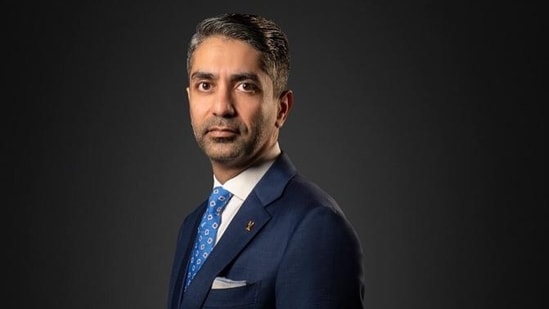
The Olympics, the grandest global sporting stage, is where every nation’s sporting strength is put to real test. For India, it’s often a reminder of how far the country has come as young, upcoming talent win coveted medals. Yet, in every four years, it also serves a reminder of how it has miles to go before it sleeps as a nation of over 1 billion population that gets a far less medal tally.
Former sport shooter Abhinav Bindra, India’s first individual Olympic gold medalist (Beijing, 2008) and someone who up until recently served on the International Olympic Committee (IOC) Athletes’ Commision (2018-2026), one realises the vision for India extends far beyond the glamour of the podium.
Q. You won India’s first individual Olympic gold in 2008, which filled the nation with optimism for the future. Nearly two decades on, India still struggles to crack double-digit medals. From inside the system now, what’s the real bottleneck — funding, talent identification, or something cultural?
A. It is not one bottleneck. It is the alignment of many things. Funding has improved significantly compared to the time when I was competing. Talent identification is still a major area where we need more depth and consistency. In a country of India’s size, talent should not depend on accident, geography, or privilege. Culturally, we also need patience. Olympic success is not built in six months before the Games. It is built over eight, ten, sometimes twelve years. We must learn to value process as much as outcome.
Q. What is the significance of Olympic Day for you?
A. Olympic Day reminds us that sport is not only about medals; it is also about health, education, inclusion and community. A true sporting nation is one where excellence is not left to heroic individuals, but supported by a system that works every day. Money by itself does not win medals. It has to be converted into quality coaching, daily training environments, competition exposure, injury management, nutrition, psychological support, and accountability.”
Q. India has shown great inclination towards hosting the 2036 Olympics. Do you think India has the infrastructure and ability to host such a mega competition when many Indian athletes, especially at the grassroots, still struggle with access to proper infrastructure for training?
A. India has the ambition, scale and capability to host an event of the magnitude of the Olympic Games. A country of our size, our youth population and our growing global presence should certainly aspire to bring the world’s greatest sporting event to India. At the same time, I believe the real strength of any Olympic bid lies in the legacy it creates. Hosting the Games should not be seen only as a three-week event. It should be seen as a 10-year national opportunity to strengthen sport at every level — from elite preparation and world-class venues to public playgrounds, school sport, district facilities, community access and long-term athlete development.
For me, these are not competing priorities. Building Olympic-level infrastructure and improving grassroots access must go hand in hand. In fact, a well-planned Olympic ambition can become a catalyst to accelerate better facilities, better coaching systems, stronger
The Games, if they come to India, should inspire not only those who compete in the stadium, but also the child in a government school, the young athlete in a district centre, the girl looking for a safe place to play, and every family that begins to see sport as part of everyday life.
Q. As a sportsperson, you fuelled the belief that Indian could also win medals at the Olympics. Do you too feel that your golden moment changed a lot for the Indian sport?
A. I have always believed that the Beijing gold belonged far more to the country than to me as an individual. For many years, Indian athletes carried extraordinary talent, but also the burden of limited belief. What Beijing perhaps did was shift the national imagination. India began to look at Olympic sport with greater respect and ambition. I see that as the larger change. A medal can inspire, but its true legacy is only realised when it helps build pathways for the next generation. It told a young athlete in a small town, a parent, a coach, a federation, and even the system, that an Indian could stand on top of an Olympic podium in an individual sport.
Q. Ace shooter and coach Jaspal Rana’s recent death left you grieving like many others. Your memories of him?
Jaspal’s passing is a deep loss for Indian sport and especially for the shooting community. He was a champion in his own right, but perhaps his greatest contribution was the way he shaped and guided the next generation. Shooting is a sport of immense technical precision, but also of temperament, discipline, and trust between athlete and coach. Jaspal understood that deeply. His contribution as a coach, mentor, and personality within Indian shooting will be remembered with great respect.
At moments like this, one also realises that sport is built not only by medals, but by people who give their lives to nurturing excellence in others. Jaspal did that. His legacy will live on through the athletes he influenced and the standards he helped set for Indian shooting.