
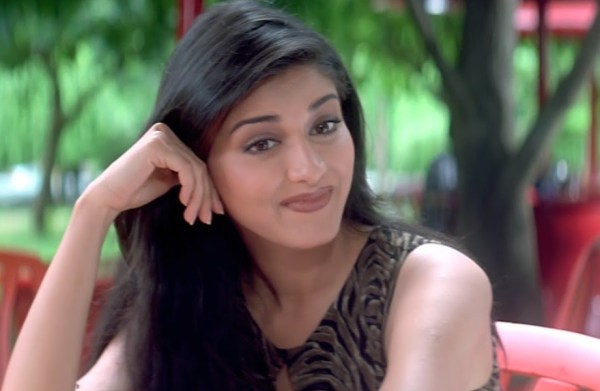
John Matthew Matthan’s 1999 cop thriller Sarfarosh was way ahead of its time. The grit and grime in Aamir Khan’s character of Ajay Singh Rathod is in the same zone as the no-nonsense investigators in the best streaming shows today. Its political astuteness is also as apt as the most layered police procedurals on OTT. While watching another such crime thriller, Raakh, on Prime Video India, I couldn’t believe how starkly different roles Sonali Bendre played in both the projects. Of course, it’s a testament to her range as a performer, but also speaks volumes of Bollywood’s tendency in the 1990s to paint its leading ladies in candy-coated colours without exploiting the depth they always had.
Rising from the Raakh
No wonder that Sonali said she was reduced to “comic relief” in Sarfarosh. While she didn’t completely make a fool of herself with her ceaseless “don’t mind” chatter, the heavy lifting was reserved for Aamir and Naseeruddin Shah. Even Surekha Sikri had more impact in her cameo as the mother of Sultan.
It was pretty much the same case with Mahesh Bhatt’s Zakhm (1998) the year before, where she served as just a sounding board for Ajay Devgn’s character. Even though he won a National Award for his performance, the film truly belonged to Kunal Kemmu (then a child artist), Pooja Bhatt, and even Nagarjuna. It’s a pity that Safarosh and Zakhm, the two films mentioned in shining letters in Sonali’s filmography, did gross disservice to her talent. In fact, she never even got the chance to showcase her acting chops because she was running from one vacant blockbuster to another for leading lady duties.
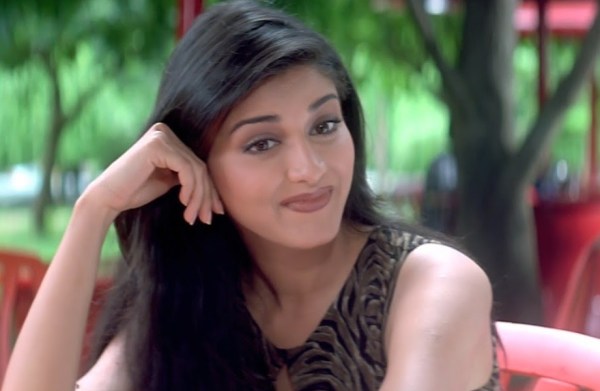 Sonali Bendre in Sarfarosh.
Which is why it’s not wrong to say she made more of a mark within a short role in one of her last Hindi films, Nikkhil Advani’s 2003 romantic comedy Kal Ho Naa Ho, where she played the doctor of Shah Rukh Khan’s protagonist Aman. By investing more in his treatment than him, and stomping her feet when he wouldn’t take her seriously, she asked him to stay back and fight when contrary to popular opinion, all Aman wanted to do was take a flight.
So, it’s no surprise that actors like Sonali don’t make a ‘comeback’ in Bollywood after tying the knot or becoming a mother. That’s because they’re victims of a so-called creative industry that doesn’t know not only what to do with them beyond a certain age (30 back then), but also is clueless about what to do with them even when they’re younger.
Sonali returned to acting only almost two decades years after Kal Ho Naa Ho with Vinay Waikul’s newsroom drama The Broken News on ZEE5 in 2022. What had changed? Firstly, streaming had entered India. Long-form stories by lesser known creators and with fresher faces were being told, consumed, and appreciated. Secondly, Sonali had undergone a drastic physical, mental, and spiritual metamorphosis herself, having recovered from stage 4 metastatic cancer, diagnosed in 2018.
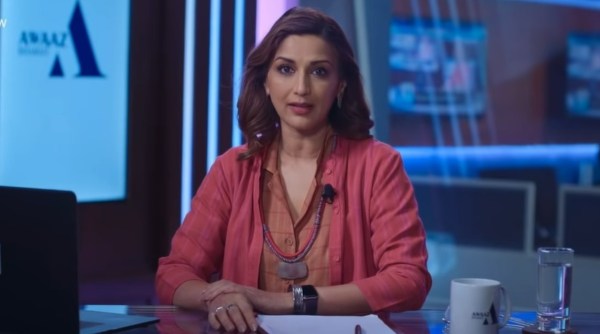 Sonali Bendre plays an editor-in-chief in The Broken News.
Having found a new lease of life by becoming cancer-free in 2021, Sonali didn’t want to let her rebirth go waste. So, she approached The Broken News with a newfound vigour, playing Ameena Qureshi, the editor-in-chief of a neutral, thus struggling, news channel. She went beyond the b*tchy lady boss stereotype that female actors have been restricted to all this while (think Kitu Gidwani in Fashion and Bipasha Basu in Corporate), and struck that fine line between authority and vulnerability. She was firm, but never as unhinged and aggressive as Jaideep Ahlawat’s character. She was also proud of her job, but never lost sight of her objectivity like Radha (Shriya Pilgaonkar).
Story continues below this ad
Similarly, when you watch her in Raakh, you see Sonali Bendre shed another stereotype — the hapless mother. When the dead bodies of her kids are carried to her home, she insists on uncovering their faces, although her husband (Aamir Bashir) has already recognized them. As soon as she sees them, she rushes to the adjacent room (one would imagine it’s to cry unconsolably like any mother would), but she just pours herself a glass of water, downs it, turns around with no expression on her face, and says, “These are not my kids. Please bring them back. You promised.”
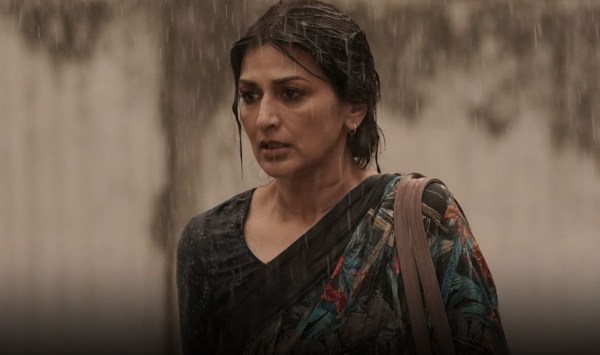 Sonali Bendre in Raakh.
A schoolteacher, she goes about her job from the very next day. To make matters worse, her kids studied in the same school. But she remains decidedly objective and lifeless, until she’s forced to return home by the principal, worried about her mental health. Her denial is not a steely resolve — but practical and matter-of-fact. In the scene, when she finally snaps out of that state, the cries that come out of her are as ironically guttural as labour pain.
Madhuri is just having fun
Sonali’s contemporary Madhuri Dixit is also reinventing herself on streaming, but she’s just having fun. Of course, she’s been a symbol of joy and celebration, having made India dance to songs like “Ek Do Teen” to “Aaja Nachle”. But now, it feels like when she dances, it’s a form of self-care instead of servicing the gaze of gawking men. Even when she danced to “Choli Ke Peeche” in Khal Nayak, she insisted on her agency to give away her heart to someone who loves her instead of those who lust her. But the song was dubbed a vulgar track because of the male gaze that’s inextricably conjoined with it.
It was interesting to see Madhuri enter the world of streaming with The Fame Game in 2022, in which she, a leading actor, plots her own disappearance because she wants to live away from the arclights. That’s something she did IRL, quitting her career at its peak to relocate to Denver with her husband Shriram Nene in the early 2000s. “That’s when I actually started living. I had no life before marriage. I was only working,” she told SCREEN recently.
Story continues below this ad
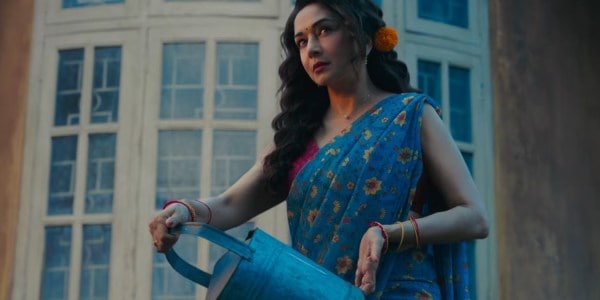 Madhuri Dixit as Rekha in Maa Behen.
Madhuri brings those lived-in experience to screen now, as she plays characters who are everyday, yet as interesting as larger-than-life. Whether it’s playing a lesbian in Maja Ma (2022), a sans-makeup serial killer in Mrs Deshpande this year, or most recently, a sleeveless blouse-clad mother in Maa Behen, who’s more rebellious and out-there than even her millennial and Gen-Z daughters. She invokes the superstar within when she enters the narrative, with “Dhak Dhak” playing in the background, but leaves the complicit audience second-guessing their gaze by the end of the film.
She’s also a house on fire when she bickers with her onscreen daughters, played by Triptii Dimri and Dharna Durga. It’s a pity that she seldom got the chance to enjoy such well-rounded arcs with her female co-stars back in the day, whether it was that one scene and song with Aishwarya Rai in Devdas (2004) or “The Dance of Envy” with Karisma Kapoor in Dil To Pagal Hai (1997). But now, unlike the ’90s, female actors are no longer pitted against each other, also because they’ve all lived a life that tells them they know better.
Karisma’s diverse choices
Karisma’s choices on streaming have been sparse, but interesting nonetheless as well. In Ekta Kapoor’s Mentalhood (2020), she played a woman frustrated with motherhood, and finding her tribe in fellow moms who crave something deeper than their domesticated roles. In Homi Adajania’s Murder Mubarak (2024), she was constantly drawn to streaks of (mellow-)drama and shards of light as a has-been actor — only to reveal a dark past at the end. But in her latest series Brown on ZEE5, she completely embraces the darkness. Having lost her partner and unborn child, she finds herself in a loop of smoking, drinking, and pill-popping fits — a role that would dampen even her least glamorous turns yet, like in Fiza (2000) or Shakti: The Power (2002).
Also Read: Once champions of indie films, OTT giants are now acquiring them for as less as Rs 30 lakh
Story continues below this ad
It’s a travesty that Bollywood hasn’t been able to catch up with streaming in terms of the roles it has in store for its leading ladies. All these women, and several more, have galvanized the silver screen and made it richer for decades. To reduce them to character roles or make them play mother to the male co-stars they were once paired with is a gross disservice to their storied contributions. By showcasing their commendable turns and returns on streaming, these 50-year-plus female actors have proved yet again they were always in charge of their narrative — even when they said no. They may have chosen to settle down at their peak, but refused to settle even on the cusp of their twilight.