
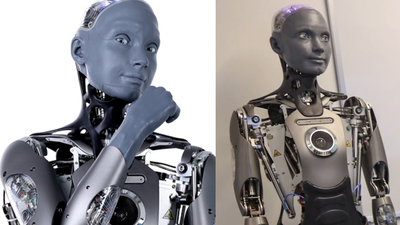
A charter school network in San Diego is testing what could become one of the most ambitious experiments yet in AI-assisted education. Altus Schools has invested $500,000 in two Ameca humanoid robots that use ChatGPT to interact with students through natural conversations and lifelike facial expressions. The robots are designed to support teachers by serving as classroom assistants, wellness coaches, college planners and translators rather than replacing human educators. School leaders say the pilot will help them understand whether “physical AI” can improve student engagement, personalise learning and prepare young people for a future in which artificial intelligence is expected to play an increasingly important role. The initiative has attracted global attention while also raising questions about cost, effectiveness and ethics.The project has been launched by Altus Schools, a California-based charter school network that provides personalised education to thousands of students across San Diego County. The organisation serves learners with diverse needs, including those recovering academic credits, balancing work or family responsibilities, experiencing homelessness or living with disabilities.School leaders describe the initiative as a research project aimed at understanding how physically present AI can support teaching and learning. Rather than evaluating another chatbot on a computer screen, they want to study whether students interact differently with a life-sized humanoid capable of speaking, making eye contact and responding with facial expressions.
Meet the ChatGPT humanoid robots entering classrooms
The robots purchased by Altus are Ameca, developed by UK robotics company Engineered Arts, which specialises in creating robots for human interaction and research.Standing approximately 6 feet 2 inches (1.88 metres) tall, Ameca is designed to appear approachable and expressive. It features a realistic grey silicone face capable of smiling, blinking, raising its eyebrows and displaying a range of emotions. Cameras allow it to maintain eye contact during conversations, while microphones and speakers enable natural voice interactions. Its transparent head reveals internal electronics, and advanced motors in the neck, shoulders, arms and hands produce smooth, human-like movements.Unlike industrial robots built for manufacturing, Ameca was designed primarily for communication and social interaction, making it suitable for education, research and public demonstrations.Although often described as a ChatGPT-powered robot, Ameca itself was created by Engineered Arts, while its conversational abilities come from large language models such as ChatGPT.This combination allows the robot to answer follow-up questions, explain complex topics in simple language, adapt conversations based on student responses and engage in discussions across a wide variety of subjects. Its expressive gestures and facial movements are intended to make these interactions feel more natural than conversations with a text-based chatbot.
Four specialised personas in one robot
The robots can instantly switch between four different AI personas, allowing them to support students in different situations.Sage acts as a classroom tutor, helping explain lessons, answer questions and reinforce concepts taught by teachers.Remi functions as a wellness coach, encouraging conversations about emotional wellbeing, healthy habits and managing everyday challenges. It is designed to complement, not replace, professional counsellors.Ari serves as a college and career planner by helping students explore higher education options, scholarships, career pathways and future goals.Lexi works as a multilingual translator, helping bridge communication gaps between students, families and school staff who speak different languages.
Early classroom demonstrations revealed both promise and challenges
The robots have already participated in trial classroom sessions, offering an early glimpse of how they might fit into education.During one demonstration, students asked the robot to role-play as inventor Nikola Tesla while discussing scientific ideas. Although the activity demonstrated the robot’s ability to engage in conversation and respond creatively, it also exposed the technology’s current limitations. At times, the robot interrupted students, spoke too quickly and required questions to be repeated before producing useful responses.Following the demonstration, school officials openly acknowledged that the interaction was “clunky”, describing the programme as an ongoing learning process for both educators and developers.
The idea behind ‘physical AI’
Unlike most schools experimenting with AI through laptops or tablets, Altus is exploring the concept of physical AI, also known as embodied AI. Researchers in this field study whether people communicate differently with machines that have a physical presence.A humanoid robot can use facial expressions, gestures, eye contact and body language alongside spoken responses, creating interactions that may feel more engaging and intuitive than text-based conversations. Researchers hope this could encourage greater participation, particularly among students who benefit from one-to-one support. However, whether embodied AI leads to measurable improvements in academic performance remains an open question.
Safeguards have been built into the programme
Recognising concerns about artificial intelligence in education, Altus Schools says several safeguards are in place.Students are never left alone with the robots, and every interaction is supervised by school staff. According to school officials, conversations are not permanently stored, with memory cleared after each session. Students are also encouraged to verify information provided by the AI because generative AI systems can occasionally produce inaccurate or fabricated responses, commonly known as AI hallucinations.Human teachers remain responsible for instruction, assessment and student welfare throughout the programme.
Experts urge caution despite the excitement
The project has generated enthusiasm among technology supporters but also concern from education researchers.Some experts argue there is currently limited independent evidence showing that humanoid robots improve learning outcomes compared with existing educational technologies. Others question whether expensive AI systems offer sufficient educational value to justify their cost, particularly when schools face ongoing shortages of teachers and resources.Privacy specialists have also highlighted the importance of protecting student data whenever AI systems are used in educational settings. Researchers further warn that students should continue developing critical thinking and problem-solving skills instead of relying too heavily on AI-generated answers.
What this could mean for the future of education
The San Diego initiative reflects a broader global shift as schools, universities and education companies increasingly explore generative AI for tutoring, lesson planning, accessibility, language translation and administrative support.Whether humanoid robots eventually become a common feature in classrooms will depend on the results of pilot programmes such as this one. Their high cost, evolving technology and unanswered ethical questions mean widespread adoption is still far from certain.For now, the Altus Schools project represents an early experiment in combining artificial intelligence with human teaching. If successful, it could help shape how future classrooms balance the efficiency of AI with the experience, empathy and judgement that only educators can provide.