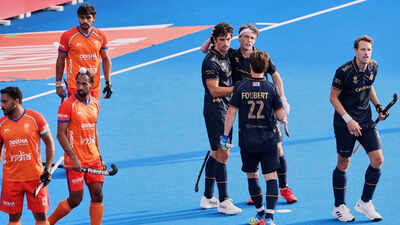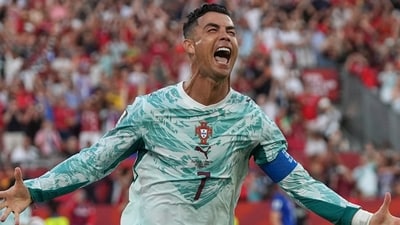
It really doesn’t matter how you try to win a World Cup but there also can be no doubt about the assertiveness with which Spain thrashed Austria, or the lack of it with which Portugal scraped to a win against Croatia in the last-32 matches on Thursday. Looking increasingly comfortable in its identity, Spain dismantled Austria 3-0 through patient control and sustained superiority. Portugal, on the other hand, survived a frantic 2-1 victory that demanded resilience as much as quality, requiring a stoppage time winner from Gonçalo Ramos after a contest dominated by VAR interventions, disallowed goals, missed chances, rebounds and the enduring influence of Cristiano Ronaldo.
The result is an enticing last-16 meeting between the Iberian football powerhouses that also are possibly two of the most emotionally driven sides. Emotion however won’t see Portugal advance to the last eight, going by the way Croatia pushed them back in the second half of the match. The performance reinforced the truth that Portugal have evolved beyond being solely dependent on Ronaldo, yet almost every decisive moment still gravitates towards him. It remains Portugal’s greatest strength as well as their most intriguing tactical dilemma.
The opening hour belonged almost entirely to Portugal. Bruno Fernandes dictated possession between the lines, Rafael Leao repeatedly isolated defenders in wide areas, while Joao Cancelo’s advanced positioning Croatia spent long periods confined to their own defensive third. What must keep Portugal concerned though is how that domination translated to almost nothing.
Fernandes was denied twice early, Renato Veiga headed over from close, and Ronaldo himself endured a frustrating first half in which he fell short of quite a few promising crosses. Croatia’s response underlined how quickly this kind of wastefulness is punished. The introduction of Igor Matanovic after half-time gave Croatia more teeth upfront, and with Mateo Kovacic carrying the ball through midfield instead of chasing it, Portugal soon saw their domination challenged.
Ivan Perisic’s opener wasn’t merely the product of an excellent cross from Josip Stanisic but of Croatia finally finding ways to bypass Portugal’s aggressive but still disorganised press. Predictably, Portugal’s response again centred around Ronaldo. His finest contribution—bringing Cancelo’s cross under control before flipping it past a defender and finishing calmly beyond Croatia goalkeeper Dominic Livakovic—Ronaldo briefly produced a magical moment. But a VAR intervention, correctly identifying the slimmest of off-sides, denied him what could have surely been a contender for goal of the tournament.
It also encapsulated the margins now defining what is surely the business end of Ronaldo’s career. His first touch, or even the final, remains intelligent enough to outfox the best defenders. But it’s also clear that his pace has lost the edge that used to keep Ronaldo a fraction ahead. What was encouraging though is how Portugal kept him as an emotional reference point, and how Ronaldo repaid that faith when called for. When Nikola Vlasic wrestled Veiga to the ground during a goalmouth melee, Ronaldo stepped up to take the penalty with characteristic certainty and a bit of a run-up. His first knockout stage goal was devoid of spectacle but rich in significance.
The closing stages nevertheless exposed lingering questions about Portugal’s defensive structure as Croatia repeatedly found space through the midfield. Kovacic struck the post before forcing Diego Costa into another outstanding save, while Luka Sucic also had a goal ruled out for off-side. This was before the nailbiting last minute drama where Gvardiol seemed to knock in the equaliser but it was not given since Pasalic was in an off-side when the ball ricocheted from him. Beyond that, throughout the last 15 minutes, Portugal looked vulnerable whenever the game became transitional rather than controlled.
That vulnerability makes Spain such an intriguing opponent. Where Portugal got embroiled into the chaos, Spain surgically removed it without ever appearing to accelerate beyond their natural rhythm. They created chances without forcing attacks, and defended by ensuring Austria rarely had the ball long enough to threaten consistently. Mikel Oyarzabal’s twin strikes were simply the finishing touches on another polished collective display.
Lamine Yamal played himself well, stretching Austria with direct intrusions rather than elaborate combinations, while Rodri quietly controlled the tempo behind the game’s more obvious attacking narrative. Pedro Porro’s goal reflected Spain’s broader superiority that really made it a mismatch. There were no dramatic recoveries, no emotional swings and no dependence on any individual inspiration. Spain simply looked like a team entirely comfortable with themselves.
That distinction may ultimately define the next match. Portugal rely on players capable of altering games with moments of individual brilliance. Fernandes remains among the most inventive creators and Ronaldo, despite being 41, continues to command attention inside the penalty area. But Spain have shown they are wired differently by focusing on calm control. Austria resisted their sustained pressure for 35 minutes before caving in. Croatia resisted Portugal for long spells but continually found opportunities to counter. Against Spain, they may not find those.