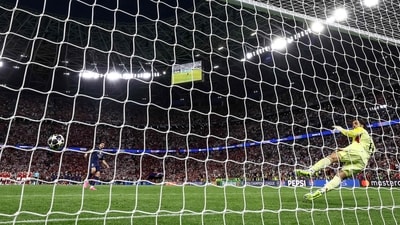
FIFA has now reached the serious half of the world cup, the knockout stage, where matches can no longer end in a draw. In group stages if matches ended in a draw, both teams were given a point. Whereas now, extra time is given first and if they are still tied it proceeds to penalty shootouts.
Extra time and penalties in soccer are used to determine the winner, despite scores being level at the end of regulation time.
What is extra time?
At the end of 90 minutes if both teams are still tied, they are granted extra minutes that could over 30 minutes divided into two halves of 15 minutes each. There is a short break in between the two halves and any time wasted in substitution or injury is also added at the end of the 15 minutes, just like in regulation time.
If the scores are still level after extra-time, the teams proceed to penalty shootouts to determine the winner. There are five sets of penalties for each team, with infinite number of rounds till a winner is determined.
Also Read I World Cup 2026: Focus on big stars, rise of Africa in knockouts
The final nail biter, Penalties.
Penalties are the final shot at redemption for either team to decide who moves forward in the tournament. A coin is tossed to choose who goes first at taking the penalties, which is then alternated.
5 players are selected to attempt at shooting; it is a one-on-one faceoff between the players and the goalkeeper. Each team gets 5 shots at scoring a goal with a designated goal keeper. The team with the highest goals at the end of the penalties wins.
If by the end of the penalties, they are both still level then the sudden death takes place: if one team scores and the other misses, the scoring team wins the soccer game.
Also Read I Jurgen Klopp reacts to Germany job speculation after shock World Cup exit
The world cup final has gone to penalties on seven occasions, the most recent being the 2022 finals where Argentina beat France at the penalties after a long-awaited wait for Lionel Messi to bring home the victory.