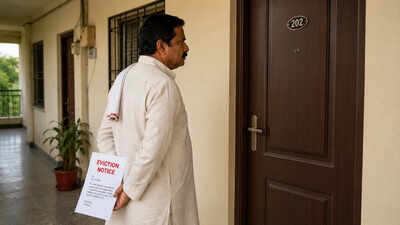
Problems related to tenancy do not just affect the tenants, but landlords as well. In certain cases the tenant may refuse to pay rent, hold the property beyond the agreed period, establish claim on the premise upon owner’s death, or rent it out to another person without the landlord’s permission.The Model Tenancy Act, 2021, brings out the regulations for such circumstances, with chapter five of the Act dealing with eviction and recovery of possession of premises by the landlord.Section 21(1) makes it clear that a tenant cannot be evicted during the period of the tenancy agreement except in accordance with the provisions of the Act or as otherwise agreed in writing by the landlord and the tenant.A landlord must approach the Rent Court for an eviction order and cannot resort to measures such as forcibly removing the tenant or disconnecting essential services.
Grounds for eviction
Under Section 21(2), a landlord may seek eviction before the Rent Court on several grounds.If the tenant refuses to pay the agreed rent or fails to clear other dues for two consecutive months even after receiving a demand notice, the landlord may seek eviction. However, if the tenant pays all outstanding dues, including applicable interest, within one month of receiving the notice, the Rent Court cannot order eviction on that ground. Notably, this protection is available only once during the tenancy.A landlord can also seek eviction from the rent court if the tenant sublets the property without their written consent, uses the premise for illegal purposes, encroaches additional spaces, or causes public nuisance.Additionally, a tenant who carries out structural changes or erects permanent structures without the landlord’s written consent can also face eviction.In case of the landlord’s death, section 22 provides that the legal heirs may apply to the Rent Court for eviction if they have a bona fide requirement of the rented premises.
Penalty for refusing to vacate
Under section 23 of the Act, a tenant who refuses to vacate the property must pay the landlord twice the monthly rent for the first two months and four times thereafter, until possession is handed back to them.If eviction proceedings are pending on grounds other than rent default, the landlord may request the Rent Court to direct the tenant to continue paying rent and other charges during the pendency of the case, under section 25. This prevents tenants from remaining in occupation without making payments while the dispute is being decided.