
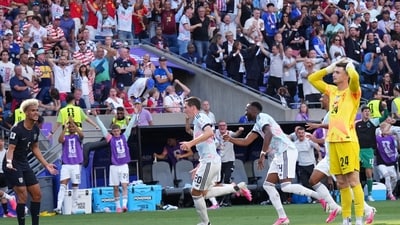
The dream did not merely end for the United States. It was broken open, stripped of its noise, and left exposed under the lights of Seattle.
On a night built for American defiance, Belgium delivered cold European judgment. The scoreline read 4-1, but the damage felt heavier than that. This was not just a defeat in a knockout match. This was a home World Cup campaign collapsing in front of its own people, with hope briefly rising, then being crushed almost immediately by a Belgium side that grew more ruthless with every American mistake.
For all the emotion around the occasion, the United States never truly looked in control of it. They had the crowd, they had the stage, they had the sense of unfinished business. But Belgium had the sharper mind, the calmer feet, and, most importantly, Charles De Ketelaere – the man who turned a tense Round of 16 night into a statement of Belgian authority.
Belgium turn American hope into a brutal lesson
Belgium struck early, and with it came the first crack in the American belief. De Ketelaere’s opener was not just a goal; it was a warning. The United States had started with energy, but Belgium carried the threat in fewer touches. Every time they moved forward, there was a sense of structure. Every American recovery felt urgent. Every Belgian attack felt designed.
Then came the moment that briefly changed the mood. Malik Tillman, with a brilliant free-kick, dragged the United States level and shook Seattle back to life. For a few seconds, perhaps a few minutes, the stadium believed again. The noise swelled. The old romance of knockout football returned. A host nation, wounded but alive, had found its way back.
Belgium killed that feeling almost instantly.
De Ketelaere rose again, this time to restore Belgium’s lead and puncture whatever emotional force Tillman’s equaliser had created. That was the turning point. The United States were out of the game mathematically, because they were out of rhythm emotionally. The equaliser should have been a platform. Instead, it became a pause before another Belgian blow.
From there, the match became increasingly cruel for the hosts. The United States tried to push, tried to force the tempo, tried to bend the night back towards them. But their play grew anxious. Passes were rushed. Defensive distances opened. Belgium, smelling panic, became colder.
Hans Vanaken’s goal deepened the humiliation. It came from the kind of defensive confusion that knockout football rarely forgives – a moment that made the American back line look trapped between hesitation and horror. Belgium did not need to produce art for every goal. Sometimes, they simply waited for the mistake, stepped forward, and accepted the gift.
By the time Romelu Lukaku added the fourth, the contest had lost its suspense. It had become a procession. Belgium were no longer surviving American pressure; they were strolling through the wreckage of American ambition.
For Mauricio Pochettino’s side, this will hurt because there had been enough promise to dream bigger. The United States had entered the knockouts believing this could be the tournament where they finally pushed beyond familiar limits. Instead, they met a Belgium team that exposed the gap between progress and pedigree.
Belgium, meanwhile, suddenly look dangerous. They were not perfect, but they were decisive. De Ketelaere gave them elegance and edge, Vanaken gave them control, and Lukaku gave them the finishing stamp of a team that knows how to punish weakness.
The United States leave their own World Cup with applause, regret and a brutal question: when the biggest night arrived, were they brave enough, or just hopeful?
Belgium leave with something far more valuable — momentum, conviction, and a quarterfinal against Spain waiting like the next great test.