At first glance, these appear to be separate stories.
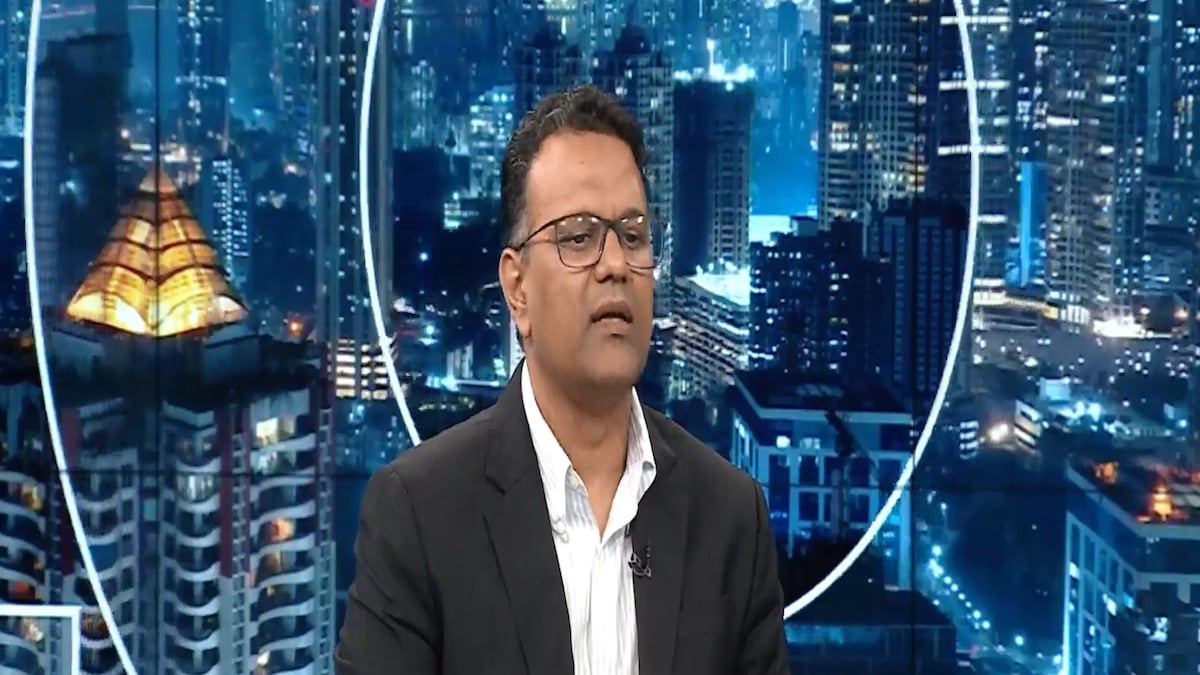
However, according to Ravi Dharamshi, Founder and Chief Investment Officer at ValueQuest Investment Advisors, they may all be part of a much larger structural shift that could shape global investment for years to come.
His argument is that the world is not simply experiencing an AI boom. Instead, it may be entering a “capital allocation supercycle”—a prolonged period of elevated investment in physical infrastructure across multiple industries and geographies.
What is a capital allocation supercycle?
A capital allocation supercycle refers to an extended period during which governments and businesses invest heavily in long-term assets such as factories, power infrastructure, semiconductor plants, transport networks and manufacturing capacity. Unlike a typical business cycle, which often lasts a few years, a supercycle can extend for a decade or more because it is driven by structural changes in the global economy.
According to ValueQuest, the current cycle is unusual because several long-term investment themes are unfolding simultaneously, potentially reinforcing one another rather than competing for capital.
Why has the world changed?
For nearly three decades after the 1990s, businesses focused on efficiency.
Global supply chains were designed to minimise costs, inventories were kept lean, manufacturing shifted to the lowest-cost locations, and companies increasingly embraced asset-light business models.
That approach delivered lower costs and higher profitability for years. However, a series of global shocks exposed its vulnerabilities.
The COVID-19 pandemic disrupted global supply chains, while the Russia-Ukraine conflict highlighted the risks of relying on imported energy. Shipping disruptions and semiconductor shortages demonstrated how a single bottleneck could ripple across the global economy. More recently, tensions in West Asia have once again raised concerns about energy security.
Together, these events have prompted governments and corporations to rethink decades of globalisation.
“What was encouraged over the last 30 years was efficiency and asset-light business models,” Dharamshi said in an interview with CNBC-TV18.
“But now the world is realising that it needs to build in resilience, redundancy, energy security, and supply-chain security.”
Instead of optimising solely for cost, countries are increasingly investing in domestic manufacturing, critical infrastructure and strategic industries to reduce dependence on external suppliers.
Why AI is only part of the story
Much of the current investment narrative revolves around AI.
Technology companies continue to invest aggressively in data centers, chips and computing infrastructure, leading many investors to question whether this pace of spending can be sustained.
Dharamshi argues that focusing solely on AI misses the broader picture.
He believes AI should be viewed as one catalyst within a much larger industrial investment cycle rather than as the cycle itself.
The launch of ChatGPT in late 2022 demonstrated the commercial potential of generative AI, accelerating demand for computing infrastructure. But deploying AI also requires substantial investments in power generation, electricity transmission, cooling systems, networking equipment, industrial automation and advanced manufacturing.
“It is not only an AI-led capex cycle,” Dharamshi said.
“It is not something that will probably end in the next couple of years.”
According to Dharamshi, AI has accelerated investments that governments and companies were already being compelled to make to strengthen infrastructure and improve economic resilience.
Why economic sovereignty has become a priority
A central theme in ValueQuest’s report is the growing importance of economic sovereignty.
Countries increasingly want greater control over strategic industries, whether that involves semiconductors, defence manufacturing, energy supplies or critical minerals.
The pandemic exposed vulnerabilities in pharmaceutical and industrial supply chains, while trade disputes demonstrated how countries with dominant positions in critical materials could use them as strategic advantages.
According to Dharamshi, these developments have fundamentally changed how governments think about capital allocation.
“Everything kept pointing to the fact that there are certain things where you cannot afford to be vulnerable to other nations.”
That, he argues, is driving fresh investment across defence, energy, manufacturing and technology.
Why this investment cycle could last longer
Historically, global capital expenditure has averaged around 23-24% of world GDP.
According to ValueQuest, the current cycle could push that figure higher because multiple structural investment themes are unfolding at the same time.
Unlike previous investment booms that were largely driven by a single trend—such as China’s industrialisation during the 2000s—the firm argues that today’s spending is being supported simultaneously by AI infrastructure, defence modernisation, semiconductor manufacturing, electricity networks, energy transition and industrial reshoring.
Dharamshi believes this combination could make the current cycle broader and potentially more durable than previous capital expenditure booms.
Rather than viewing AI spending in isolation, he argues that investors should monitor whether infrastructure demand, industrial orders and supply-chain bottlenecks continue to support sustained capital investment.
Why India could benefit
According to ValueQuest, India is well positioned to benefit if this global investment cycle gathers pace.
Over the past few years, public infrastructure spending has increased, banks have strengthened their balance sheets and corporate leverage has declined. What has been missing, Dharamshi argues, is a sustained private-sector capital expenditure cycle.
He believes global demand for AI infrastructure, power equipment and industrial manufacturing could provide that trigger.
If India attracts a larger share of global data center investment, substantial spending would also be required on electricity generation, transmission networks, transformers, switchgear, cables, cooling systems and other industrial equipment.
Based on these infrastructure requirements, Dharamshi estimates that the opportunity could amount to around ₹20 lakh crore over the next five years, creating significant demand for domestic capital goods manufacturers and engineering companies.
Why investors may need to look beyond AI stocks
One of ValueQuest’s key conclusions is that investors may be looking at these themes too narrowly.
AI companies, defence manufacturers, renewable energy businesses and data center operators are often analysed as separate sectors.
However, they all depend on much of the same underlying physical infrastructure.
Power transmission equipment, transformers, switchgear, industrial automation, cables, substations, cooling systems and specialised engineering products are required regardless of whether demand comes from AI, defence or renewable energy projects.
That has led ValueQuest to favour what is commonly described as a “picks-and-shovels” approach—companies supplying the equipment that enables multiple investment themes rather than businesses exposed to only one end market.
The report also cautions that rapid demand growth does not automatically translate into superior shareholder returns. Sectors with low barriers to entry may face intense competition and weaker pricing power, while businesses with specialised technology, manufacturing expertise or limited competition could be better placed to sustain profitability.
What should investors watch?
According to Dharamshi, investors should focus less on short-term valuation debates and more on indicators that typically reveal where a capital investment cycle stands.
These include industrial order books, capacity utilisation, profit margins and supply-chain bottlenecks.
If demand continues to outstrip supply across critical infrastructure segments, companies supplying the underlying equipment could continue to benefit from pricing power and earnings growth.
Could the thesis be wrong?
Not all investors are convinced that today’s investment surge will evolve into a prolonged supercycle.
Some believe AI infrastructure spending could moderate if demand fails to justify the current pace of capital expenditure. Others argue that governments may eventually face fiscal constraints that limit long-term infrastructure spending.
Whether the current investment boom develops into a sustained capital allocation supercycle will ultimately depend on factors such as global economic growth, corporate profitability, technological adoption and continued policy support.
If ValueQuest’s thesis proves correct, however, today’s AI boom could ultimately be remembered not as a standalone technology cycle, but as the catalyst that accelerated a much broader rebuilding of the world’s industrial foundations.