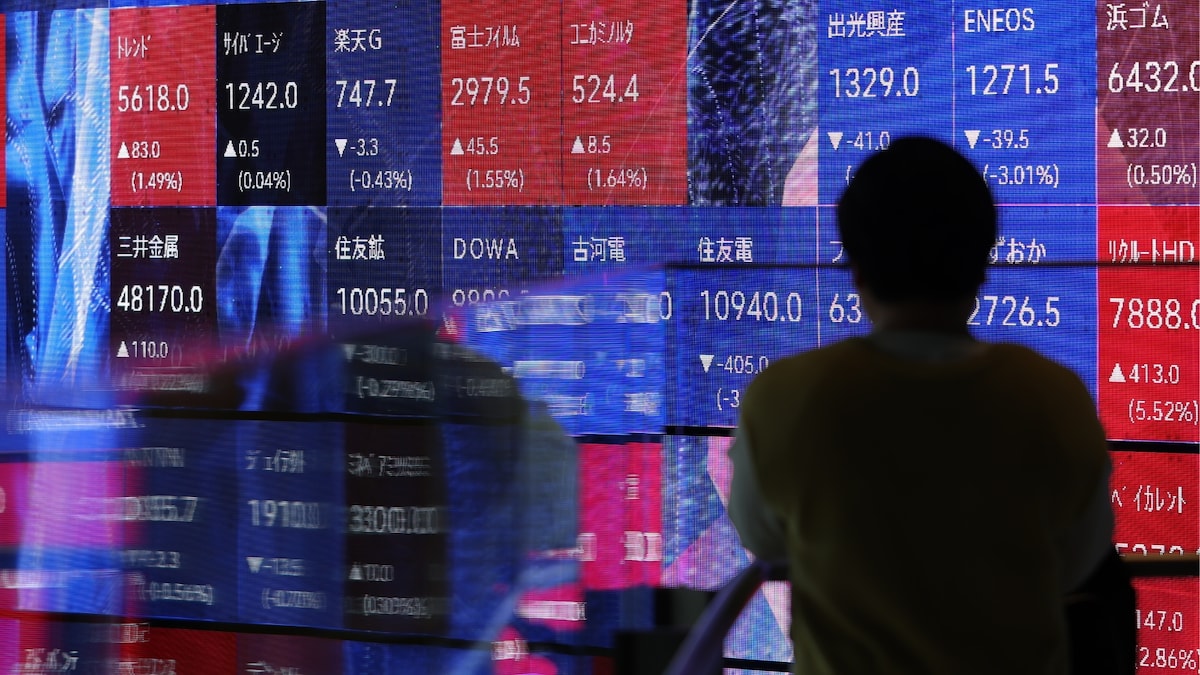
The shift pushed the Kospi Index toward a technical bear market after a rally that made it the world’s best-performing major benchmark this year. At the same time, the Hang Seng China Enterprises Index climbed as much as 3.8%, its biggest gain since April 2025.
For much of this year, investors crowded into South Korea and Taiwan, betting that an explosion in AI demand would benefit chipmakers such as SK Hynix Inc. and Samsung Electronics Co. But as the rally extends and questions emerge over whether the spending boom can be sustained, money is beginning to rotate into one of Asia’s most unloved markets. Alibaba Group Holding Ltd. jumped more than 10% in Hong Kong and Tencent Holdings Ltd. rose over 4%.
Kospi Declines
In Korea, the Kospi dropped as much as 6.1%, taking its drop from last month’s all-time high to about 20%. SK Hynix slid as much as 5%, while Samsung Electronics fell 6.9%. Taiwan’s Taiex gauge, another big winner from this year’s AI trade, fluctuated.
Korea’s outsized reliance on the chipmakers has left it especially vulnerable when sentiment turns. Leveraged exchange‑traded funds, which magnify moves in both directions, have added to the market’s volatility. Chip stocks continued to fall despite Samsung Electronics’ 19-fold surge in quarterly profit released earlier this week, highlighting investors’ growing scepticism that earnings growth can keep pace with soaring expectations for the AI buildout.
“A lot of this increase in volatility is driven by fundamental uncertainty,” said Ian Samson, a portfolio manager at Fidelity International. “We are seeing real, huge demand for all kinds of semiconductors driven by AI – but this is really just being driven by around $1 trillion of capex controlled by a handful of huge tech companies,” which creates downside risk if this chip spending proves unsustainable, he added.
Over the past few weeks, the Kospi has swung sharply as investors parsed every AI industry development to test the rally’s durability. The Kospi was up about 116% this year through its peak but has now pared that advance to about 72%. It’s still the world’s best-performing benchmark.
Hong Kong, by contrast, has spent much of the year out of favour as concerns over China’s economy and e-commerce earnings pushed several major benchmarks into bear markets. Despite Wednesday’s rally, the Hang Seng Tech Index and Hang Seng China Enterprises Index remain down about 15% and 10% this year, respectively, among the world’s worst-performing equity benchmarks tracked by Bloomberg.
“The divergence in performance between China and the rest of the world has been particularly pronounced, creating compelling value opportunities in Chinese equities,” Reed Capital’s Gan added. “The likes of the Chinese major tech firms are also some of the names we are accumulating our exposures on.”
Also Read: World Cup 2026: Quarter final ticket prices drop nearly 60% after USA, Portugal exit