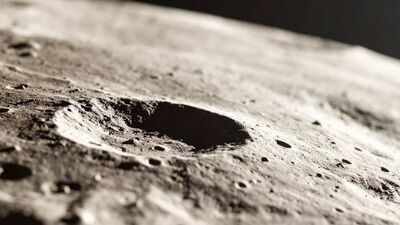
As humanity prepares for a new era of space exploration, NASA and other space agencies are planning ambitious missions to Mars and other distant worlds that aim to bring back valuable rock, soil and ice samples. As these missions move closer to reality, some scientists believe a future NASA base on the Moon should include a specialised biocontainment facility where returned samples can be safely examined before they are transported to Earth, minimising any potential biological risk.In a study published in the journal Ambio, researchers have suggested that the safest place to examine such samples may be the Moon before they are ever brought to Earth. In the study, Frederick I. Moxley, Director of Strategic Threat Analysis and Research Laboratories, and Anthony Ricciardi, James McGill Professor of Biology and Director of the Bieler School of Environment at McGill University, propose that future extraterrestrial samples should first be transported to a secure lunar biocontainment facility instead of being brought directly to Earth. According to the researchers, such a system would allow scientists to carefully examine any unknown biological material while significantly reducing the risk of contaminating Earth’s biosphere. The researchers emphasise that there is currently no evidence that alien life exists, nor do they suggest that future missions are likely to return dangerous organisms. Rather, they argue that as space exploration advances, preparing for even highly unlikely biological risks is a sensible and scientifically responsible precaution.
A lunar laboratory before Earth
According to the study, several future missions aim to collect samples from environments that may have once supported life or still possess conditions favourable for microbial organisms. If samples from these worlds are ever found to contain unfamiliar microorganisms or biologically active compounds, they should not be transported directly to laboratories on Earth. Instead, spacecraft should deliver them to a secure research facility on the Moon, where they can undergo detailed analysis under strict containment conditions. According to the researchers, the Moon offers a practical balance between accessibility and isolation. It is close enough to Earth to allow regular transportation of personnel and equipment but distant enough that any accidental release of unknown biological material would remain separated from Earth’s ecosystems. This additional layer of protection could significantly reduce the consequences of an unforeseen contamination event. The proposed lunar laboratory would function as an advanced quarantine centre equipped with specialised containment systems, robotic handling technologies and scientific instruments capable of analysing extraterrestrial materials before they are cleared for transport to Earth.
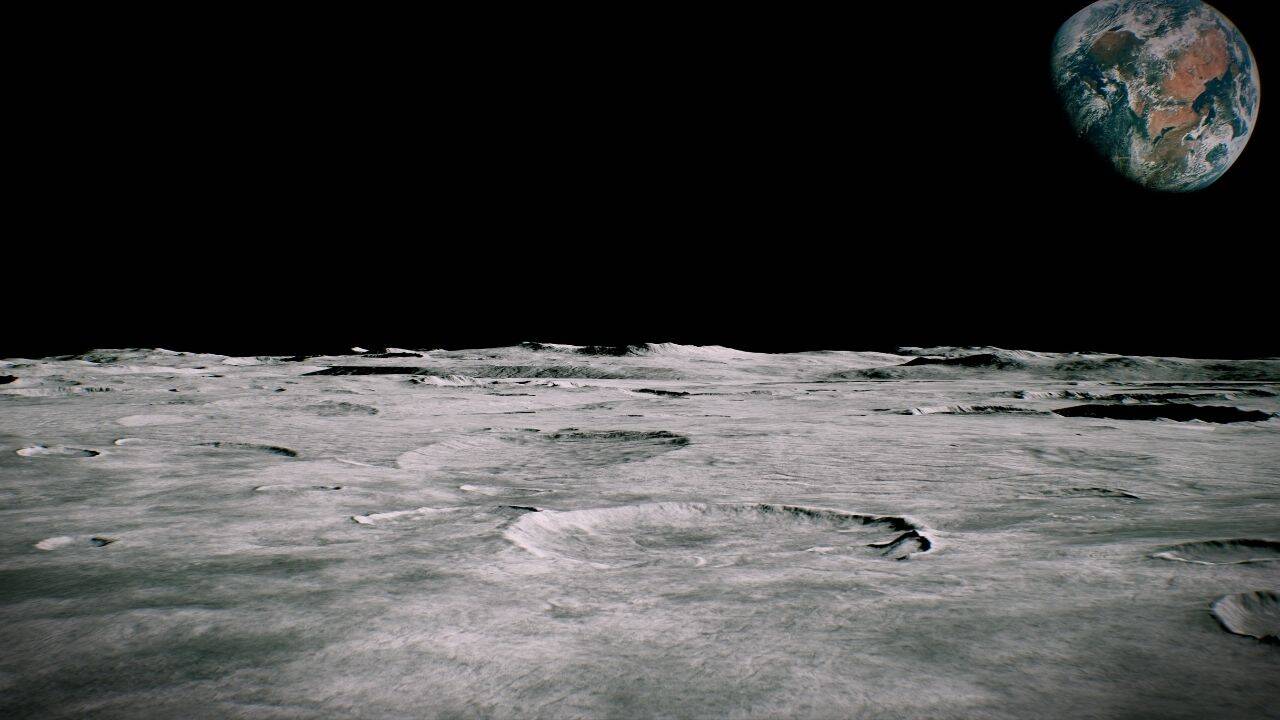
Image Credit: Canva
Why scientists believe caution is necessary
The proposal is based on the long-established principle of planetary protection, which aims to prevent biological contamination between Earth and other celestial bodies. While international space agencies already sterilise spacecraft to avoid carrying Earth microbes to other planets, Moxley and Ricciardi argue that equal attention should be given to preventing any possible contamination in the opposite direction. One of the greatest uncertainties is that scientists cannot predict how an unfamiliar organism – or even complex biological molecules – might interact with Earth’s environment. Although the possibility of harmful extraterrestrial microbes is considered extremely low, introducing new organisms into unfamiliar ecosystems can have unpredictable ecological consequences.The researchers also discuss the possibility of what they describe as rebound contamination. This refers to a scenario in which Earth microorganisms accidentally carried to another planetary body evolve under different environmental conditions and later return to Earth through future missions. Even though such a situation remains hypothetical, the authors believe it deserves consideration as space exploration expands over the coming decades.
Preparing for future discoveries
Developing a lunar biocontainment lab would certainly pose great challenges in terms of scientific and engineering achievement. As indicated by the authors of the study, it would involve advanced containment technology, automated labs, transportation systems, and international cooperation. But they suggest that the plans for future human settlements on the Moon may serve as an opportunity to integrate the required facilities into future lunar colonies.Given the plans for more ambitious sample return missions in the years to come, the scientists think that safety standards can be developed parallel to the advancement of science. Regardless of whether signs of extraterrestrial life are discovered or not, the need to be prepared for what may happen in the future seems reasonable.