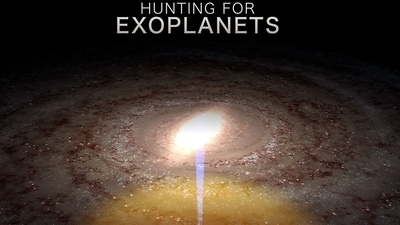
Opening thoughts. Calling all astrophiles. For the first time, NASA’s TESS (Transiting Exoplanet Survey Satellite) mission has identified a planet orbiting a distant star using a new method called microlensing that identifies potential planets as their gravity warps space-time. Unlike what NASA calls “star-hugging transiting planets” that TESS regularly reports back, this newfound world is being called a super-Jupiter, named Gaia23bra b. And it is orbiting far from its host star.
The super-Jupiter is 1.6 times Jupiter’s mass and a similar orbital distance, and it is said that discovery would be extremely unlikely for such a planet via the primary detection method TESS was designed for. Interestingly, Gaia23bra b was first potentially alerted about by the ESA’s (European Space Agency) now-retired Gaia space telescope in 2023.
“Gaia’s observations were too sparse to pick up on the planet,” said Mallory Harris, a Ph.D. candidate at the University of New Mexico, who led the study. “The TESS spacecraft happened to be monitoring the same area of the sky during the event, and its denser time coverage showed extra features in the light curve caused by a planet.”
Fun fact: Gaia23bra b is about 80 percent of the Sun’s mass, is nearly 40,000 light-years away from Earth, and far exceeds TESS’s usual search radius of about 150 light-years.
EDITOR’S MARGIN
DARK PATTERNS
There’s something to be said about dark patterns, or deceptive designs, that seem to sit at the very core of almost every interface you interact with today. Streaming platforms, anything with a subscription built in, e-commerce platforms, paywalls on websites, quick commerce apps ans so on, each of them have tricks carefully crafted to get a user to do things they otherwise didn’t intend to—buying more than they really needed to, sign up for a recurring subscription or auto payment of a bill, sneak in a hidden cost or create a false sense of urgency (“Only 2 left!”; works beautifully with the FOMO generation).
There is this rather interesting Big Brains podcast in which Marshini Chetty, Professor at the University of Chicago’s Department of Computer Science, talks about these subtle yet manipulative design choices from her standpoint as an expert in human-computer interaction.
“I think in many cases, our research and other research has shown that companies are crossing that line. There’s outright deception or there’s manipulation that is harmful to consumers,” she says, leading to the point about what happens with our data. This is a bit of a paradox, as she calls it, citing human behaviour as something that doesn’t always reflect a need for data privacy and for our information to remain secure will we consent to share it. How many times have you clicked Next or Okay on a consent notification or page just to get on with whatever it is you were doing, without reading through?
She was asked why the categorisation as manipulation and not persuasion instead, and Chetty has clear reasons why.
“The reason why it’s manipulation as opposed to persuasion is because it’s kind of hidden influence. The whole idea is you’re not consciously aware of it and you can’t easily become consciously aware of it. And some researchers in the field have tried to unpack this and say that when you’re trying to persuade someone, they’re more consciously aware of what you’re trying to do. But with manipulation and with something like a dark pattern, you don’t even know that you’re being steered in a certain way,” she explains.
Persuasion provides reasons, data, or appeals to help you make a choice. A salesperson telling you a jacket looks great is persuasion; you still choose to walk away. A dark pattern is quietly adding ‘platform fee’ or ‘open box delivery fee’ on an order, without explicit mentions or a choice to remove either.
Those deal countdowns on e-commerce platforms, for instance, are designed to get you to buy now and not carefully think through a purchase. So is the activity fabrication banner that reads something like “10 other people are looking at this item right now.” How many of you know that you can share your Amazon Prime subscription with members of your family? Chances are you didn’t, because that’s how the Prime subscription sharing and family management flow is designed in the Amazon app. They’d rather have 3 members of the family pay for their full fledged Prime subscriptions, rather than reveal this feature.
I completely agree with Chetty when she warns us that with advertisements in AI, there’s a lot more potential for things to go wrong and manipulation to occur. That’s because AI can infer a lot about you from even limited conversations with a chatbot. On e-commerce or quick commerce apps, for instance, they have an added context of your purchase history, habits and neat trends. You’re being manipulated, and it’s time you realise it. Easier said than done, though.
THE LATEST, ON NEURAL DISPATCH
TECH SPOTLIGHT
AMKETTE MOZEN AIR 900 AND AIR 800
Indian tech company Amkette is on an absolute roll. Some of you may remember I’d assessed their XS Flow Plus and XS Natural Plus mice a few weeks ago, and noted the performance as well as overall refinement as impressive. The company is alongside building a brand that’ll focus on premium power accessories, and it’ll be called Mozen.
Two Qi2 wireless charging systems for desks and bedsides, the Mozen Air 900 ( ₹2,799; very similar to another charger Amkette also lists, called PowerPro Air 920) and the Mozen Air 800 ( ₹1,899) are geared for the Apple device ecosystem—though other phones will work too, and some may require the magnetic ring. One could argue that Qi2.2 might be more in tune with the times, but the cost does play a role—a key difference is the newer standard does 25-watt wireless charging in newer compatible phones, up from 15-watts in Qi2.
These are three in one docks, because these systems will charge the iPhone, AirPods and Apple Watch, or compatible phones and watches as well as earbuds that are compatible with these wireless charging pads. You’ll be able to get some of the recent generations of the Samsung Galaxy flagships, the Google Pixel phones and OnePlus phones to work with this, though the heavier ‘Ultra’ phones likely won’t stick effectively. There are design differences and some unique traits, yet overall, Amkette has done well to keep parity as far as key charging capabilities are concerned. The add-on elements, are a nice touch.
The Mozen Air 900, arguably the more exciting one, collectively delivers 23-watts which is distributed across wireless smartphone charging (15-watt), Apple Watch charging (3-watt) and AirPods charging (5-watts). The Mozen Air 800 retains this exact spec spread, albeit without the Air 920’s integrated ambient lighting. This is visually a nice element to have, essentially as a nightlight in the bedroom, with the choice of warm, cool, or neutral lighting tonality. But as far as the pricing gap goes, you’re paying a significant difference for the night light effect.
While there is little adjustability as far as the phone mount is concerned in the Air 900, the Air 800 does have a much more adjustable MagSafe charging base. If the intention is to place this on your work desk, this may be a better bet for adjusting the screen visibility just right. Both charging docks allow for an iPhone to be magnetically attached in horizontal or vertical orientations. All in all, Amkette has given the first generation Mozen wireless charging docks just the substance to be very usable on work desks and at home.
SECOND THOUGHTS
END OF TIME
Sony says that any games released after January 2028, will be digitally downloadable only, and ends the era of physical discs. Killing the idea of physical game discs can be wrapped as any level of consumer focused initiative as Sony wants to, but it is a move that only benefits Sony. In my Tech Tonic column for HT, I pointed out why this is bad news for gamers (lack of choice, lack of pricing discounts), bad news for retailers, and extremely bad for the idea of game preservation.
In parallel, what’s happened should get the alarm bells going. Sony has (after its previous attempt five or so years ago failed) shuttered the PS Store for older consoles including the PS3 and the PS Vita. That means a digital platform, after creating a condition in which you have no alternatives, decide to become the master of access. Which it can decide to turn off any time it wishes to.
I’ve a feeling game publishers will get abroad this train with enthusiasm (corporates see profits) speeding up the inevitable, and we’re seeing the first signs of that with Rockstar Games’ much delayed Grand Theft Auto VI that finally releases in November—only as a digital download. It’ll be too late by the time we realise these mistakes.