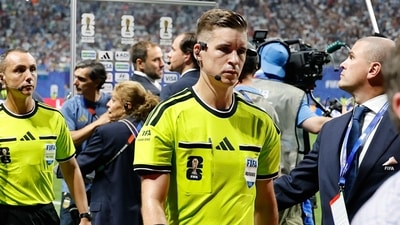
The controversy surrounding Francois Letexier’s handling of Argentina‘s dramatic 3-2 victory over Egypt has now shifted from the pitch to FIFA’s corridors of power. A day after the Egyptian Football Association (EFA) lodged a complaint against the French referee over a series of contentious decisions in the Round-of-16 clash in Atlanta, attention has turned to what happens next and whether Letexier will officiate again at the tournament.
The EFA has reportedly accused Letexier and his officiating team of making crucial errors that directly influenced the match, in which Argentina recovered from 2-0 down to score three goals in the final 13 minutes and reach the quarterfinals. Egypt’s grievance centres on the VAR decision to disallow Mostafa Ziko’s 58th-minute goal, while the federation has also questioned other key calls during the match. In its complaint, the EFA has sought an investigation into the refereeing team and called for their removal from the remainder of the World Cup.
While Egypt’s protests have intensified scrutiny of Letexier, French outlet L’Equipe reported that no national federation has the authority to veto or block a referee’s future appointments. That responsibility lies solely with FIFA’s Referees Committee, which will review Letexier’s technical performance, the officials’ reports and the disputed incidents before deciding whether he remains in the tournament.
However, the report suggested that Letexier, who refereed the UEFA Euro 2024 final between Spain and England and was named the world’s best referee by the International Federation of Football History & Statistics (IFFHS) that year, is unlikely to lose his place at the World Cup solely because of Egypt’s complaint. Ironically, France’s progress in the tournament could have a greater bearing on his chances of receiving another appointment.
France have already booked their place in the quarterfinals, where they will face Morocco in Boston on Thursday.
This is not the first time a federation has sought the removal of a referee during a World Cup. Such requests, however, have never directly resulted in an official being dismissed from the tournament. One of the most notable examples came in 2002, when Italy complained about Ecuadorian referee Bryan Moreno following their controversial Round-of-16 defeat to South Korea. The Italians alleged that Moreno’s officiating, including what they believed was excessive added time, contributed to their elimination. Moreno did not officiate another match at that World Cup, although FIFA never confirmed that his omission was linked to Italy’s protest.