
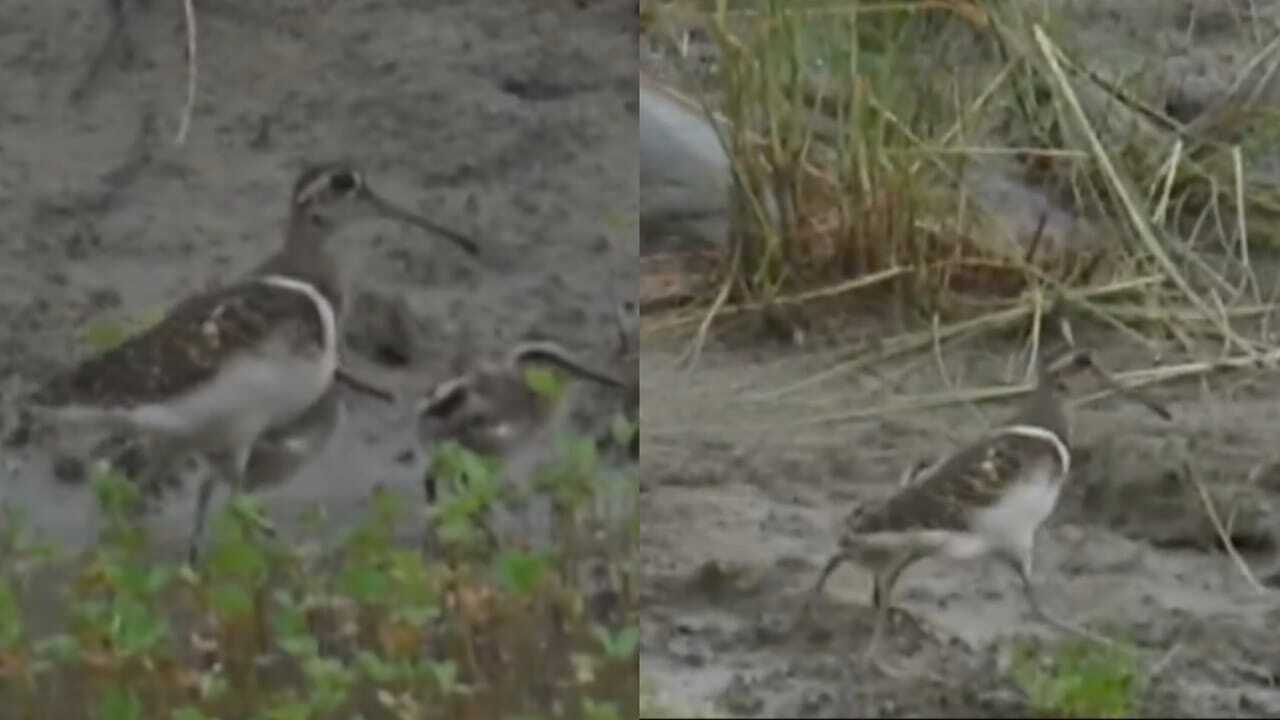
A rare bird sighting in Uttarakhand’s Corbett Tiger Reserve has excited birdwatchers and conservationists alike. Wildlife photographer Deep Rajwar has documented a Greater Painted-Snipe with two chicks, a sighting that he says provides the first scientific evidence of the species successfully breeding in the Corbett landscape. The video shared by PTI on X, the observation is being seen as an encouraging indicator of the reserve’s healthy wetland ecosystem. Experts believe such breeding records are valuable because they help scientists better understand species distribution and the effectiveness of habitat conservation efforts.
A rare find inside corbett
The Greater Painted-Snipe is a rare wetland bird which is usually heard than seen. Unlike many other bird species, it usually spends most of its time hiding itself in high grass and marsh vegetation. According to the wildlife photographer Deep Rajwar, observing an adult bird together with its chicks inside Corbett Tiger Reserve makes the observation very important. Family sightings of this bird are rarely seen by researchers and provide useful information regarding breeding behaviour.
Why birdwatchers are celebrating
Though the Greater Painted-Snipe may not be known by many people, it has significance among bird lovers. Due to the fact that the bird is very shy and well camouflaged, the confirmation of breeding records is rare indeed. Bird watchers say recording of the bird with chicks is much more important than just recording its presence since it proves that the environment is suitable for nesting.
A first scientific breeding record
According to Rajwar, the observation is the first scientific evidence that the Greater Painted-Snipe has successfully bred in the Corbett landscape. The confirmation of the breeding is highly important as it means that the birds are using this habitat as a breeding ground and raising young there.
What makes the greater painted-snipe unique?
There are some characteristics of the greater painted-snipe that make it unique. Unlike most bird species, the females are usually more colourful than males. The females also leave incubation and chick-rearing tasks to the male after they lay eggs. This unique reversal of roles has been fascinating ornithologists for decades now and makes the bird one of the most interesting wetland species.
Healthy wetlands make healthy wildlife
Breeding of wetland birds is usually considered to be a sign of healthy ecosystem. Since the Greater Painted-Snipe requires shallow freshwater wetlands, marshes and grassy edges as food sources and nesting grounds, the presence of these habitats is a good sign that the environment continues to sustain a diversity of wildlife despite the threats of today.
Why such records are important for conservation
All of the breeding records are important for the understanding of the distribution of the species. Conservationists state that photographic evidence, together with the scientific documentation, adds up to biodiversity records and helps wildlife managers to identify the areas that require protection. Since wetlands face many threats nowadays, such as pollution, development, and climate change, such discoveries show the importance of protecting natural habitats for vulnerable bird species.