
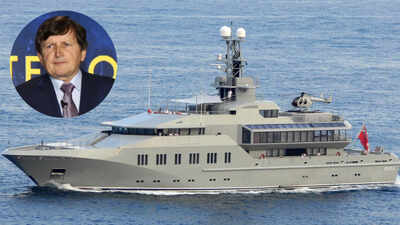
Decades before the world’s richest people began leaving high-tax states like California and New York for Florida and Texas, one tech mogul quietly found his own way to avoid local taxes, strict building rules, and the need for a permanent home.Charles Simonyi, the Microsoft engineer behind Word and Excel, solved two problems at once by owning a luxury property by building a floating home. Instead of buying expensive apartments in different cities, he commissioned a custom-built $100 million 233-foot superyacht called Skat in 1990s, by 2002 Skat was fully built and delivered. For almost two decades, he spent up to six months each year living and working on the yacht, avoiding millions in property taxes while enjoying some of the world’s most exclusive waterfront locations.
A floating solution to land-based taxes
Forbes estimates Simonyi has a net worth of around $7.2 billion. He could easily afford to own property almost anywhere on Earth. He looked at luxury apartments in Montreal, Monte Carlo, and Copenhagen but found that owning homes in different countries came with property taxes, strict planning rules, and high-maintenance.His solution was to stop relying on a fixed home. By moving his life onto a fully staffed yacht, he avoided regional property taxes and local regulations while gaining the freedom to travel wherever he wanted.Simonyi used the yacht as both a “grand travelling home” and a fully equipped office, spending about half of every year on board. Because the yacht could move whenever needed, he was able to dock in the centre of major cities, often securing waterfront locations that simply could not be bought on land.In Scandinavian capitals including Oslo, Copenhagen, and Stockholm, Simonyi could dock Skat right beside royal palaces. He once joked that his floating home gave him the best real estate, the nicest bathroom, and a fantastic restaurant, all without paying municipal property taxes.
The floating warship that fooled navies
Built by the German shipyard Lürssen and delivered in 2002 under the project name Project 9906, Skat looked very different from other luxury yachts of its time. Simonyi disliked the smooth, rounded shapes of many yachts, saying they looked as if they had been “carved out of soft cheese”.To create something different, he hired famous yacht designer Espen Øino to build a steel yacht that actually looked like a steel ship. The finished design featured flat, sharp-edged surfaces painted in two shades of grey, with the hull number 9906 displayed in military-style lettering.The yacht looked so much like a naval vessel that it caused a real warship to delay entering a port because officers briefly mistook Simonyi’s yacht for an unidentified military ship.Although the outside looked tough and industrial, the interior was designed as an elegant art gallery. Its minimalist spaces displayed works by huge artists including Roy Lichtenstein and Victor Vasarely, alongside classic Arne Jacobsen Egg chairs.
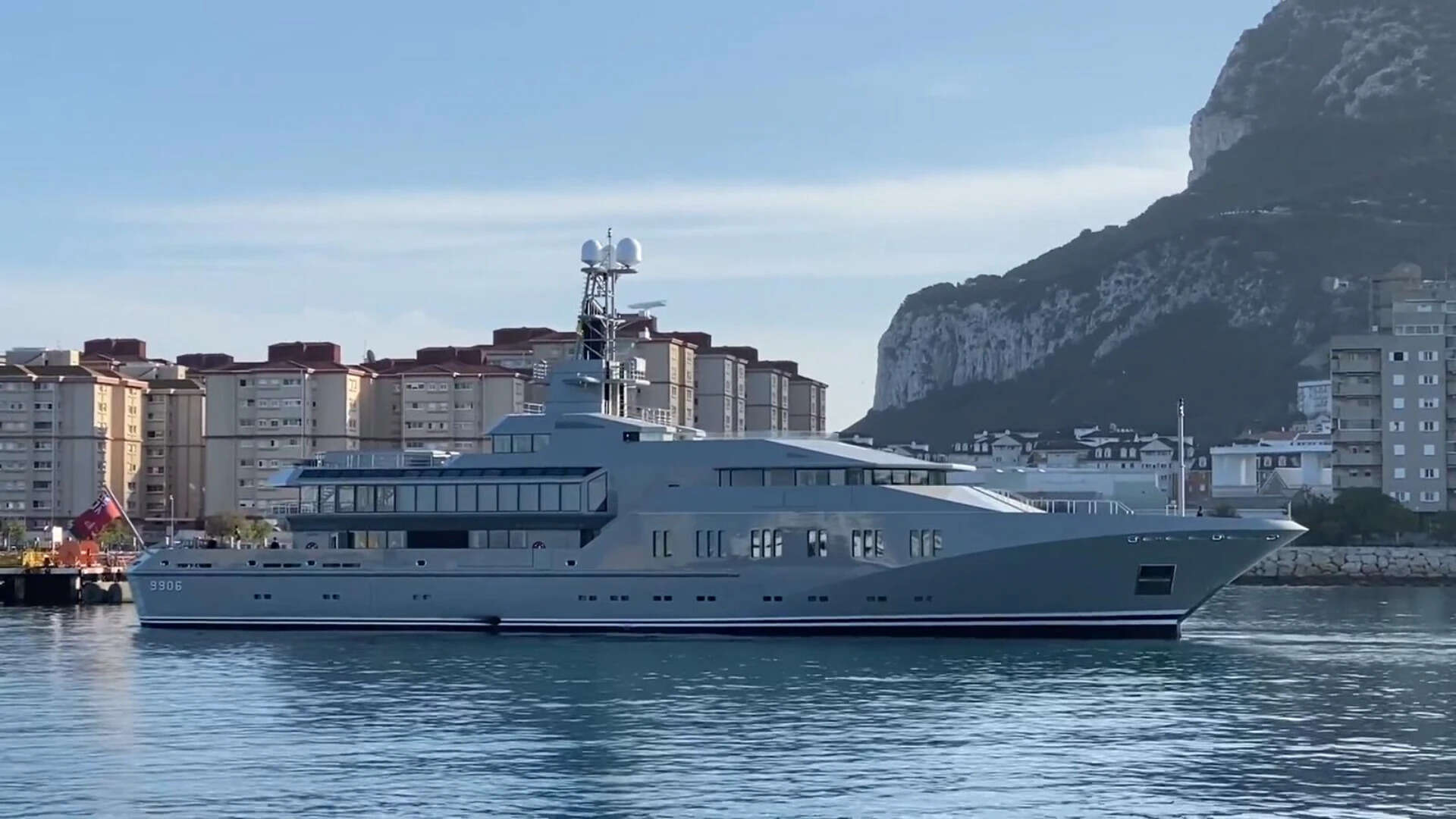
A superyacht so military-looking that it reportedly fooled a real navy
The yacht measures 71 metres, or 233 feet, in length and has a volume of 1,998 gross tonnes. Designed by Espen Øino International and built in Germany, it cruises comfortably at around 15 knots (about 27.8 km/h). It also had it’s own helipad.To make the yacht as quiet as possible, Simonyi insisted on advanced noise-control technology during construction. Engineers mounted the engines, generators, watermakers, air compressors, and other heavy machinery onto a large steel platform supported by special shock mounts. This military-inspired system stopped vibrations from travelling through the hull, allowing the owner’s suite to remain as quiet as a library, measuring only 34 decibels while cruising. For context, a quiet residential street measures around 40–50 decibels.
The modern battle over wealth taxes
Simonyi’s mobile lifestyle has become especially relevant as debates over wealth taxes continue in the United States. In 2026, high-tax states such as California and New York are considering tougher tax policies for their wealthiest residents, encouraging some billionaires to move permanently to lower-tax states like Florida and Texas.In California, voters are preparing to decide on a proposed one-time 5% wealth tax on residents with a net worth of at least $1 billion as of January 1, 2026. Although the proposal excludes assets such as real estate, pensions, and retirement accounts, it has still raised concerns that wealthy people could move elsewhere. If enacted, it could raise about $100 billion for healthcare, education, and food assistance, but critics, including major Republicans argue it would encourage high earners to change their tax residency.New York is facing similar discussions. Although the state does not currently have a wealth tax on personal assets, lawmakers regularly introduce proposals for one. The state continues to depend heavily on progressive income taxes, making its finances sensitive if wealthy residents decide to leave. New York City mayor Zohran Mamdani is also in full support of this wealth tax.
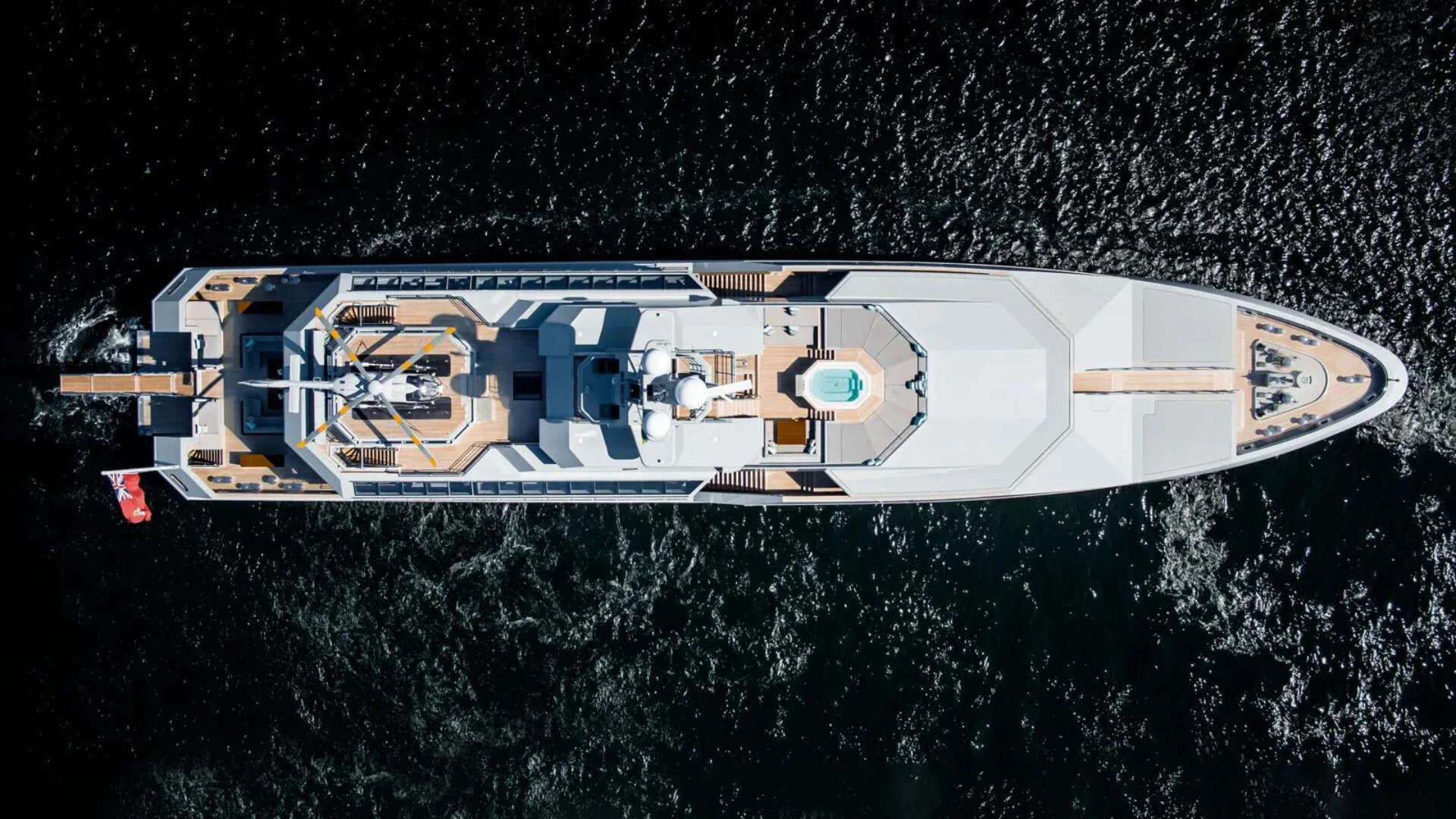
Built by Lürssen as Project 9906 and delivered in 2002, Skat was unlike almost any superyacht of its era
A legacy of digital and maritime innovation
Simonyi approached yachting with the same logical thinking that made him one of the most important figures in personal computing. As head of Microsoft’s applications group in the early 1980s, he led the development of the company’s first major software products. He is widely recognised as the ‘chief architect’ behind Microsoft Word and Excel and helped introduce the “What You See Is What You Get” (WYSIWYG) editing system that changed office software forever.His interest in exploring new frontiers eventually took him beyond the oceans and into space. Simonyi travelled to the International Space Station in 2007 and again in 2009, becoming the first repeat customer in the history of space tourism. The two trips cost around $60 million.

Simonyi travelled to the International Space Station in 2007 and again in 2009
When plans for Skat were first revealed in the late 1990s, the lack of advanced 3D design software made it difficult for people to imagine the finished yacht. One observer even predicted it would be the ugliest yacht ever built. However, after seeing the finished grey vessel launched in 2002, he changed his opinion and simply said: “It’s cool.”Simonyi sold Skat in 2021. Instead of returning to life on land, he upgraded to Norn, a larger 295-foot Lürssen superyacht also designed by Espen Øino and costing around $250 million.