
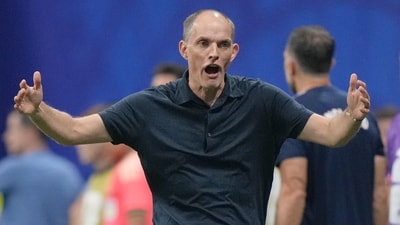
It’s not coming home; England is headed home. The Harry Kane-led side crashed out of the FIFA World Cup 2026 after suffering a 2-1 defeat at the hands of Argentina in the semi-final. The 1966 champions took the lead in the 55th minute but decided to park the bus for the remainder of the game, and a lack of attacking play saw Argentina stage a comeback, with Lionel Messi providing two assists to help the defending champions set up a summit clash with Spain. The aftermath of the semi-final has seen England manager Thomas Tuchel coming under heavy criticism for defensive tactics despite taking the lead.
However, Tuchel stood by his tactical decisions. For much of the second half at Atlanta’s Mercedes-Benz Stadium, England looked on course for their first World Cup final appearance since lifting the trophy in 1966. Anthony Gordon’s strike shortly after the restart put Tuchel’s side ahead and raised hopes of a historic victory.
However, the defending champions responded with relentless pressure as England struggled to regain control. Enzo Fernandez restored parity before Lautaro Martinez struck late to complete Argentina’s comeback and book their place in the final.
Reflecting on the defeat, Tuchel admitted his players retreated too deep after taking the lead, allowing Argentina to dominate the closing stages.
“We’re disappointed, we were so close, but we got too passive after we scored and conceded a lot of chances,” Tuchel told the BBC.
“We could not turn the ball possession around and then conceded so many crosses, chances and shots. We were close but couldn’t keep the level up after we scored,” the German added.
Questions over substitutions
Tuchel is also facing questions over his decision to withdraw goalscorer Gordon in the 72nd minute and replace him with defender Ezri Konsa. Explaining the substitution, Tuchel said the move was designed to shore up a defence that had already come under sustained pressure.
“I did also offensive substitutions in the last games, we just tried to help the players,” he said.
“We conceded a chance straight away, and we decided to go to a back five because the gaps were far too open. Straight after our goal, without any substitutions, we conceded way too many crosses and way too many chances, so we tried to help,” he added.
Speaking later during his post-match press conference, Tuchel also rejected suggestions that his tactical approach had cost England a place in the final.
“No, I believe that’s just the nature of the game,” he said.
“As soon as you lose, you get criticised. It’s just what it is. No one knows what would have happened if we had made different decisions. So it makes no sense to engage in that and lose my head. I’m responsible for them. I took them, so I take the criticism,” he added.
When asked why England failed to push for a second goal after taking the lead, Tuchel insisted his side’s problems stemmed from an inability to retain possession rather than a lack of attacking intent.
“Yes, but it doesn’t help if you can’t get the ball. We couldn’t get out,” he explained.
“Of course, we wanted to go for the second goal, but I did not have the feeling that offensive substitutions would help. We couldn’t win any balls, and we couldn’t keep the ball, so I don’t think it was a structural problem; we didn’t change anything. But the match changed completely,” he added.
The former Chelsea manager had signed a two-year contract extension in February, keeping him in charge through the 2028 European Championship, which England will co-host.
When asked whether he expects to remain at the helm following the World Cup disappointment, Tuchel reaffirmed his commitment to seeing out his deal.
“We keep on going for the contract until the home Euros, and I’m looking forward to that. Even like now, it’s difficult to look that far ahead,” he said.