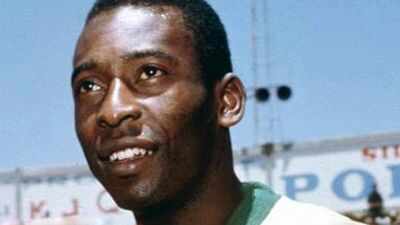
Winning tells you very little about what someone is actually made of. Pelé, widely regarded as one of the greatest footballers in history, argued the real test comes later. “Success isn’t determined by how many times you win, but by how you play the week after you lose,” he said. A scoreline settles a single match. What happens in the days after a defeat says something considerably more lasting about a person. Coming from someone whose own career included three World Cup titles alongside plenty of matches that did not go his way, the line reads less like a motivational slogan and more like something learned directly from decades of experiencing both outcomes.
Quote of the day by Pelé
“Success isn’t determined by how many times you win, but by how you play the week after you lose”
What is the meaning behind the quote by Pelé
Success usually gets measured in wins, trophies and records, numbers that tell part of the story but not all of it. Pelé is pointing at what happens after the number goes the wrong way. After a defeat, a person can stay fixed on what went wrong, lose confidence, or start blaming outside factors. Or they can examine the result honestly, take what is useful from it, and start preparing for the next match. That choice, not the loss itself, is where he places the real measure of success.
Why the response to a loss reveals more than a win does
A win tends to confirm that preparation worked, which feels good but rarely tests anything. A loss creates doubt, and how a person handles that doubt says far more about their long-term durability. Someone whose confidence depends entirely on winning finds that confidence collapsing after a single defeat. Someone who treats a loss as information rather than a verdict can keep the same motivation regardless of the result.
Why Pelé’s own career backs this up
Even the most dominant athletes lose. Pelé’s own record, three World Cup wins with Brazil among the most decorated careers in football history, still included plenty of matches that did not go his way. What separates a lasting career from a short one is rarely the absence of defeat. It is what happens in the days immediately following it.
Why a single loss can feel bigger than it actually is
A defeat tends to narrow focus onto one mistake, replayed over and over, until it starts to feel like a complete verdict on someone’s ability. In reality, a career or a season is built from a long pattern of results, not defined by any single one. The useful skill is stepping back far enough to see that pattern rather than getting stuck inside one bad result.
Why returning to routine matters more than it feels like it should
After a setback, the instinct is often to avoid the thing that produced the disappointment. Getting back into the same routine, the next training session, the next attempt, does not erase what happened. It creates the actual opportunity to move past it, which avoidance never does.
Why this applies well beyond sport
A failed exam, a business idea that loses money, a job rejection, a hypothesis that does not hold up, all of these follow the same pattern Pelé is describing. The result itself cannot be changed after the fact. What happens next, a better-prepared attempt, a different approach, remains entirely within a person’s control.
Other famous quotes by Pelé
- “Everything is practice.”
- “The more difficult the victory, the greater the happiness in winning.”
- “Success is no accident. It is hard work, perseverance, learning, studying, sacrifice and most of all, love of what you are doing or learning to do.”
- “I was born to play football, just like Beethoven was born to write music and Michelangelo was born to paint.”
Why this quote still matters today
Nobody who attempts anything meaningful avoids failure forever. The real difference lies in what happens once it arrives, whether it becomes a permanent verdict or one result inside a much longer story. Pelé’s line is a reminder that the week after a loss, not the loss itself, is usually where resilience actually gets built.