Spain’s World Cup triumph has not merely added another trophy to the resumes of its leading players. It has rewritten the entire 2026 Ballon d’Or conversation, elevating previously unlikely contenders, rescuing faltering campaigns and diminishing the value of outstanding club seasons that were not followed by success on football’s biggest stage.
The official 30-player shortlist is yet to be announced, but the World Cup has already influenced who is expected to feature and where those players will sit once voting begins.
Harry Kane entered the tournament with perhaps the strongest season-long case. The England captain scored 73 goals across club and international football, won the Bundesliga and DFB-Pokal with Bayern Munich and then added six goals as England reached the World Cup semi-finals.
His numbers remain extraordinary. Yet England’s defeat to Argentina changed the complexion of his candidacy. Kane had the opportunity to combine one of the most prolific individual seasons in modern football with England’s first World Cup title since 1966. Instead, he finished without a goal in England’s final two matches and left the tournament with another deep run rather than a defining international triumph.
Kane remains among the favourites, but the World Cup prevented him from closing the debate.
No player benefited more than Rodri.
The Manchester City midfielder arrived at the tournament after an injury-disrupted club season in which he had started only 22 matches since suffering a serious knee injury in September 2024. Before the World Cup, another Ballon d’Or challenge appeared unrealistic.
By the end of it, Rodri was a world champion and the winner of the Golden Ball.
He completed 655 passes during the tournament at an accuracy rate above 93 per cent, made 26 tackles, and repeatedly controlled matches from the centre of Spain’s midfield. His influence was particularly significant during the knockout stages, when Spain defeated Portugal, Belgium, France and Argentina while conceding only once across the entire tournament.
Rodri’s campaign demonstrates the extraordinary power of the World Cup. His club season alone would not have placed him near the front of the race. Seven weeks with Spain transformed him from a possible lower-ranked nominee into a genuine contender for the award.
World Cup creates new contenders and rescues old ones
Pau Cubarsi is another player whose candidacy was effectively created by the tournament.
The Barcelona defender already possessed a strong domestic record after helping his club win La Liga, but the World Cup gave his season a completely different level of significance. Cubarsi anchored a defence that conceded one goal in eight matches and allowed only 10 shots on target before he was named the tournament’s Best Young Player.
Defenders are routinely overlooked in Ballon d’Or voting unless their performances are attached to a major team achievement. Cubarsi now has exactly that. He may not challenge for the trophy, but a place inside the final 30 – and perhaps even the top 10 – has become entirely realistic.
Jude Bellingham’s nomination was similarly rescued by his international performances.
Bellingham endured an injury-affected campaign with Real Madrid, who finished the season without a major trophy. His club numbers of 15 goals and six assists were respectable but not enough to guarantee a leading position in such a competitive field.
Seven World Cup goals changed that. His knockout-stage braces against Mexico and Norway carried England into the semi-finals and restored the decisive, match-winning image that had faded during his club campaign. Without the World Cup, Bellingham could have been vulnerable when the shortlist was selected. After it, leaving him out would be difficult to justify.
Lionel Messi and Kylian Mbappe were already certain to command attention, but both used the tournament to strengthen their positions.
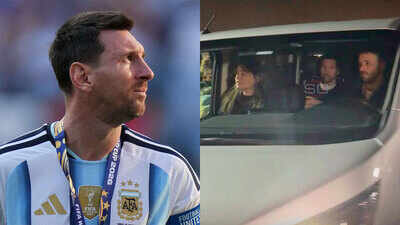
Messi scored eight goals, supplied four assists and won the Silver Ball as Argentina reached the final. His club campaign in the United States had produced enormous numbers, but performances outside European football inevitably attract greater scrutiny in Ballon d’Or discussions. The World Cup gave those numbers global relevance.
Argentina’s defeat, however, denied Messi the emotional and historical force that would have accompanied a second successive world title. His tournament should carry him towards the upper reaches of the voting, but without the trophy, a ninth Ballon d’Or becomes considerably harder to justify.
Mbappe finished as the World Cup’s leading scorer with 10 goals and won the Bronze Ball. Combined with his 58 club goals, his individual output is almost impossible to dismiss.
France’s semi-final defeat to Spain and Real Madrid’s trophyless season remain his principal obstacles. Mbappe produced a better individual World Cup than several players from the championship-winning side, but Ballon d’Or voting has never been decided by goals alone.
That problem also confronts Lamine Yamal, although from the opposite direction.
Yamal possesses the strongest combination of team honours, having won La Liga and the World Cup. His club output of 26 goals and 21 assists was outstanding, while his dribbling remained one of Spain’s greatest attacking weapons.
However, he finished the World Cup with only one goal and one assist. Spain won the tournament, but Rodri controlled it, and Cubarsi defined its best defence. Yamal was its most recognisable star, though not necessarily its most influential performer.
His World Cup medal should elevate him towards the podium, but it should not automatically place him above players who delivered stronger individual tournaments.
Michael Olise may emerge as one of the less obvious beneficiaries. He combined an outstanding campaign with Bayern Munich with a record seven assists for France at the World Cup. France’s failure to reach the final limits his winning chances, but the tournament converted him from a probable nominee into a legitimate top-six candidate.
The World Cup also damaged players without necessarily removing them from the shortlist.
Khvicha Kvaratskhelia and Vitinha were central to Paris Saint-Germain’s Champions League success, but neither was able to match that achievement internationally. Vinicius Junior scored four times for Brazil, yet their Round-of-16 exit and Real Madrid’s trophyless season left him without a defining collective accomplishment. Ousmane Dembele won major honours with PSG and scored six World Cup goals, but France’s elimination allowed Rodri, Mbappe and Messi to move ahead of him in the post-tournament conversation.
That is the real influence of a World Cup on the Ballon d’Or.
It does not automatically make every champion superior to every defeated player. It changes the weight of the evidence. A brilliant club campaign can secure a nomination, but an exceptional World Cup can create a candidacy that barely existed beforehand.
Rodri is the clearest example. Kane still owns the most formidable season-long numbers, while Messi and Mbappe produced the strongest attacking tournaments. Yamal has the finest collection of trophies, and Cubarsi has become the defensive revelation of the year.
The World Cup has therefore not settled the 2026 Ballon d’Or race. It has made it far more complicated — and ensured that the final nominations will reflect events in North America as heavily as anything achieved during the European club season.