
He believes the AI credit cycle is still in its middle phase, with debt being raised across public and private markets, both on and off-balance sheets, backed by the strong financial position of hyperscalers.
Seth also expects market volatility to remain elevated through the rest of the year amid geopolitical tensions and higher oil prices. However, he does not see a worst-case market scenario unfolding and expects the US Federal Reserve to remain on hold until year-end while assessing incoming economic data.
This is an edited transcript of the interview.Q: How are you assessing the credit risk now in the global markets? There is an artificial intelligence (AI) on one hand. Now there are fears of escalation in West Asia, with a second front opening up at the Red Sea. Overall, assess the macro environment and credit risk for us.
A: Overall, I would say the risks are more balanced at this point. You obviously have AI capex, which is becoming more and more debt-funded. So, you are seeing issuance going up from an investment-grade market perspective. You also have the oil price moving higher, but I would say that is playing more through the rates market than credit.
So, all in all, I don’t think credit is seeing a lot of noise and volatility globally, including in Asia. Certainly, it’s the rates market where you are seeing the reaction right now to higher oil prices, the conflict, and the increased issuance.
Q: What is the conversation in the US with other global investors about the AI risk that’s building up?
A: The markets are certainly focusing more on the AI build-out, especially after the news around Meta becoming more aggressive on compute spending and AI capex. There is some soul-searching on whether AI capex is getting ahead of itself. To some extent, the Magnificent Seven and the hyperscalers are lagging the rally, while semiconductors are where you’re seeing a lot of the action right now.
The Magnificent Seven are the world’s leading tech giants: Apple, Microsoft, Amazon, Alphabet, Meta, Nvidia and Tesla.
There is definitely a deeper assessment of AI risk. I don’t think we are at the end of the cycle, but I do think we will see more prudence in AI capex going forward.
Q: Jamie Dimon, CEO of JPMorgan Chase said markets are underestimating geopolitical risk and that it could rattle markets. He even said he wouldn’t buy stocks or Treasuries at this point. What do you make of that? Are things getting a little too hot, particularly in the US?
A: There are two parts to that. When Jamie talks, you have to listen. He obviously has a high level of intelligence and access to information as the head of the biggest bank in the US.
But, having listened to Jamie over the last few decades, he always prepares his bank and the markets for the worst-case scenario. It doesn’t necessarily mean he believes that will happen. He wants to make sure JPMorgan is prepared for the worst-case outcome in both equity and fixed-income markets.
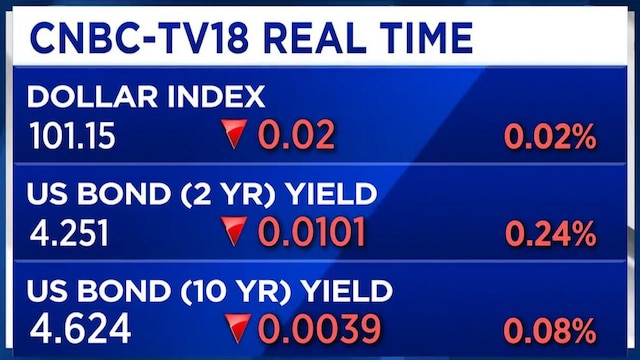
I am not as bearish. I actually think the Treasury market, particularly the front end of the curve, is pricing in two rate hikes. I am not sure it’s necessary for the Fed to hike twice between now and the next three quarters. My base case is that the Fed stays on hold until the end of the year and assesses the incoming data.
On equity markets, I do expect volatility to rise and remain elevated through the end of the year. But are we heading towards a disaster scenario? I am not so sure.
Q: Did you see the Nikkei story about nearly $1.6 trillion in debt accumulated by some of the largest AI companies, much of its off-balance sheet?
A: I didn’t look at that specific story, but we have been tracking very closely where capital formation and debt issuance are happening.
One thing you are seeing is that AI-related capex is being funded through a combination of public and private markets, both on and off-balance sheet.
Watch the full conversation here

I don’t think that’s going to stop here. You have already had more than $1 trillion of issuance in the US investment-grade market. Hyperscalers have gone from almost nowhere to nearly 15% of the market. You also have players like SpaceX coming in and borrowing.
So, you have to keep an eye on this debt formation across on- and off-balance sheet funding, as well as public and private markets. It’s growing. I would say we are probably in the middle of the credit cycle, not the late stage. So, it’s not something that really concerns me, given the strength of the balance sheets of the underlying hyperscalers. But certainly, debt levels are going up.
Catch all the latest updates from the stock market here