
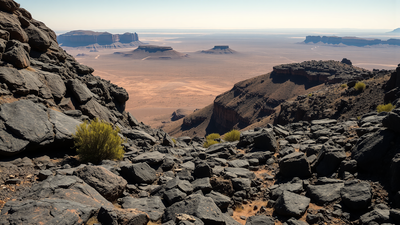
Deep beneath the Pilbara region of Western Australia lies some of the oldest and best preserved crust anywhere on the planet, and it has just revealed something unexpected about Earth’s earliest history. Volcanic rocks dating back 3.1 billion years show chemical signs that surface water had already travelled deep into the planet’s interior at that time, helping generate magma long before modern plate tectonics existed in its familiar form. The discovery pushes back the timeline for when Earth began recycling water between its surface and interior, a process considered fundamental to how continents grow and how volcanic activity is distributed across the planet.
Why the Pilbara rocks offer such a rare window into deep time
According to the study titled Modern arc-like water content in the source of 3.1 billion year old volcanic rocks, published in Nature Communications, the rocks analysed come from the Pilbara Craton, a section of ancient crust valued for having survived with unusually clear geological records intact. An international research team led by Adelaide University geochemist Dr Eric Vandenburg examined the chemical signatures locked inside these volcanic rocks to reconstruct conditions on Earth as they existed 3.1 billion years ago, a task made possible only because most crust from this early period has since been altered, buried or destroyed by later geological activity.
How water usually reaches Earth’s mantle today
Understanding why this finding matters starts with how the process works in the present day. Today, oceans and the deep Earth stay connected through plate tectonics, specifically at subduction zones, where one tectonic plate sinks beneath another and carries water-bearing minerals from the surface down into the mantle. Once released at depth, this water lowers the temperature needed for surrounding rock to melt, helping generate the magma that feeds volcanoes and contributes to the ongoing growth of continents over geological time.
Why applying this same process to early Earth creates a problem
Extending this modern explanation back more than three billion years runs into a significant obstacle. Dr Vandenburg explained that early Earth was likely too hot for its crust to behave like the rigid, moving plates seen today, which meant the modern system of subduction zones may not have existed yet. This left an open question for geologists over whether surface water could have reached the mantle that early in Earth’s history at all, and if it did, through what alternative process.
A theory called dripduction offers a possible answer
To explain how water could have reached such depth without modern plate tectonics, Vandenburg and his colleagues propose a process they describe as dripduction. In this scenario, sections of Earth’s cooler outer crust absorbed surface water and gradually grew dense enough to become unstable, causing them to sag and eventually collapse downward into the hotter mantle beneath, rather than sliding along the edge of a rigid tectonic plate the way subduction works today. As this water-rich material sank into hotter conditions, it would have released its water into the surrounding mantle, encouraging melting and generating magma capable of rising back toward the surface.
What the rocks’ chemical fingerprints actually reveal
The team’s conclusions rest on reading detailed chemical patterns preserved inside the volcanic rock, since particular chemical signatures can reveal how a given batch of magma formed and whether water was present during that process. Vandenburg noted that what surprised the team most was finding clear evidence that large amounts of water had already made their way deep into Earth’s interior and directly influenced the formation of these ancient volcanic rocks, suggesting some of the same fundamental processes now associated with modern plate tectonics were already partly in place billions of years earlier, even though the underlying mechanism looked quite different at the time.
Why this changes a long-standing question in Earth science
The Pilbara findings effectively shift the nature of the question researchers have been asking. Rather than debating whether water could have reached Earth’s deep interior more than three billion years ago, the evidence now allows scientists to investigate what specific process carried it there before modern plate tectonics became established. This distinction matters because deep water recycling directly influences where magma forms and where volcanic eruptions occur, and over longer timescales, it also plays a role in continental growth and the redistribution of materials relevant to the environments in which early life eventually developed.
A young planet already more connected than previously thought
Taken together, the evidence from the Pilbara suggests Earth was not cleanly divided into separate surface and interior systems even in its earliest chapters. Instead, water appears to have already been circulating between the two, shaping magma formation, volcanic activity and the slow growth of early continents while the planet was still relatively young. Since rocks capable of preserving this kind of record from so early in Earth’s history are extremely rare, the Pilbara Craton continues to serve as one of the few places on the planet where scientists can directly study processes that occurred more than three billion years ago.