
For years, the artificial intelligence (AI) industry globally has been stuck in a peculiar cycle. A Chinese AI company announces a new model. Of course, powerful and capable. Silicon Valley reacts in disbelief. And scrambles to find ways to blunt the reaction. This isn’t a one time thing. It seems to happen more than once, every quarter. No surprise then, that the American AI companies are now trying to put up a brave front. And they can’t seem to get that right, either. A new powerful AI model (or two, or three) from China is no longer an anomaly.
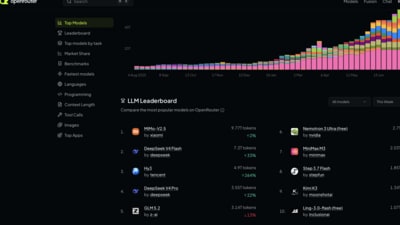
For years, we’ve seen the trajectory. I’ll give the AI companies and industry watchers the benefit of being surprised and shocked when DeepSeek made their leap early last year. But nothing since should elicit any shock. Here’s a look at the top models on the OpenRouter AI leaderboard, as I write this (expect changes by the hour, but you get the idea): Xiaomi’s MiMo-V2.5 leads usage with 9.77 trillion tokens, followed by DeepSeek V4 Flash (7.3 trillion tokens), Tencent’s Hy3 (4.9 trillion tokens), DeepSeek V4 Pro (3.55 trillion tokens) and Z-ai’s GLM-5.2 (3.14 trillion tokens).
Also Read:Tech Tonic | Xiaomi is no longer making just gadgets, it is building an empire
If we extend this list to a ‘top 10’ leaderboard, the only American AI model to figure is the Nvidia Nemotron 3 Ultra free (2.7 trillion tokens), ahead of more Chinese AI models MiniMax M3 (2.03 trillion tokens) and Kimi K3 (1.34 trillion tokens).
There are trends to be seen. GLM-5.2 leads security audit tasks, accounting for 21.3% of all token usage and significantly outpacing Anthropic’s Claude Opus 4.8 (10.8%). It is a similar hierarchy in memory extraction tasks. In terms of market share based on usage, Google leads with 27% token usage cornered, while DeepSeek follows in close second with 25.4% share. OpenAI (14.5%), Qwen (5.3%), Anthropic (4.3%), and Xiaomi (3.4%) follow.
I’d written a few days ago that the drumbeat of caution has been sounded by the likes of OpenAI CEO Sam Altman, Microsoft CEO Satya Nadella and Google DeepMind’s Sir Demis Hassabis, in their own ways. Some taking the more picturesque route to building a narrative, while some have said it straight. At first, the messaging may come across as a wave of an unprecedented sense of corporate responsibility, but the narrative building isn’t hidden.
A couple of things are happening here. First, OpenAI’s persistent spin that its models have gone rogue (in a sensible world, this wouldn’t have been something to boast about, but something that would’ve invited a lesson in law enforcement) is part of a bigger plan to convey that their technology is powerful.
By saying that, AI companies are trying to get the attention of regulators and gently nudge an inevitable in a direction that suits them. Google DeepMind’s Sir Demis Hassabis also recently called for regulation.
Secondly, with these claims, the other pitch is that this technology is powerful and therefore worthy of large investments. The investments must keep rolling, the circularity of funding shouldn’t change shape.
Third, and this is also something Microsoft’s Satya Nadella said recently, that companies using AI pay two prices: one for the model, and one with their data (the explicit hint being that’s used for training). The read-between-the-lines moment is simple—do not give your data to Chinese AI companies. But what if the models you are running are open source, and on premise? None of your data goes to the Chinese AI companies anyway, isn’t it?
In China, there has been a very different approach to AI. From the AI companies, frontier labs, and indeed the government. In fact, the government’s handling of AI has been contradictory to an extent. Strict regulation on one hand, extensive incentivising for innovation on the other.
What we see now is a landscape where Anthropic’s latest models Claude Opus 5 and the Claude Fable 5, as well as OpenAI’s latest GPT-5.6 troika (Sol, Terra and Luna), Google Gemini 3.6 Flash and xAI’s Grok 4.5 are being more than matched by the latest models from Moonshot’s Kimi, Z-ai’s GLM, Alibaba’s Qwen and MiniMax.
All that is a result of Beijing’s method which attempts to balance deployment regulation without slowing down development. The reason is, they treat AI as a strategic industry, not one where players do their finest politicking to curry favour. Global AI companies would inevitably point to trade-offs around freedom of expression and state oversight, but at the end, success is all that matters.
What has clearly worked is a mix of government funding, provincial subsidies, tax incentives, and AI industrial parks.
China foresaw an AI era much earlier than anyone else. They just didn’t make a lot of noise about it. They had been putting together regulations much before American AI companies found their voice. The rules governing recommendation algorithms (2022), deepfakes and synthetic media (2023), and generative AI services (2023) are some examples.
The fact that China figured out affordability and cost, is a key barometer that most policy measures have worked. It remains perplexing that none among OpenAI, Anthropic, Microsoft, Meta, xAI and others, can make models as affordable as the GLM-5.2, despite claiming to have the best brains and processes in place. If anyone in 2026 is surprised that China can consistently build benchmark beating models, that’s purely on them.
Vishal Mathur is the Technology Editor at HT. Tech Tonic is a column that looks at the impact of personal technology on the way we live, and vice versa. The views expressed are personal.