
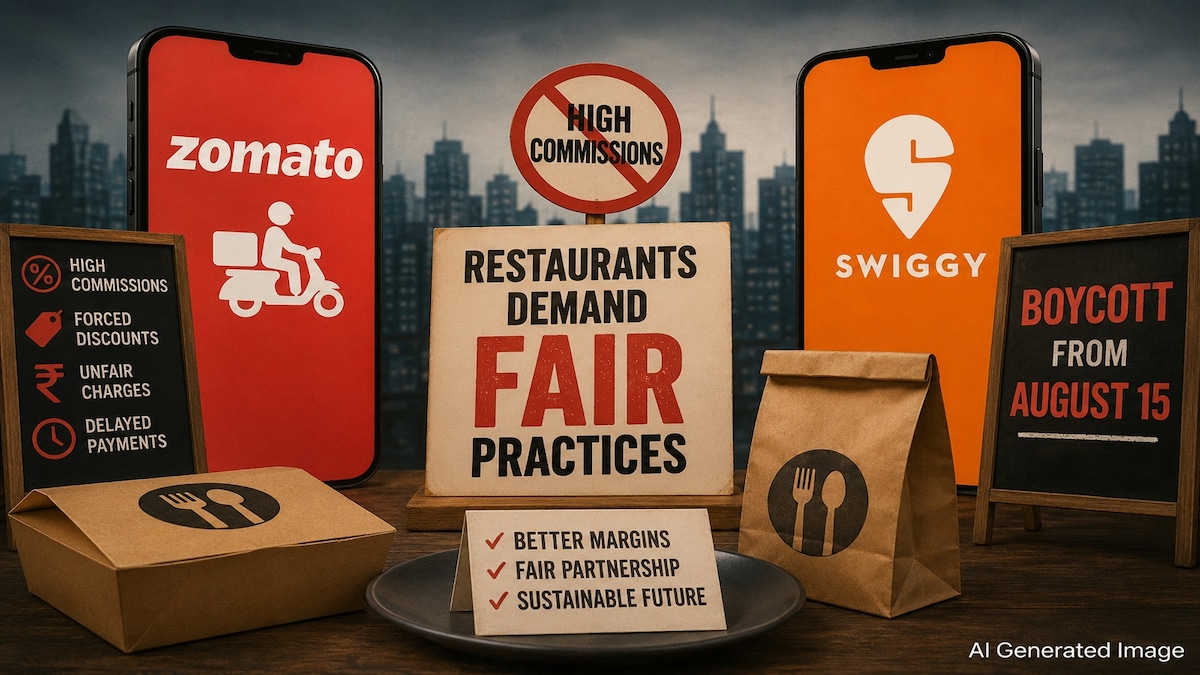
The Karnataka Hotel Association has warned of a boycott if its demands are not met. Even if the standoff is resolved, it has reignited debate over how revenue is shared between restaurants, delivery platforms and consumers, and whether emerging alternatives could give restaurants greater bargaining power.
Here’s a look at what the dispute is about and what it could mean for restaurants, consumers and food delivery platforms.
Why are Bengaluru restaurants protesting?
Restaurant owners say the economics of online food delivery have become increasingly difficult to sustain.
Typically, restaurants pay food delivery platforms commissions and other service charges while also participating in promotional campaigns and discounts. To protect their margins, many charge higher prices on delivery apps than they do for dine-in customers, leaving consumers paying more for the same meal.
According to S. Subramanya Holla of the Bruhat Bengaluru Hotels Association, restaurants are not opposed to selling through delivery platforms but object to what they see as mounting deductions and discounting practices that are eating into their earnings.
“The association’s biggest grievance is that restaurants are forced to significantly increase menu prices on delivery platforms just to earn what they would from a dine-in order,” Holla said.
“If you’re buying a ₹100 product from them, I have to charge you ₹42 to get back my ₹100 in my restaurant,” he told CNBC-TV18.
Restaurant owners have also accused the platforms of offering deep discounts without their consent.
“Beyond this, what Swiggy and Zomato are doing is running huge discounts on the food without the permission of the restaurant owner. That is where we are drawing the line,” Holla said.
Despite the escalating rhetoric, the association says it prefers negotiations over confrontation.
According to Holla, Zomato recently met representatives of the association and has promised to resolve the concerns within two weeks.
“The Zomato team has come. I have just concluded a meeting with them, and it was very fruitful. They have promised that they will sort out all the issues within the next two weeks,” he said.
Holla added that Swiggy had yet to engage with the association. If negotiations fail, restaurants plan to proceed with the proposed boycott from August 15.
Why has the issue resurfaced now?
Disputes over commissions, promotional campaigns and settlement practices are not new. Restaurants have periodically raised similar concerns ever since online food delivery became mainstream in India.
What makes this episode different, analysts say, is that restaurants may finally have alternatives beyond the two dominant platforms.
Satish Meena, Founder of Datum Intelligence, said the concerns have persisted for years, but restaurants previously had little choice except to remain on Swiggy and Zomato.
“This is not the first time they are raising these concerns. This has been an ongoing issue between restaurants and these platforms,” Meena said.
He believes newer entrants could strengthen restaurants’ negotiating position even if they are not yet significant competitors.
“Now it makes more sense because restaurants may finally have some options, and Swiggy and Zomato will take this more seriously,” he said.
One of those alternatives is Ownly, Rapido’s recently launched zero-commission food delivery platform, which aims to allow restaurants to retain a larger share of every order. The Karnataka Hotel Association has begun exploring the platform while also encouraging direct ordering by customers.
The association is also in discussions with Flipkart, which is preparing to enter India’s food delivery market, potentially giving restaurants another option beyond the existing duopoly.
Are Zomato and Swiggy under threat?
Not immediately, according to industry experts.
Despite the arrival of new players, Meena believes Swiggy and Zomato continue to dominate India’s online food delivery market.
“As of now, both Zomato and Swiggy are the undisputed leaders in the market,” he said.
While platforms such as Ownly are beginning to gain traction in Bengaluru, Meena said there is “no serious threat” to the incumbents’ market share at present.
That reflects more than a decade of investment in delivery fleets, logistics infrastructure, customer loyalty programmes and restaurant partnerships, creating high barriers for new entrants.
Why is it so difficult to challenge the duopoly?
According to Karan Taurani of Elara Capital, entering India’s food delivery market today is significantly harder than it was a decade ago.
Unlike the industry’s early years, when rapid customer acquisition justified heavy spending, the market has matured. Growth has moderated, investors are demanding profitability and raising fresh capital has become more difficult.
Taurani estimates that Zomato generates around ₹120 in revenue per order through commissions and other charges, but much of that is offset by logistics, technology and operating expenses.
Even after years of investment, margins remain relatively thin.
“If you exclude logistics costs, fixed costs and other expenses, the EBITDA they make is about 4.5% of GOV per order… It’s about ₹25 per order,” he said.
That leaves little room for aggressive price competition unless a new entrant is prepared to absorb significant losses for an extended period.
According to Taurani, Rapido could need to invest around ₹2,000 crore to build even a 5% market share.
“It’s going to be a long haul for Rapido. They will need to burn a lot of money to achieve a meaningful market share,” he said.
Could food delivery follow the ride-hailing market?
Rapido has previously disrupted India’s ride-hailing market, prompting comparisons with its food delivery ambitions.
However, Taurani believes the two industries are at different stages.
Ride-hailing continues to expand at a faster pace, while online food delivery is becoming a more mature business with slower growth. Investors are also placing far greater emphasis on sustainable profits than they did a decade ago.
“Profitability matters as well. I think execution will be quite challenging for Rapido from here on,” Taurani said.
What happens next?
The immediate focus is whether negotiations between the restaurant association and the food delivery platforms can produce a compromise before the August 15 deadline.
Holla said Zomato has committed to addressing the association’s concerns within two weeks, while Swiggy has yet to begin discussions with the group.
Regardless of whether the proposed boycott goes ahead, the dispute reflects a broader shift in India’s food delivery industry. After years in which platforms largely dictated the economics of online ordering, restaurants are attempting to regain greater bargaining power.
Whether they succeed will depend not only on negotiations with Swiggy and Zomato but also on whether credible alternatives such as Ownly and Flipkart can provide enough competition to reshape the balance of power in India’s food delivery market.