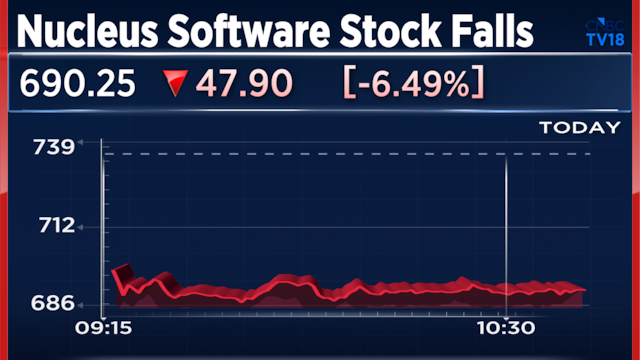

IT stocks, which were otherwise beaten down in 2026, have seen some respite this week. The Nifty IT index has jumped almost 6% in the past 1 week, as compared to a 20% year-to-date fall. Once a darling on the Dalal Street, the Indian IT stocks left many investors feeling stuck for the past few months – some call it the AI
trade or India missing out on the big tech rally. The recent term being coined for the recovery seen is the Anti-AI trade (some experts feel AI stocks are overheated now).
1. The Indian stock market has been lacklustre this year so far, how do you see the second-half-year performance? What are the targets you are expecting for Nifty, Sensex, Bank Nifty for Diwali or end of the year?
accumulate rather than a reason to panic.
3. Three sectors you like as short-to-medium-term bets? And three long-term stock picks?
A. For the short to medium term, I like financials, especially PSU banks. They have the cleanest balance sheets in a decade, and their ROEs now rival private peers at a fraction of the valuation. Second, capital goods, defence and infrastructure, where government capex is at a record, order books are full, and a private capex cycle is only now turning. That gives the theme a five-to-seven-year runway. Third, and this is the contrarian call, IT services. It has been beaten down on AI fears, but Q1 held up and a rupee near 96.6 is a tailwind for margins.
For long-term stock picks, the core discipline is simple: prioritize companies with strong free cash flows, low debt, high return on capital, and management with real skin in the game. Some ideal proxies are SBI – The flagship PSU lender , combining strong fundamentals with a valuation still near book value and Larsen & Toubro (L&T) – the ultimate capex giant with unmatched execution capabilities. Notably, its rapidly scaling
precision manufacturing positions it to become a formidable defence player in India’s indigenization push.
4. Has India “missed the bus” on the AI and big-tech theme? Is that why we are lagging peers?
A. This is a global rotation story, not a lasting verdict on India. Global liquidity chased a narrow technology trade that our indices simply do not carry much of. As that rally played out elsewhere, India’s weight in the MSCI Emerging Markets index fell from about 20% in mid-2024 to roughly 11% by May 2026, dropping us to fourth behind Taiwan and South Korea.
That low correlation, though, is exactly why global managers are starting to treat India as a hedge against an expensive, heavily concentrated AI trade. We did not miss the bus. We are on a different one,
and it runs on domestic earnings and consumption.
5. How are FIIs viewing India? Do they still see value?
A. 2026 has been brutal. FPI outflows crossed ₹2.2 lakh crore by mid-May and foreign ownership fell to a two-decade low. But the selling looks close to exhausted. FPIs turned net buyers in July, putting in over ₹15,157 crore after four straight months of outflows.
Do they see value? Increasingly, yes. The valuation premium that had made India a consensus underweight has largely gone. What turns this into durable inflows is steady earnings and crude behaving itself, and a stable
rupee would give FIIs a clear reason to look again.
6. If a retail investor had ₹10 lakh to deploy today, how should they split it?
A. For a moderate-risk investor, I would stagger it over three to six months. Put roughly ₹6.5 lakh in equity, skewed to large-caps: ₹4 lakh in large-cap or flexi-cap, ₹1.5 lakh in mid-caps and ₹1 lakh in small-caps. Keep ₹1.5 lakh in fixed income to lock in current yields, and ₹1 lakh in gold or silver as a hedge, again phased in, since gold returned about 74% in 2025 and then turned volatile in 2026. The last ₹1 lakh stays in liquid funds. And keep the SIPs running through all of it.
7. Corporates chasing early retirement (FIRE) cite ₹10-15 crore as ideal portfolio size. Is that the right number?
A. There is no single right number, and treating ₹10-15 crore as universal is the mistake. Anchor instead to a multiple of your annual expenses. The 4% rule implies 25x, but India’s higher inflation pushes that closer to 28-33x. A lifestyle costing ₹1 lakh a month needs about ₹4-5 crore today, which 15 to 20 years out grows into that same ₹10-15 crore in nominal terms.
Three traps are worth watching: sequence-of-returns risk, longevity or the risk of outliving your money, and
family goals that have to be funded separately. So, anchor to a multiple, ring-fence your healthcare, and let quality equities do the work of beating inflation.