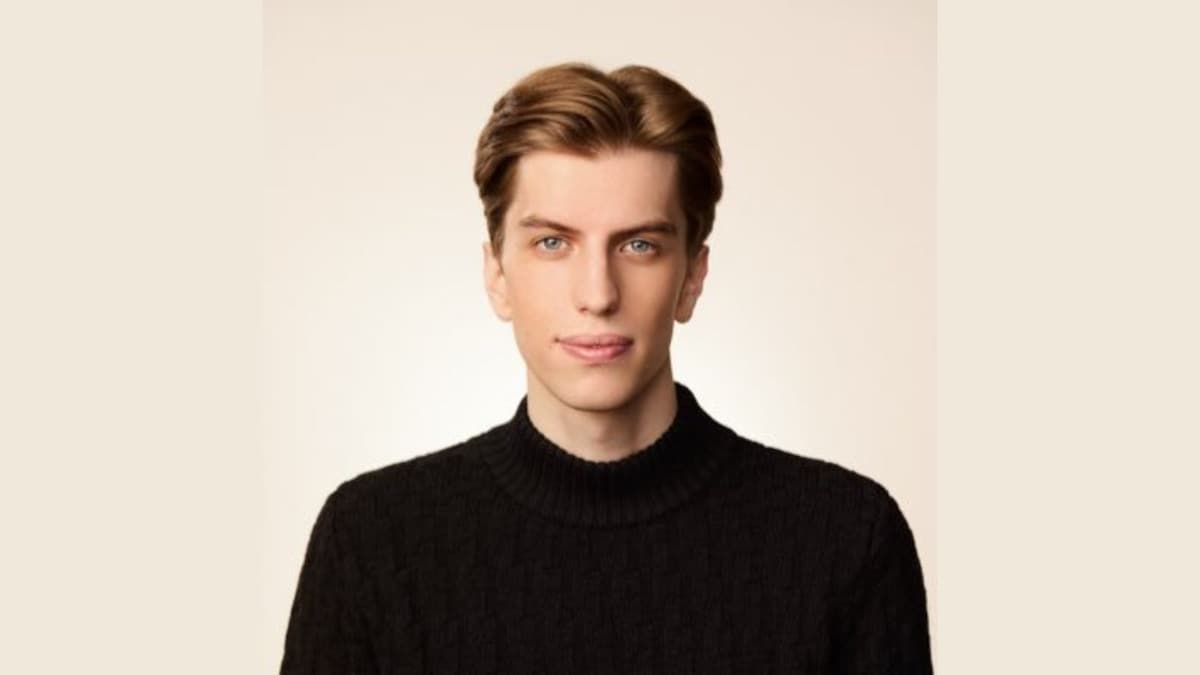
It’s a swift and almost cinematic reversal for a 24-year-old who, two years ago, was being called the “Nostradamus of AI”, and it arrives, almost too neatly, in the same week he’s getting married.
The mechanics of the blowup
The headline numbers are dramatic, but the more interesting story is how a fund built on a directionally correct thesis nearly imploded anyway. According to CNBC’s David Faber, the fund sold its entire public equities book, both long and short positions, in a single block trade, with the Wall Street Journal identifying Citadel as the buyer.
The proximate cause was leverage, not the thesis itself. The Wall Street Journal reported Aschenbrenner was running three to four times leverage on his positions — borrowing three to four dollars for every dollar of investor capital. That kind of gearing turns an ordinary sector pullback into a solvency event, and CNBC reported the fund was forced to meet margin calls from its lending banks as positions deteriorated through late July.
The strategy was concentrated in one of the more crowded trades on Wall Street this year. Per CNBC, the fund had built positions betting on companies expected to supply chips, data centers, and power for the AI buildout, while shorting software firms it viewed as vulnerable to AI disruption — with public filings showing large long stakes in Nebius, Bloom Energy, SanDisk, CoreWeave, SharonAI and IREN as of the end of March. When memory and semiconductor names sold off sharply in July, both sides of a leveraged, concentrated book got hit at once — the textbook setup for a forced unwind.
Also read: OpenAI claims Astra made a massive breakthrough in math
What he kept
The detail most write-ups bury is arguably the most important one: Aschenbrenner didn’t lose everything, and he protected what may be his best asset. The fund’s private portfolio — which includes a significant stake in Anthropic — was not part of the sale to Citadel. Michael Spencer’s AI Supremacy newsletter has estimated that roughly $5 billion remains in his Anthropic position alone, a holding that could grow substantially in value if the company eventually goes public — though that figure is an outside estimate, not a confirmed number from the fund itself.
There was also more competitive tension in the sale than the “distressed dump” framing suggests. Citadel rival Millennium, along with existing Situational Awareness investor Jane Street, also submitted competing bids for the public book before Citadel won it.
From manifesto to margin call
The arc traces back to a document, not a trade. Aschenbrenner’s June 2024 essay, “Situational Awareness,” argued that artificial general intelligence was arriving faster than governments or the public understood, and that only a small circle of insiders truly grasped the implications. The essay became, per its own framing, essential reading in AI circles and turned its 22-year-old author — freshly fired from OpenAI’s Superalignment team over a dispute about how he raised internal security concerns — into a minor celebrity. Within weeks, that fame converted into $225 million in seed capital from backers including Stripe’s Patrick and John Collison, former GitHub CEO Nat Friedman, and investor Daniel Gross.
What followed was one of the more remarkable capital-raising runs in recent hedge-fund history: from $225 million to a reported peak of $45 billion — all built on the same AI-infrastructure thesis from the essay, now expressed as a leveraged, concentrated equity book.
Also read: Would you trust AI with your bank account?
The wedding subplot
The timing has made this less a straightforward finance story than a small pop-culture moment in AI circles. Aschenbrenner is marrying Avital Balwit, chief of staff to Anthropic CEO Dario Amodei, this weekend in Carmel, California — a ceremony reported by the Wall Street Journal to include a “colloquium of panels and breakouts,” a ceremony at a Tuscan-style villa. Aschenbrenner reportedly spent the week before the wedding trying to keep the fund afloat, and offered investors one-on-one calls during his honeymoon. The couple met through the FTX Future Fund, and Aschenbrenner shared an office with podcaster Dwarkesh Patel and hosted happy hours for OpenAI and Anthropic researchers.
The read that gets missed
The easy narrative, boy genius, overhyped manifesto, inevitable comeuppance, is satisfying but incomplete. This wasn’t a case of a fund misjudging the trade; it’s closer to a fund that was right about direction and wrong about survival math. As Wall Street coach Jerry Diao put it in comments to CNBC before the unwind, the risk here wasn’t really about whether it would happen but about when.
Aschenbrenner, notably, still owns the piece of his portfolio most likely to validate the original thesis, his Anthropic stake, even after losing control of nearly everything else. Whether that’s enough to call this “a bump in the road” rather than a genuine reputational blow will depend largely on where AI infrastructure stocks, and Anthropic’s own valuation, sit a year from now.