
If someone told you your future could be predicted today, would you believe them? Would it reveal whether you’ll become successful, live to 100, or stay healthy?For centuries, humans searched for answers in astrology, palmistry and fortune tellers. Now, science offers its own version of a crystal ball: your genes.But before you imagine your DNA deciding your destiny, there’s an important catch.While DNA can reveal valuable clues about our biological predispositions, it cannot determine exactly what will happen.Lifestyle, environment, diet, exercise, stress, pollution and even chance play a crucial role in shaping our health and lives.In other words, genes can predict risk and probability — not destiny.Understanding where genetics ends and personal choices begin is at the heart of one of modern medicine’s most fascinating questions, and it’s reshaping how we think about the idea of a “genetic silver spoon.”Genes predict risk, not certaintyTo understand where genetic testing succeeds, and where its limits lie, we spoke to experts in medical genetics and fetal medicine.Dr. Seema Thakur, Senior Consultant in Genetic and Fetal Medicine at Madhukar Rainbow Children’s Hospital, said genetic testing helps identify a person’s predisposition to certain diseases but cannot predict with certainty whether they will develop them.
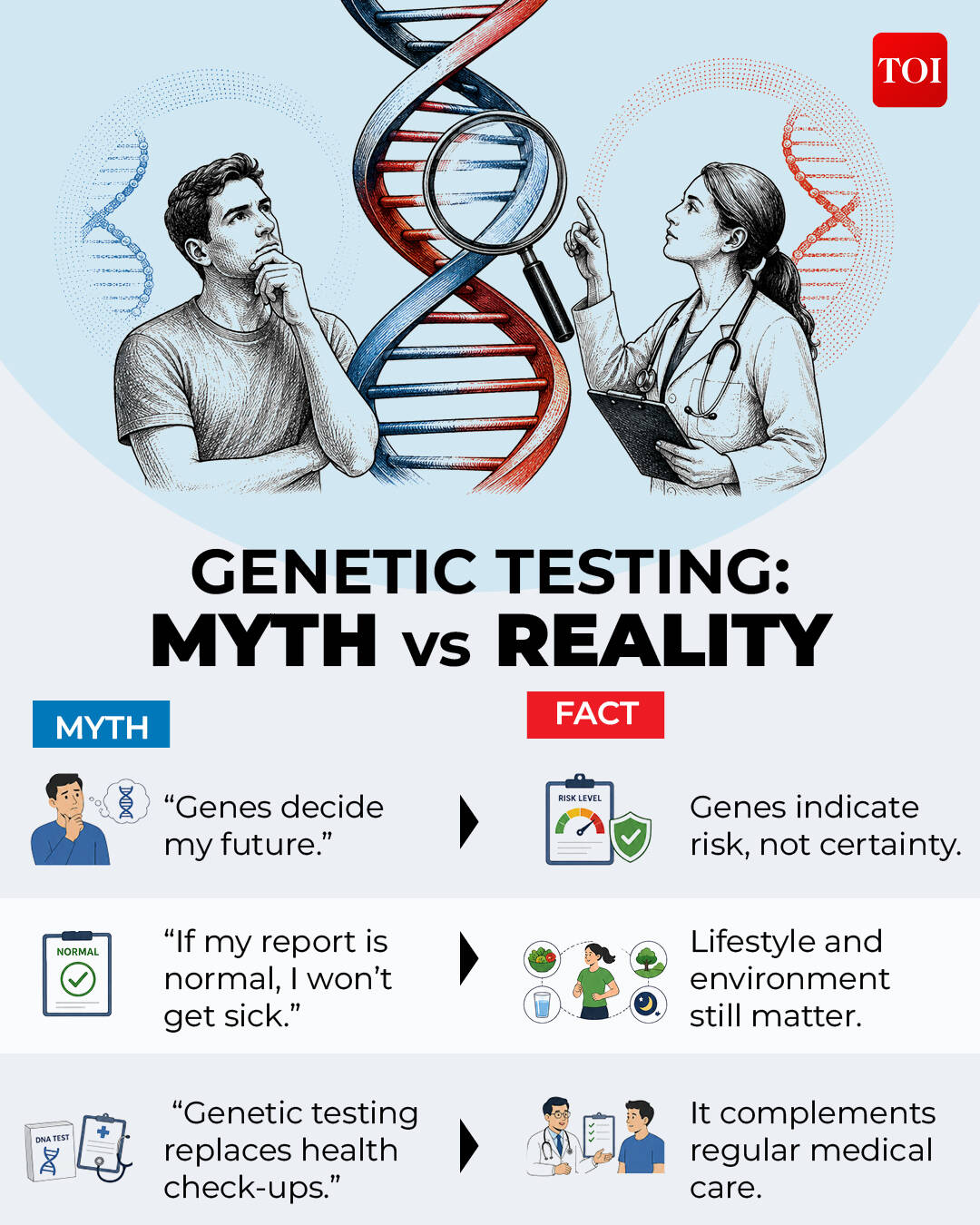
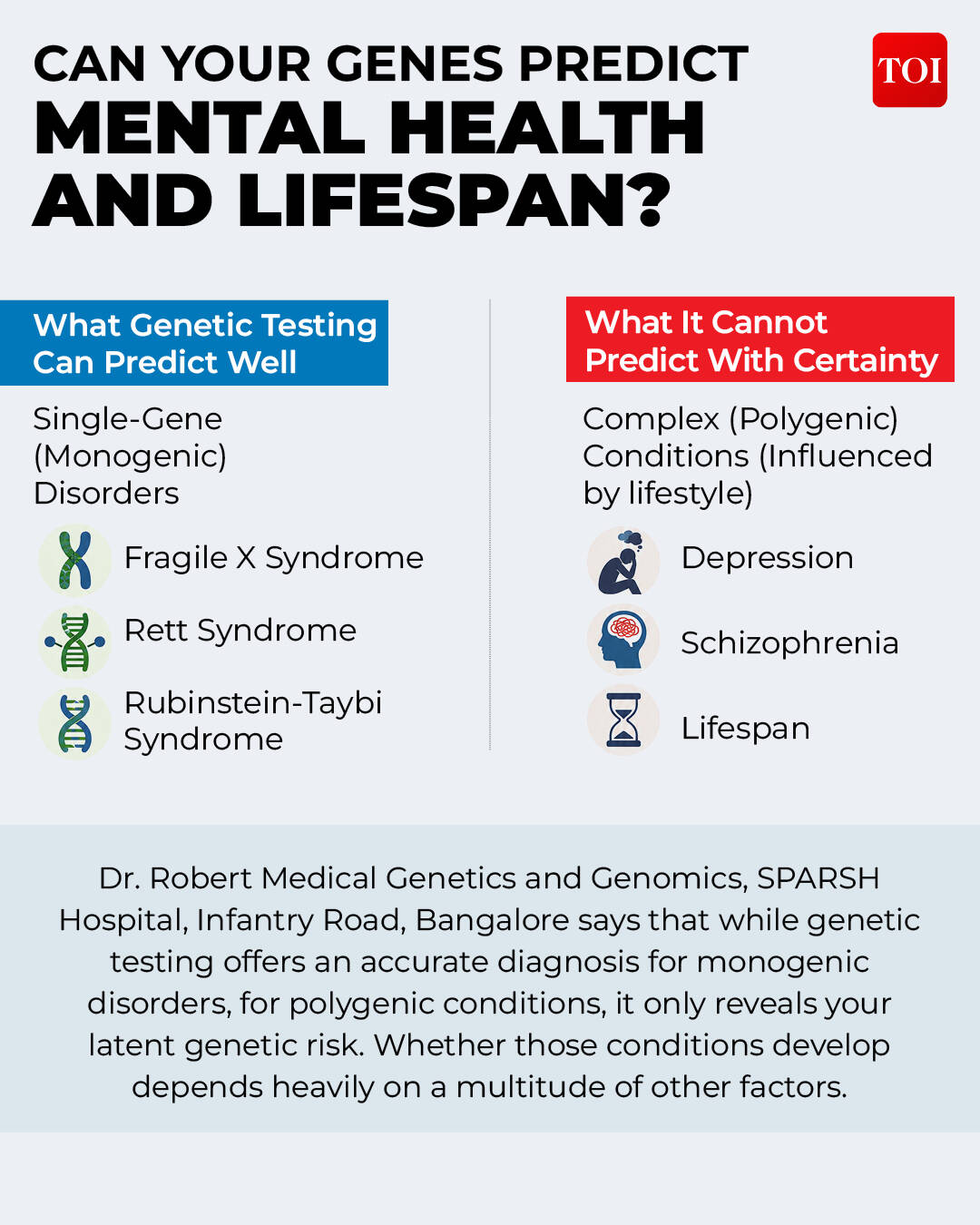
“Genes can indicate a person’s likelihood of developing certain conditions, but they cannot guarantee that a disease will occur. Lifestyle, environment and timely preventive care play an equally important role,” she said.Dr. Robert Patrick Selvam, Consultant in Medical Genetics and Genomics at SPARSH Hospital, Bengaluru, echoed this view, explaining that while genetic testing is highly accurate for some inherited disorders, most common diseases involve multiple genes interacting with environmental factors.“For monogenic disorders, genetic testing can provide a highly accurate diagnosis. But conditions like depression, schizophrenia and even lifespan are influenced by hundreds of genes along with environmental and lifestyle factors. Genetic testing reveals susceptibility, not certainty.”Which diseases are strongly genetic?According to the experts, some diseases are largely inherited, while others depend heavily on lifestyle choices.Dr. Thakur said conditions such as hereditary breast cancer linked to BRCA mutations, thalassemia, cystic fibrosis, Huntington’s disease and familial hypercholesterolemia have a strong genetic basis.
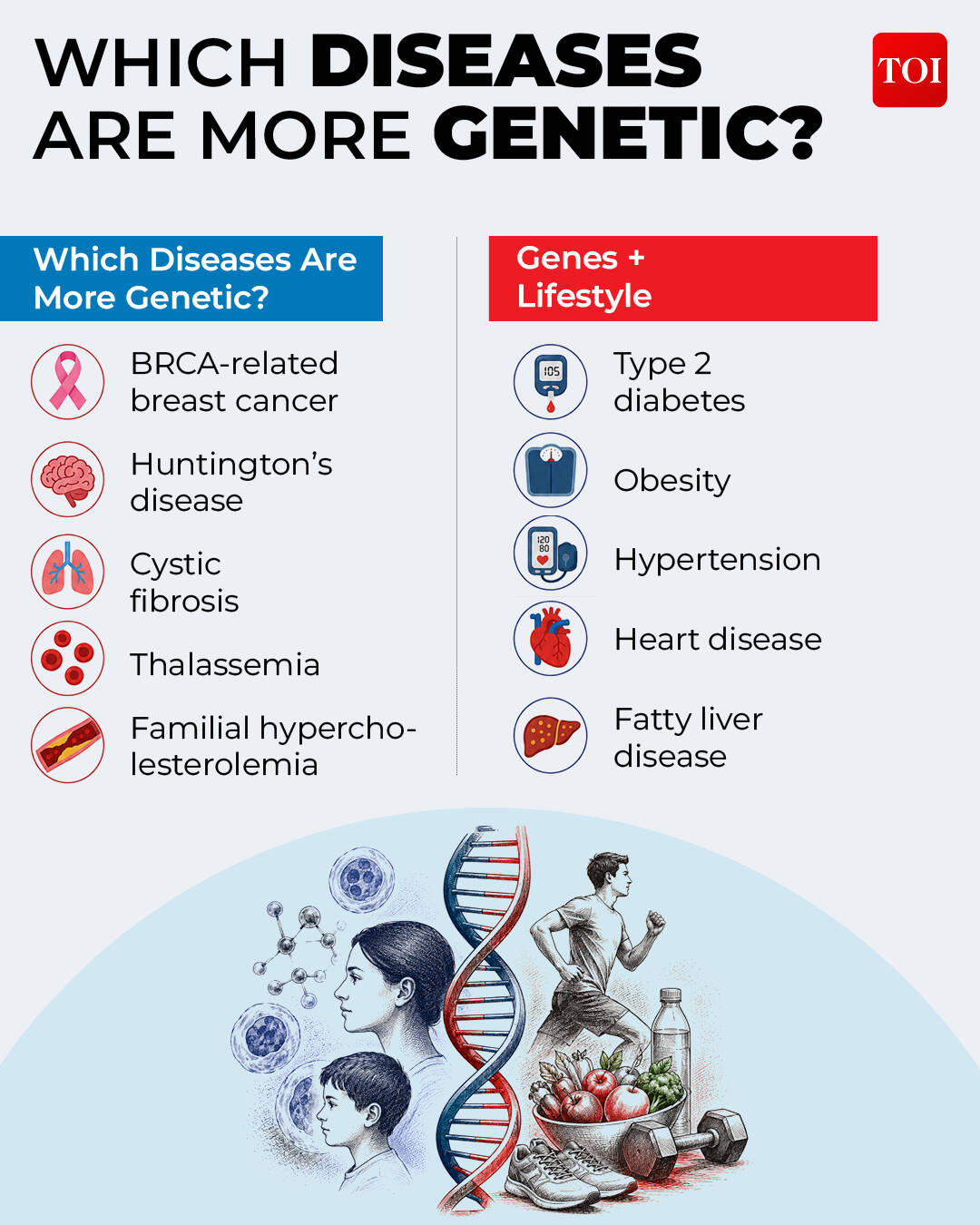
Meanwhile, illnesses such as type 2 diabetes, obesity, hypertension, fatty liver disease and heart disease arise from a combination of genetic predisposition and factors like diet, exercise, sleep and tobacco use.“While genetics may increase an individual’s susceptibility to common chronic diseases, lifestyle factors largely determine whether the disease develops and how severe it becomes,” Dr. Selvam said.Who should consider genetic testing?The experts emphasised that genetic testing is not a routine screening tool for everyone.Dr. Thakur said testing is most useful for people with a family history of hereditary diseases, early-onset cancers, repeated miscarriages, unexplained medical conditions or known genetic mutations in the family. She added that carrier screening can also help couples planning a pregnancy assess the risk of passing on inherited disorders.Similarly, Dr. Selvam said people with inherited disorders, unexplained sudden cardiac deaths in the family, hereditary cancers or couples planning pregnancy may benefit from testing.
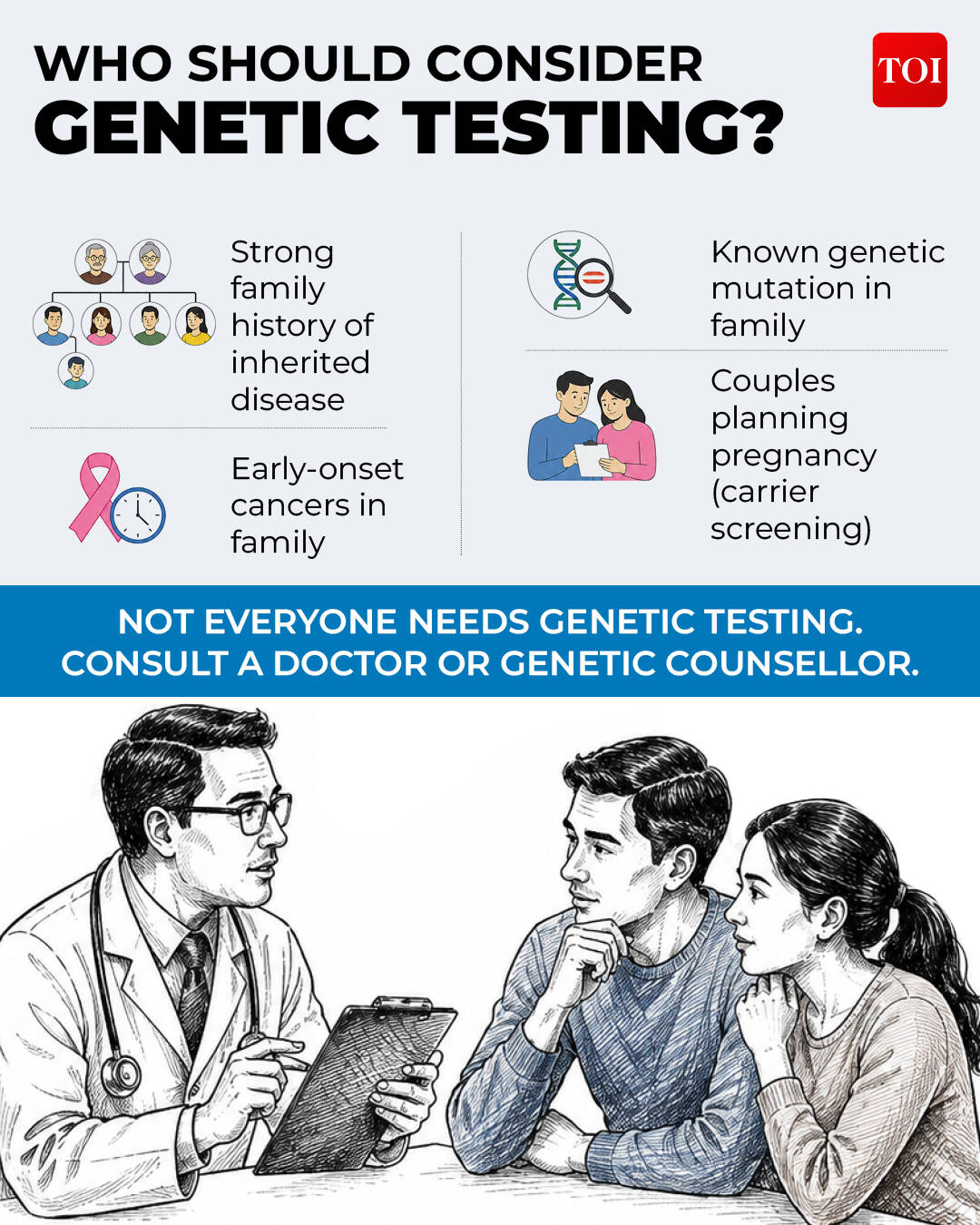
For individuals without significant personal or family risk factors, both experts said regular health check-ups and a healthy lifestyle remain the most effective preventive measures.Learning about a higher genetic risk can trigger anxiety, fear or confusion, particularly if people misunderstand what the results actually mean. Both experts stressed the importance of genetic counselling before and after testing to help individuals distinguish between genetic risk and disease certainty, understand the results correctly and make informed healthcare decisions.They also cautioned against treating genetic testing as a prediction of one’s health future. “Many people think genetic testing is a crystal ball,” Dr. Selvam said. “In reality, it identifies risk and that risk is shaped by genes, environment and lifestyle together.”Is there a genetic ‘silver spoon’?Adding to the debate on how much genes shape our future, a major twin study is shedding new light on the long-running nature-versus-nurture debate, suggesting that genetics may play a far larger role in future success than many people realise.The findings come from the German TwinLife project, a long-term research effort designed to examine how genes and environment shape people’s lives over time.The latest analysis tracked roughly 880 twins, both identical (who share virtually all their genetic material) and fraternal (who share about half), from early adulthood into their late twenties.Because both types of twins grew up in the same homes, researchers could isolate genetic effects more cleanly than in typical population studies. At age 23, participants completed standardised IQ assessments. Four years on, their socioeconomic standing was measured using markers like highest educational attainment, job type and annual earnings.The numbers tell a compelling story.Around three-quarters of the variation in IQ scores appeared to stem from genetic factors.Even more striking, the connection between cognitive ability and later socioeconomic success was overwhelmingly tied to heredity, estimates ranged from roughly 70% to nearly 100%, depending on the metric used.“This isn’t entirely new territory, but the clarity is,” said Petri Kajonius, a personality psychologist and co-author of the study, published in Scientific Reports. “What we’re seeing is that people largely become who they are because of their genetic makeup.”Redefining privilegeThese findings upend a common assumption: that advantage flows primarily from wealthy or highly educated households. Instead, the data suggest that what looks like environmental privilege may itself be partly a reflection of shared genes between parents and children.“The classic ‘silver spoon’ narrative oversimplifies things,” Kajonius noted.“Your family background matters but so do the traits you inherit, which influence how you engage with that background.”This doesn’t erase the role of upbringing. Rather, it implies that genetic predispositions such as cognitive aptitude, perseverance or curiosity may determine how effectively someone leverages educational access, mentorship or economic opportunity.The implications ripple into policy. If innate differences significantly shape life trajectories, how far can schools, welfare programmes or affirmative action go in leveling the playing field?“Our work suggests there are real limits to how much social engineering can alter deeply rooted biological tendencies over the long term,” Kajonius said.
What this means for youFor parents, the study could be oddly comforting.Many fret that a single misstep, skipping a tutoring session, choosing the wrong school, might derail their child’s future. Yet if genetics account for a large share of variation in outcomes, the pressure to do “perfect” parenting may be misplaced.That’s not to say support doesn’t matter. High-quality education, emotional stability and access to resources still boost chances of success. But the study hints that such interventions may refine, rather than rewrite, a person’s underlying potential.For young adults navigating career paths, the takeaway is equally nuanced.Chasing prestige or income alone may not lead to fulfillment, or even optimal performance, if those paths don’t align with innate strengths.“Focus less on climbing someone else’s ladder,” Kajonius advised. “Ask what you’re naturally good at and build from there.”A major caveatResearchers, however, were quick to flag limitations of the study.The study didn’t directly measure parental IQ or socioeconomic status, which could confound results. More fundamentally, genes and environment rarely operate in isolation; they constantly interact.A child with a genetic leaning toward high cognitive ability might, for instance, seek out more stimulating environments, which in turn amplify that advantage. Such feedback loops can make genetic effects appear larger than they truly are. The team estimated this dynamic might inflate heritability figures by up to 15 percentage points.Still, even after accounting for these complexities, the study reinforces a broader scientific consensus: biology exerts a powerful, often underappreciated, influence on intelligence, opportunity and life outcomes.In short, while your genes may hand you certain cards, they don’t dictate how you play them but they do shape the hand you are dealt.
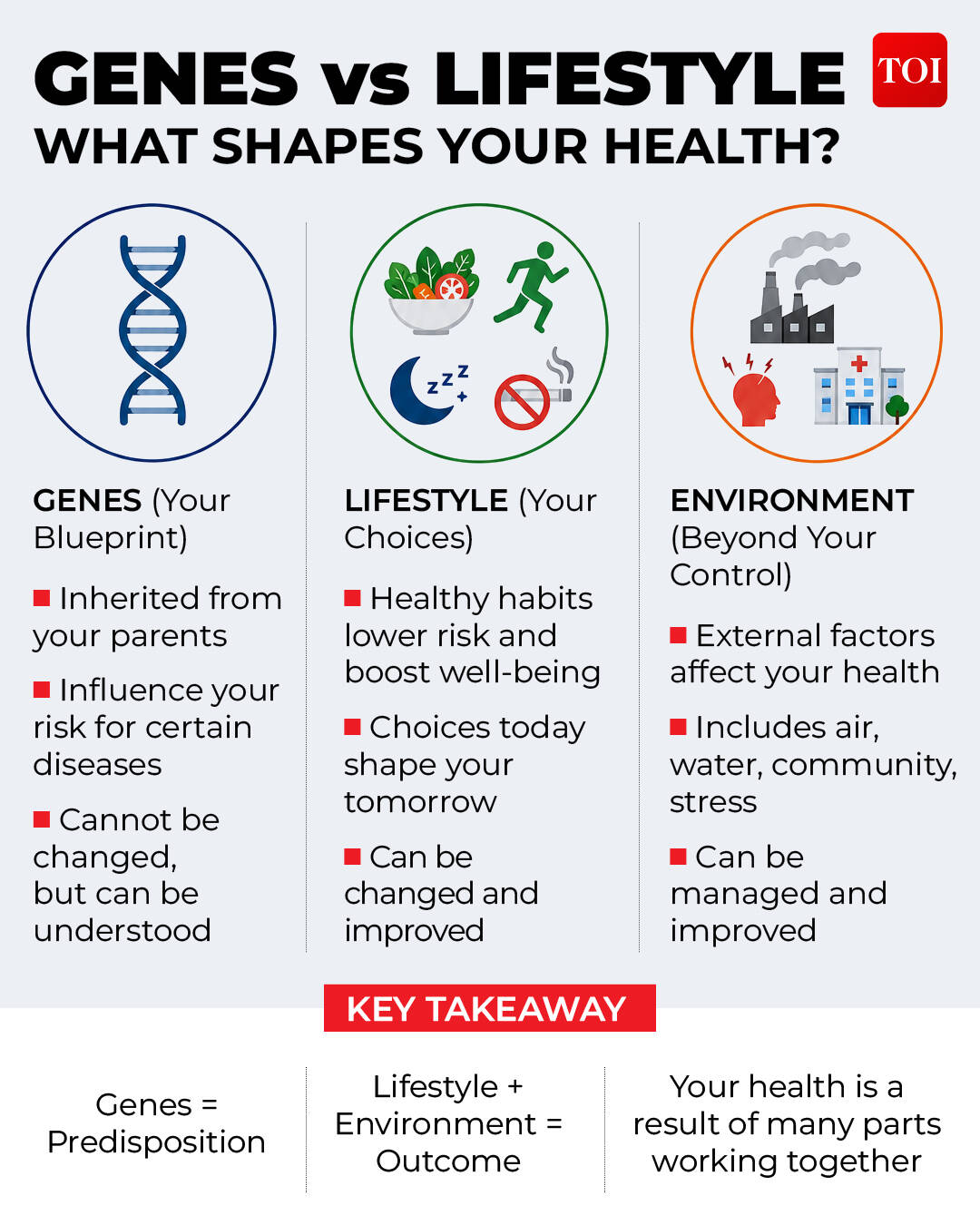
The Big PictureThere may indeed be a kind of genetic “silver spoon”, inherited traits that tilt the odds in areas like intelligence and socioeconomic success. But for health, longevity and many life outcomes, genes set the stage; they don’t write the script.Your DNA can highlight risks and tendencies, but it cannot lock in your future.Lifestyle, environment, education, opportunity and sheer chance still matter, often more than we would like to admit. And that, in many ways, is empowering: your genes may influence your starting point, but your choices still shape where you end up.