“SO CALLED” is a favourite epithet in the rhetorical armoury of Chinese officials facing unwelcome foreign criticism. The officials dismiss talk of China’s “so-called human-rights problems”, lob insults at America’s “so-called freedom of speech” and brush aside “so-called experts”. Over the past week they meted out the same treatment to “so-called overcapacity” in the Chinese economy. In a lengthy new paper, the commerce ministry seeks to rebut the accusations of industrial excess levelled against China by many foreign governments and economists.
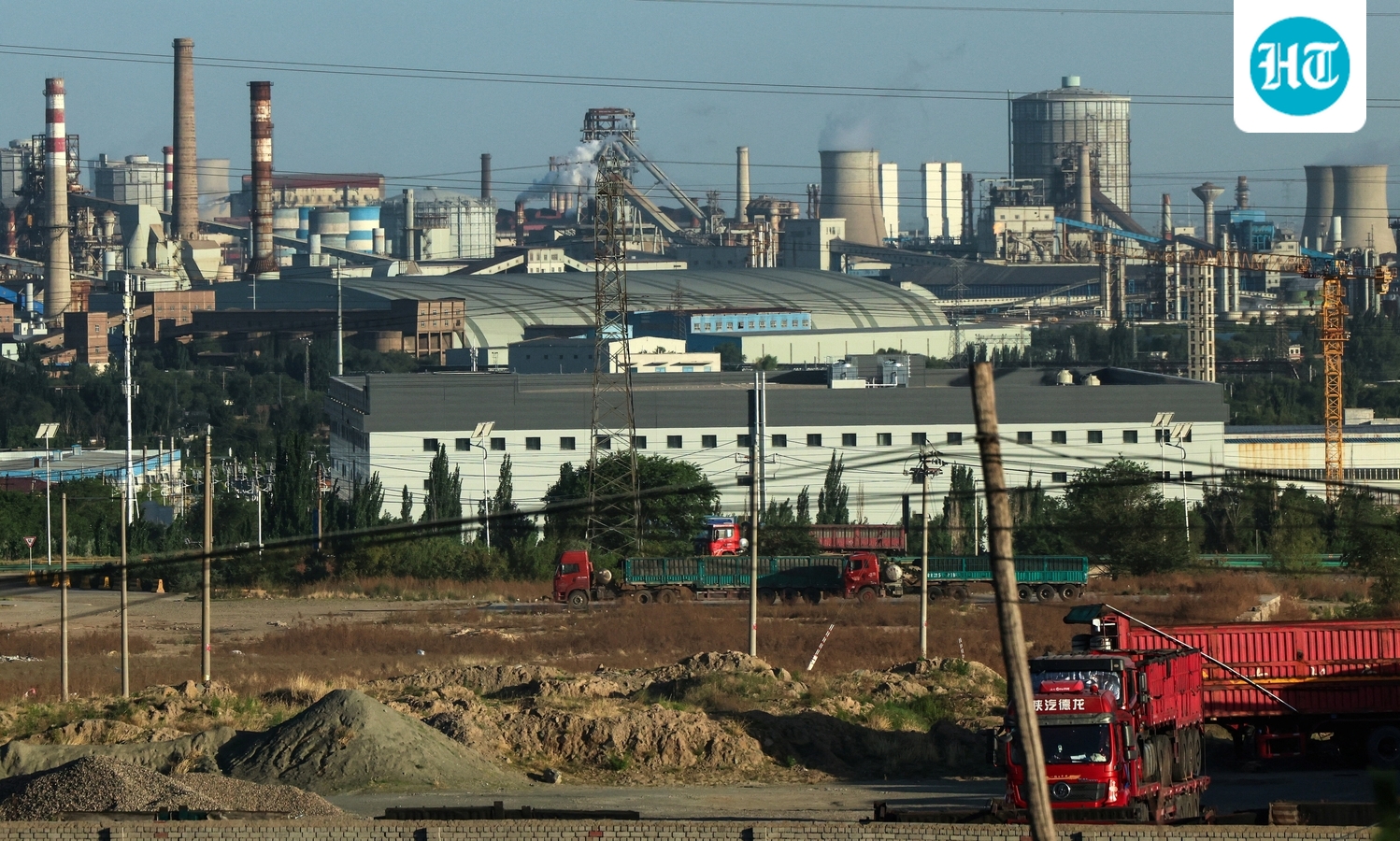
A general view of industrial area in Baotou, Inner Mongolia Autonomous Region, China, June 12, 2026. (REUTERS)
The paper is fascinating because it is both rigorous and disingenuous. Some sections bring healthy scrutiny to the concept of overcapacity. The deep insincerity of other sections suggests contempt for countries facing an onslaught of Chinese exports. Still, even meretricious arguments warrant attention, since they are bound to start recurring as talking points in official speeches, state media and diplomatic meetings.
Start with the most intellectually honest, and useful, contributions of the paper. Over time, the topography of global production, it rightly notes, is constantly in flux. America dominated global manufacturing after the second world war, before passing the baton to others; China is the world’s factory for now, though presumably not for eternity. The commerce ministry is also right to point out that definitions of overcapacity are slippery. More than a fifth of factory capacity is idle across Europe and America, but analysts do not talk about excess capacity there. Export strength surely does not, by itself, equate to overcapacity. Otherwise, why not point a finger at Boeing, which sells two-thirds of its planes abroad?
The ministry, with good reason, highlights Chinese dynamism. Flourishing innovation, manufacturing clusters and intense domestic competition have led Chinese producers to cut costs and boost quality. Companies that emerge from the crucible of the local market are better placed to take on the world. And there are real benefits to others: the global cost of electricity from solar and wind energy has more than halved in recent years, thanks largely to Chinese manufacturing and technology.
Yet that is only part of the story. Where the paper elides or drifts into denialism is telling. It is certainly true that Chinese companies are low-cost producers. Yet this is not some random market outcome, for the government has helped bring it about. Chinese officials are not usually so crude as to declare openly that they want to cut foreign imports. Yet that, boiled down, is what comes from pursuing self-reliance in science and technology, a long-standing state objective—and one especially loved by Xi Jinping. Moreover when a giant like China builds up the production capacity to replace foreign imports, it also builds up the production capacity to lord it over global markets. To give one example, in achieving its goal of sourcing domestically 80% of parts going into advanced vessels, China has in the process become the world’s biggest shipbuilder.
The commerce ministry’s discussion of state subsidies makes an art of dissimilation. It limits analysis only to direct subsidies, even though these are merely the most superficial of the techniques that China uses to favour its own companies. Other crucial forms of support include public investment in chipmakers, cheap land from local governments and rules compelling state firms to buy domestically. In the background of all this are the policy settings—above all, a weak social safety net—that have engendered a perpetually high savings rate. The government can boast about hosting annual import expos, but so long as Chinese savings far outstrip its investment, its exports will, by economic definition, exceed its imports. The result has been the forging of an industrial machine that relies on global markets as its chief outlet. It is a permanent state of industrial production well in excess of China’s domestic needs across virtually all sectors—in short, overcapacity.
The paper offers tin-eared triumphalism aplenty. The China shock that helps explain why Germany is losing 10,000 manufacturing jobs per month? The commerce ministry would rather you saw that as a “China opportunity”. Countries that want to cut dependence on China? They will only hurt the world—never mind that China has long sought to cut dependence on others. Trade restrictions imposed by Europe and America on China? These undermine mutual trust; ignore the fact that China deploys the slapping of restrictions on countries that displease it as a key geopolitical weapon.
End-station for the developmental state?
The academic debate about Chinese overcapacity speaks to a broader and more fundamental struggle under way: a material contest over the worldwide shape of industrial production. On one side is China, which has shown itself supremely proficient in all manner of production. In that sense the commerce ministry is correct that China is competitive. But what foreign companies are competing against is not just supple, hard-driving Chinese firms but a whole-of-state approach to industry. Foreign companies, however big, stand little chance against a Leninist developmental state that has attained China’s size, wealth and modernity. As Rhodium Group, an American research firm, points out, the Chinese state once limited its intervention to a handful of sectors that it deemed to be strategic; now it pursues an “industrial policy of everything”.
On the other side is everyone else. Whether other countries are willing or able to defend what remains of their industrial turf is an open question. For at least a decade, America has been groping for a response. It has imposed tariffs on Chinese goods and worked to reshore production; despite President Donald Trump’s scorn for allies and admiration for China and Mr Xi, his administration wants to work with other countries, for instance, in securing critical supply chains. Europe is inching its way towards (embryonic) made-in-Europe plans. But both America and Europe have already run smack into Chinese dominance, above all, its rare-earth stranglehold. This is the part left unsaid in China’s rebuttal of all the overcapacity talk: try as they might, other countries struggle to fight back. Industrial might makes right.