
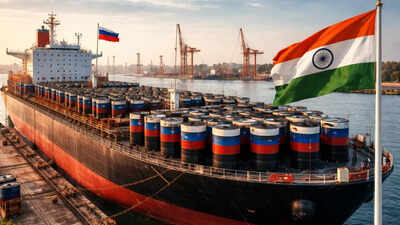
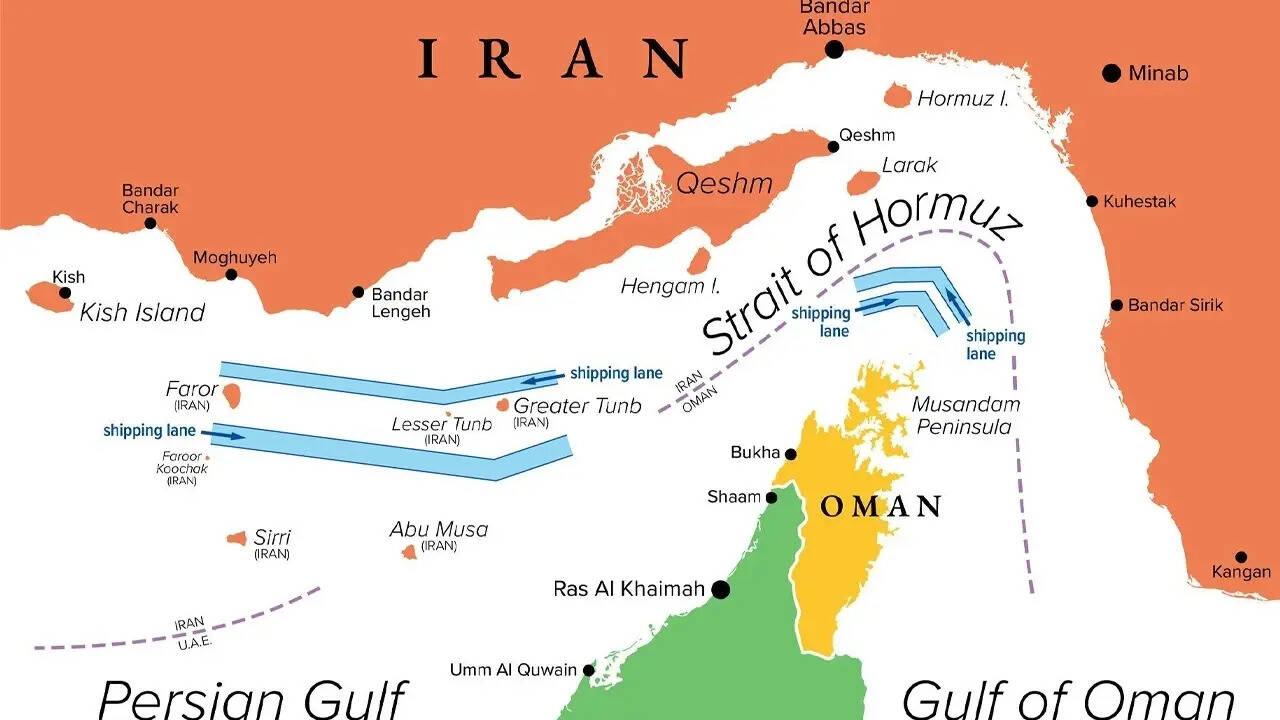
Russian crude has emerged as a major player amid the US-Iran war – global crude oil supply is badly affected via the Strait of Hormuz, Middle East countries are finding it difficult to export oil and global crude oil prices have risen dramatically. The situation has had major implications for India – a country that imports almost 90% of its crude oil.There was a time after the Russia-Ukraine war began in 2022 that Russia had begun to contribute approximately 35-40% of India’s crude oil imports. Come early 2026, sanctions forced India’s procurement of Russian crude to drop. But March 2026 presents a very different picture.The inflows of Russian crude oil have risen sharply since the US-Iran war began and imports via the Strait of Hormuz were disrupted. In fact, crude imports from Russia are now nearing lifetime monthly highs!The Donald Trump administration has given a 30-day waiver for purchase of Russian crude to keep global oil prices stable. It’s important to note that India has never stopped buying crude oil from Russia, however imports dropped drastically after sanctions on Russian oil majors.
“We source crude from wherever supplies are available, competitively priced and deliverable, and we will continue to do so,” a government source told TOI earlier this month. The source also said that the declaration of a 30-day waiver by the US appears to be for the consumption of their domestic audience.
When India Became A Big Importer of Russian Oil
For decades, India has mainly imported crude oil from the Middle East, especially from countries like Iraq, Saudi Arabia and the UAE. The decision has been driven by proximity, long‑term contracts and stable shipping routes.After the Russia–Ukraine war began in 2022, Western sanctions pushed Russian oil out of European markets. This is when India started importing large volumes of Russian crude – and a big factor driving this decision was the availability of crude that suited Indian refineries at such steep discounts.This helped India reduce its oil import costs and diversify its supply network. However, in late 2025 and early 2026, India scaled back Russian oil purchases amid US trade negotiations and pressure linked to tariffs and sanctions compliance. In August 2025, the Donald Trump administration imposed a 25% penalty tariff on India for its crude oil buys from Russia. The US called these imports an indirect financing of the war against Ukraine. Within months two Russian crude oil majors, Lukoil and Rosneft, were sanctioned making it difficult for Indian refiners to buy Russian crude, leading to a gradual decline in imports. But that has changed now.
The Re-emergence Of Russian Oil
An analysis by Kpler, a global real-time data and analytics provider suggests that India has so far purchased around 45–50 million barrels of Russian crude since the start of the Middle East conflict. The figure may even be higher, given that April figures are not confirmed as yet. The trendline suggests March procurement is likely to reach around 1.8–2.0 Mbd, which would make it one of the strongest months for Russian crude intake since India began ramping up purchases after the start of the Russia-Ukraine war. This compares with a pre-conflict run rate closer to around 1.0 Mbd, Sumit Ritolia, Lead Research Analyst, Refining and Modelling at Kpler tells TOI.Historically, India’s highest monthly purchases of Russian crude have been around 2.0-2.1 Mbd since the Russia-Ukraine war began in 2022.Hence, the biggest takeaway is that the current spurt in purchases of Russian crude oil is now nearing peak monthly trends seen before India started dialling down on Moscow’s crude. For Sumit Ritolia, what stands out is the speed of the rebound: as Middle Eastern supplies via Hormuz dried up, Indian refiners were able to lift Russian purchases by close to around 0.8–1.0 Mbd, helping cushion the disruption without materially affecting refinery runs so far.Sourav Mitra, Partner – Oil & Gas at Grant Thornton Bharat points out that India bought the most Russian crude in a single month in May 2023, when imports reached about 66 million barrels, 2.1 million bpd. “The recent rise in March 2026 is expected to be as high, at around 60 million barrels. This implies that the ongoing conflict in West Asia has pushed India’s purchase of Russian crude oil closer to its previous all-time high,” Mitra tells TOI.
India vs China: The Russian Crude Factor
Experts note that since China has more reserves, it is structurally less exposed to the Strait of Hormuz oil supply shock.Kpler data and analysis suggests that compared with China, India is currently buying similar to slightly higher absolute volumes of Russian crude in March, depending on the month, but Russia’s role in India’s crude slate has become much more critical in the current environment. China continues to take substantial Russian volumes as well, supported by both seaborne crude and pipeline imports, while India’s recent increase has been more directly linked to replacing lost Middle Eastern barrels. “In other words, India and China remain the larger structural buyers of Russian crude overall, but India’s current surge is more pronounced from a substitution and energy-security standpoint,” says Sumit Ritolia.India usually imports 5-5.5 million bpd of crude oil vis-à-vis China’s import of about 11 million bpd.Sourav Mitra says that in 2025, China ramped up crude oil imports to 11.5 million bpd to augment its stockpiles. Russia accounted for 18% of total Chinese crude oil imports in 2025. China’s import of Russian seaborne crude oil surged to almost 2 million bpd in February as India scaled back the import of Russian Urals in February. In the first two months of 2026 alone, Russia’s shipments of crude to China rose about 40 % y-o-y.“Since oil prices are high and China has enough inventory, it’s likely to cut its oil purchases. Shifting of sanctions policies and rising demand from other countries could moderate Russia’s shipments to China in the coming months. However, Russian oil may remain one of China’s preferred choices due to the stability and scale it provides in uncertain times,” he says.
India’s Energy Security & Resilience
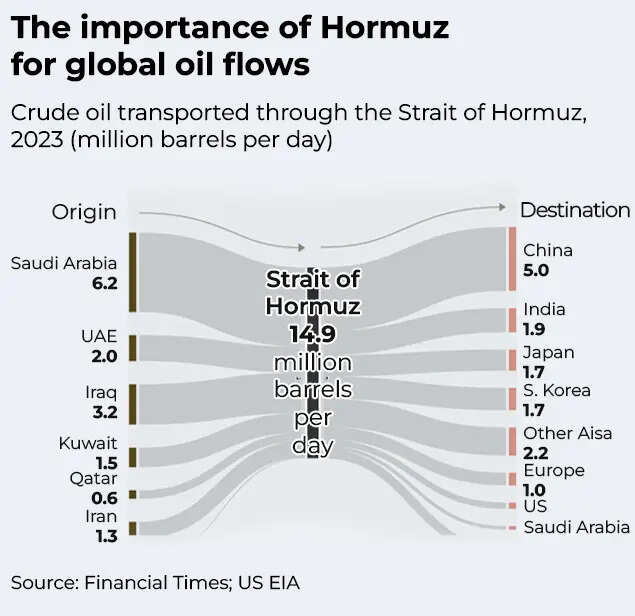
India remains structurally exposed to disruptions in the Strait of Hormuz, having historically sourced around 50% of its crude imports via the route. The ongoing conflict has therefore impacted both crude and LPG flows into the country. “Since the US eased restrictions on incremental purchases of Russian crude, Indian refiners have significantly ramped up intake. Pre-conflict, India was importing around 2.6-2.7 Mbd of Middle Eastern crude which was largely via Hormuz and around 1.0 Mbd of Russian crude. Post-conflict, the flows via Hormuz have sharply declined, but Russian imports have increased to around 1.9–2.0 Mbd, effectively offsetting a large portion of the disruption,” says Sumit Ritolia.Also, as Kpler notes, Middle Eastern producers are partially rerouting supplies via pipelines that bypass Hormuz. The most notable is Saudi Arabia’s East-West (Yanbu) pipeline and the UAE’s Habshan–Fujairah pipeline. These flows have provided incremental relief, allowing India to continue sourcing some volumes from the region despite maritime constraints.
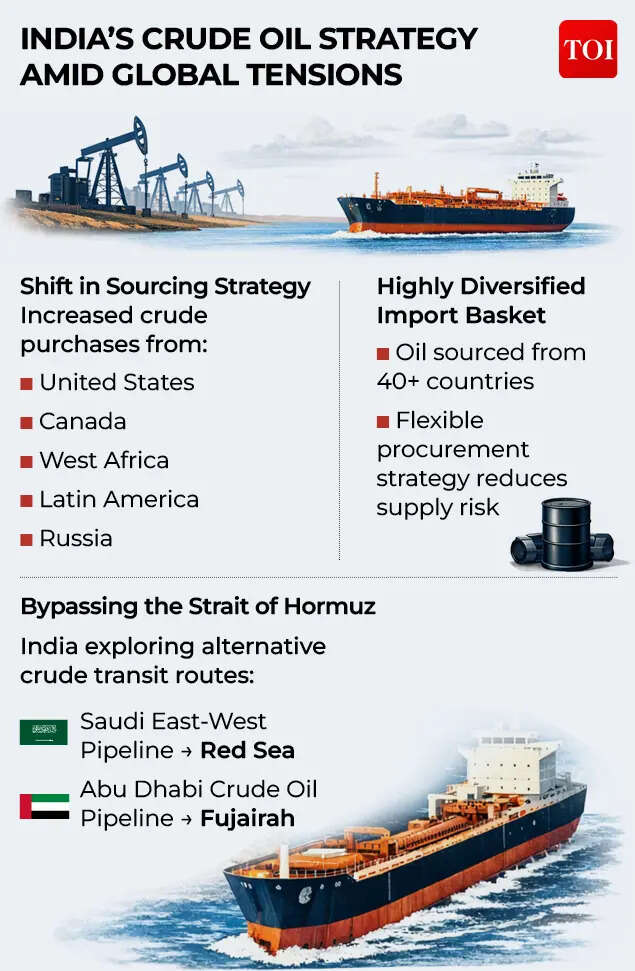
Overall, India’s total crude imports are currently down by around 800 kbd as of date compared to January or February 2026 levels. However, according to Kpler this has not yet materially impacted refinery runs, which remain broadly stable. Refiners have drawn down commercial inventories (excluding strategic petroleum reserves) to sustain throughput, while product exports continue to track near historical norms. What seems to be working in India’s favour is its diversified crude import basket. As PM Narendra Modi said in Parliament: In the last 11 years the number of countries from which India gets oil has increased from 27 to over 40.“Despite the situation at the Strait of Hormuz, India is today receiving more crude oil from its 41-plus suppliers across the world than what was previously arriving through the Straits. High volumes available in international markets — especially from the western hemisphere — have more than compensated for any disruption. Every Indian refinery is running at over 100% utilisation. Crude oil supplies for next 60 days have already been tied up by Indian Oil companies. There is NO supply gap,” the Ministry of Petroleum & Natural Gas has clarified today.Experts note that the trend of reduced Russian crude since late 2025 has reversed.“With shipping risks rising and Middle Eastern supplies becoming uncertain, Indian refiners have quickly increased Russian crude imports again to ensure energy security and uninterrupted refinery operations. The crude procurement is well diversified with supplies coming from US, Venezuela and West African countries,” says Sourav Mitra.Looking ahead, Russian crude is expected to remain the backbone of India’s import slate, with March likely marking one of the highest intake months since June 2025, Ritolia tells TOI. This trend is expected to continue into April, he says.The expert also points to potential for opportunistic purchases of Iranian barrels, particularly cargoes that are already on water, although no significant flows to India have been observed yet in vessel tracking data. Also, India is expected to start receiving Venezuelan barrels from April onwards, and that would help to arrest some of the crude supply risk, he adds.However, despite resilience so far, some moderation in refinery throughput is emerging, with runs estimated to decline by around 5–8% going forward, with crude runs around 5.2 to 5.3 million b/d, notes the Kpler expert.“That said, domestic product supply remains well balanced, and India is relatively better positioned than other Asian exporters. With countries like China and South Korea curbing exports, India could continue to play a key role in supplying refined products to East and Southeast Asia,” he adds.To sum it up, experts are of the view that India has managed to cushion the impact of Strait of Hormuz-linked oil supply disruptions for now by increasing Russian crude oil imports.“While some pressure on runs is expected, the system remains resilient, with no immediate risk to domestic fuel supply and continued strength in product exports,” Ritolia concludes.