One day after Jamshedpur FC pulled out of the Indian Super League (ISL), Mohun Bagan Super Giant announced another big ticket, long-term signing: Lallianzuala Chhangte. One club was spending millions to add depth to their roster for a competition the other had exited. Jamshedpur FC saying they would disband while participating in the Durand Cup, the 2026-27 season-opener, and after unwavering commitment to the ISL added to the confusing, if not conflicting, messaging.
It is ironic that the club signed off when a cadet of the 39-year-old Tata Football Academy (TFA), which has produced nearly 150 internationals, is the president of the All India Football Federation (AIFF). In another century under Kalyan Chaubey’s captaincy, TFA, which shares the same owners as Jamshedpur FC, won tournaments abroad.
The decision also seemed at odds with Bengaluru FC beginning preparations for what will be a full season by heading to the Inspire Institute of Sport in Bellary; Mumbai City FC signing Manolo Marquez as head coach; NorthEast United getting back 2024-25 golden boot winner Alaaeddine Ajaraie; Mohun Bagan luring Brazilian playmaker Miguel Ferreira from East Bengal; and East Bengal replacing championship-winning coach Oscar Bruzon with Antonio Lopez Habas who was synonymous with coaching ATK and ATK Mohun Bagan to ISL glory.
A Tata Steel official said the exit resulted from a review that began last year, after which the owners of Jamshedpur FC decided to focus only on grassroots development. “We should work where we have strength – connecting with the community, nurturing young talent and preparing them to play at higher levels,” D B Sundara Ramam, Tata Steel vice-president (Corporate Services), told PTI. Wouldn’t providing players a pathway by having a first team help in all of that?
Odd timing
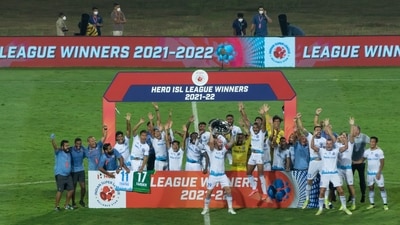
It wasn’t also clear why the decision to disband was not announced at the end of 2025-26. And, if the company was reviewing its football strategy from 2025, why was Owen Coyle given a two-season contract last January? No wonder, the coach who made Jamshedpur FC ISL league shield champions in 2021-22, said he was left blindsided by the decision.
Sundara Ramam told PTI that the decision was not “financial” but “strategic.” It didn’t align with what Jamshedpur FC CEO Mukul Choudhari said while informing AIFF that the club will not play ISL from this season.
“The decision to exit ISL is primarily due to the inability of JFSPL (Jamshedpur Football and Sporting Private Limited) to generate cashflows for running the club. JFSPL relies on its shareholders almost entirely for funding all of its operating costs, either through equity or through sponsorship. The shareholders have communicated that they are unable to commit significant funding or sponsorship going forward to JFSPL because they believe that the business model of JFC’s participation in ISL, in the form as it stands, is structurally financially unviable for the foreseeable future,” Choudhari wrote on July 31.
Beyond clubs taking a bigger role in marketing ISL and securing broadcasters, little has changed in the business model. If Jamshedpur FC had a problem with having a greater say in trying to increase the league’s, and the clubs’, revenue pool, they haven’t stated it.
Clubs in India were losing money before Jamshedpur FC joined ISL in 2017-18 and are losing money now. Which, given that pre-tax losses in the Premier League surged 600% between 2023-24 and 2024-25, is not unusual.
Protest and petition
What keeps most clubs worldwide going is their community connect. That is something most Indian clubs lack. Fans of Charlton Athletic forced a change of ownership in 2020. Also in 2020, supporters of five Chinese clubs joined to protest a decision by the country’s federation to rebrand teams. Hull City’s name couldn’t be changed in 2014 because of a fans’ backlash and the European Super League project fell due to opposition from supporters of Premier League clubs. Jamshedpur FC drew an average attendance of 7787 crowd last term which was a crunched season but clearly, that wasn’t enough.
Reactions ranged from anxiety to anguish. Sunil Chhetri said it was a punch in the gut as he, Sandesh Jhingan and Jamshedpur FC’s players asked the owners to reconsider. As has Chaubey. “AIFF would like to appeal that for the interest of the players and football, Tata should remain in the senior football league,” he told PTI on Thursday.
Fans have protested in Jamshedpur and an online petition to save the club remains in circulation. The protest and the petition are a first. I cannot recall even a murmur when Dempo, Salgaocar, JCT or Mahindra United disbanded first teams. All of these clubs won leagues and cups. None had a strong fan base. Growing one takes time and effort as seen in Major League Soccer’s (MLS) early missteps.
In the city that has Lionel Messi and Inter Miami, Miami Fusion and Tampa Bay Mutiny were shut down not too long ago. The remaining 10 clubs were owned by three groups as football struggled for popularity and the league kept losing money. The turnaround took time and investment.
Australia’s journey to regular World Cup qualification from 2006 needed vision, an overhaul of the existing set-up and a soft loan of $15m from the government as this 2005 article from The Age points out. The good news therefore is that a culture of football can be developed. The bad news: it is hard.
(The Union government spent ₹37.98 crore on football over the past five years, sports minister Mansukh Mandaviya said in the Rajya Sabha on Thursday. The allocation for this year? ₹8 crore, he said.)
It is because they have a strong supporters’ base that even after years of severe financial distress, Mohun Bagan, East Bengal or Mohammedan Sporting remain three of Asia’s oldest extant clubs. “Would I be allowed to live,” Swapan Sadhan Bose had exclaimed to a journalist inquiring if Mohun Bagan would wind up their first team. When Sultan Ahmed said Mohammedan Sporting could disband the football team because money was hard to come by, the backlash was furious and hence, the idea stillborn.
On Thursday evening, the online petition to save Jamshedpur FC, which represents a city of nearly 2 million people, had gathered less than 5000 signatures. Explains why successful Indian clubs can ignore protests and melt into the night.