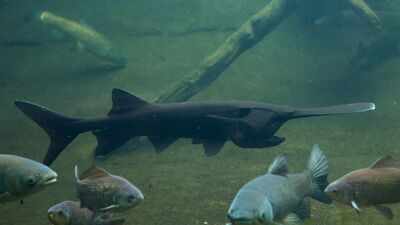
A paddlefish tagged by North Dakota fisheries biologists in 2007 has provided an extraordinary glimpse into the longevity and growth of one of North America’s oldest fish species. As detailed in the North Dakota Outdoors magazine published by the North Dakota Game and Fish Department, the fish was originally recorded at 87 pounds before being released into Lake Sakakawea. Eighteen years later, during the 2025 paddlefish snagging season, an angler caught the very same fish upstream of Williston. By then, it had grown to 98 pounds and measured three inches longer, offering scientists rare long-term data on the life of an individual paddlefish.
An 18-year journey from hatchery to record books
The story began in the spring of 2007 when North Dakota Game and Fish Department biologists netted the female paddlefish near the Montana border on the Yellowstone River. Instead of releasing it immediately, biologists transported the fish to the Garrison Dam National Fish Hatchery, where it served as a brood fish. Its eggs were collected to produce fingerling paddlefish for stocking programmes aimed at supporting healthy fish populations.After spawning, the fish was fitted with a jaw tag carrying the identification number ND 8841 and released into Government Bay on Lake Sakakawea in early June. At the time, it measured 48 inches from the eye to the fork of the tail and weighed 87 pounds. For nearly two decades, the paddlefish remained in the vast Missouri River system.Then, on May 2, 2025, during North Dakota’s annual paddlefish snagging season, an angler harvested the fish upstream of Williston. Fisheries staff identified the tag and confirmed it was the same individual released 18 years earlier. By then, the paddlefish measured 51 inches from eye to fork and weighed 98 pounds, meaning it had gained 11 pounds while continuing to grow in length.
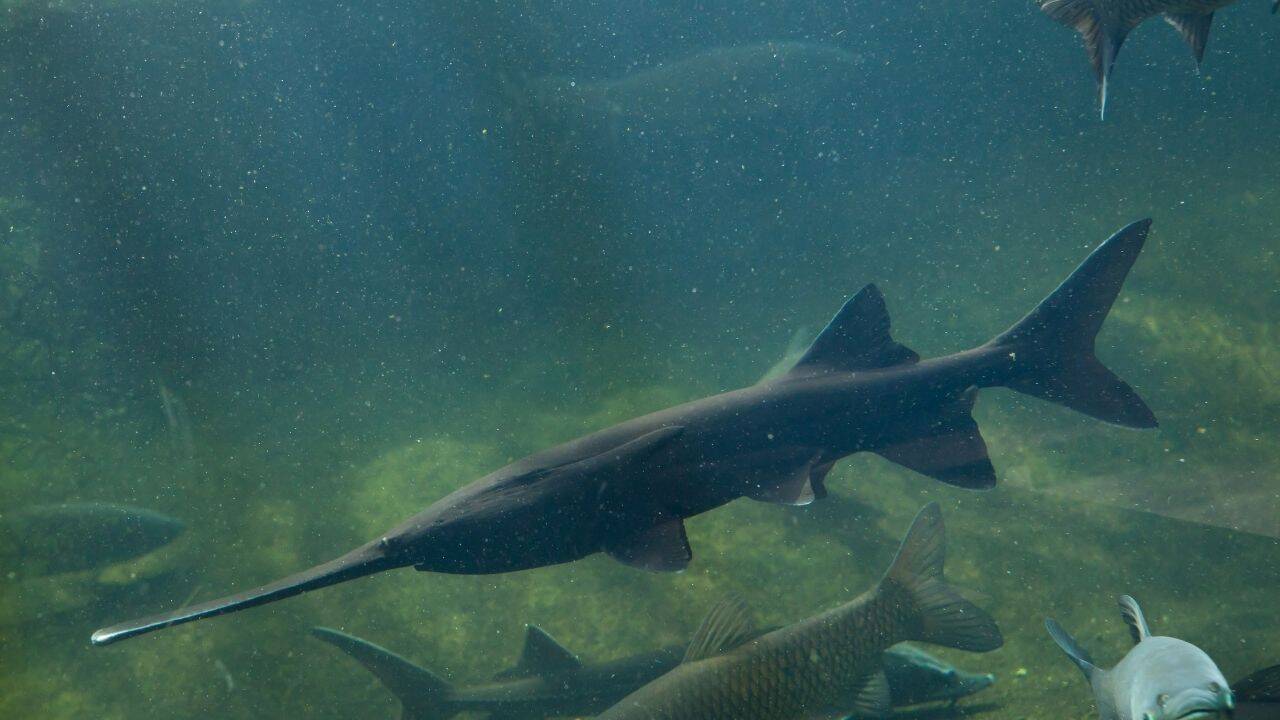
Representative Image (Canva)
Why tagged fish are so valuable to scientists
According to the North Dakota Game and Fish Department, fish-tagging studies primarily estimate exploitation rates: the proportion of a fish population harvested by anglers each year. This information helps biologists determine whether fishing regulations are sustainable and ensures healthy fish populations for the future. However, tagged fish often reveal more than just harvest rates.When tagged individuals are recaptured years later, scientists can learn about growth, survival, movement patterns, spawning behaviour and habitat use. In the case of paddlefish, these data are especially valuable because the species matures slowly and can live for many decades.The rediscovery of paddlefish ND 8841 illustrates the valuable long-term insights that tagging programmes can provide, documenting nearly two decades of growth in a single fish.
A living fossil that can survive for decades
Paddlefish (Polyodon spathula) are among the oldest surviving fish species in North America, with ancestors dating back more than 100 million years. Often called “living fossils,” they have changed little since the age of the dinosaurs. Their most distinctive feature is the long, paddle-shaped snout, or rostrum, which is covered with sensory organs that help detect tiny zooplankton drifting through the water. Rather than chasing prey, paddlefish swim with their mouths open, filtering microscopic organisms from the water through specialised gill rakers.The species is also known for its impressive lifespan. Females generally live longer than males and can survive for more than 60 years under favourable conditions. They also do not spawn every year, typically reproducing only once every two or three years when river conditions are suitable.North Dakota supports one of the healthiest remaining paddlefish populations in the United States, largely due to the connected habitats of Lake Sakakawea and the Yellowstone and Missouri rivers. Maintaining these habitats is considered essential because paddlefish require specific combinations of river flow, water temperature and clean gravel beds for successful spawning.The remarkable recapture of ND 8841 illustrates not only how resilient these ancient fish can be but also why long-running tagging programmes remain invaluable. A simple metal tag attached in 2007 allowed biologists to follow one paddlefish’s story across 18 years, adding another piece to the puzzle of understanding and conserving one of North America’s most remarkable freshwater species.