
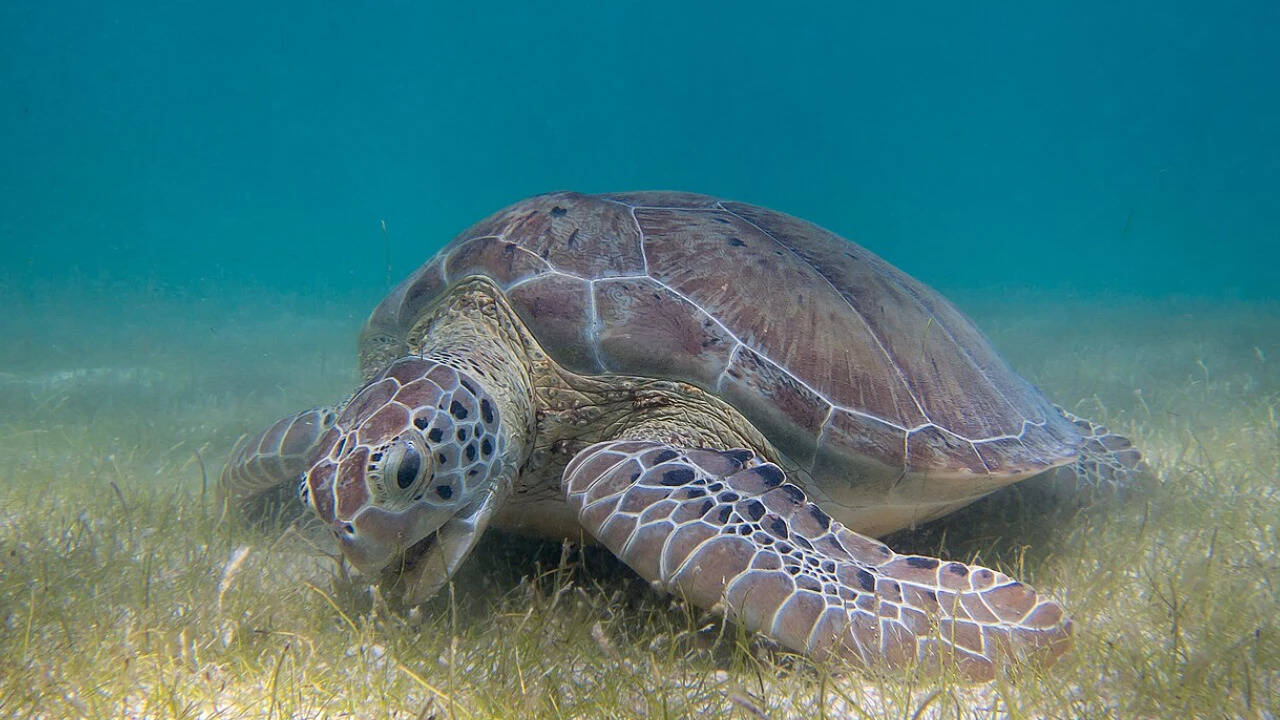
When Colin Limpus was five years old, his father took him to Mon Repos to watch nesting turtles and collect eggs to take home to eat. Holding his father’s hand, Limpus walked by flashlight while his family gathered sea turtle eggs for dinner. In a profile published by the State of the World’s Sea Turtles, Colin Limpus, the veteran scientist, looks back on that warm evening near Bundaberg as his very first encounter with a marine turtle. He also remembers being unimpressed by the taste of the eggs when they were served back home. The outing began a family tradition of returning to Mon Repos every New Year’s Eve to watch the turtles come ashore.What began as a family ritual grew into a long research career in marine conservation. Limpus grew up around Queensland’s coastal wildlife and was initially interested in sea snakes, geckos and other reptiles. As a teacher, he used his observations of reptiles and their life cycles in classroom lessons. A chance meeting on Heron Island in mid-January 1968 proved pivotal when Limpus encountered visiting zoologist Robert Bustard while he was tagging and examining a green turtle. Bustard later recalled that Limpus told him flatback turtles were nesting near his home in southern Queensland, prompting Bustard to visit Mon Repos with him days later and confirm the presence of the species. Limpus began his sea turtle research in the late 1960s and later established the Queensland Turtle Research Programme. His work went on to span more than five decades, establishing him as a leading figure in marine turtle research.From a chance beach encounter to five decades of ocean conservationLimpus later served as chief scientist for the Threatened Species Unit in the Queensland Department of Environment and Heritage Protection until his retirement in 2024. His decades of research encompassed Australia’s six marine turtle species: loggerheads, green turtles, flatbacks, hawksbills, olive ridleys and leatherbacks. His work examined nesting populations, movements, migration routes and foraging habitats across Australian and wider Indo-Pacific waters. Through decades of research, monitoring and conservation work, Limpus helped establish Mon Repos as an important conservation site. Today, it supports the largest concentration of nesting marine turtles on the eastern Australian mainland. His research also extended north to Raine Island, the world’s largest green turtle rookery, and to other coastal species including freshwater turtles, estuarine crocodiles, dugongs and sea snakes.
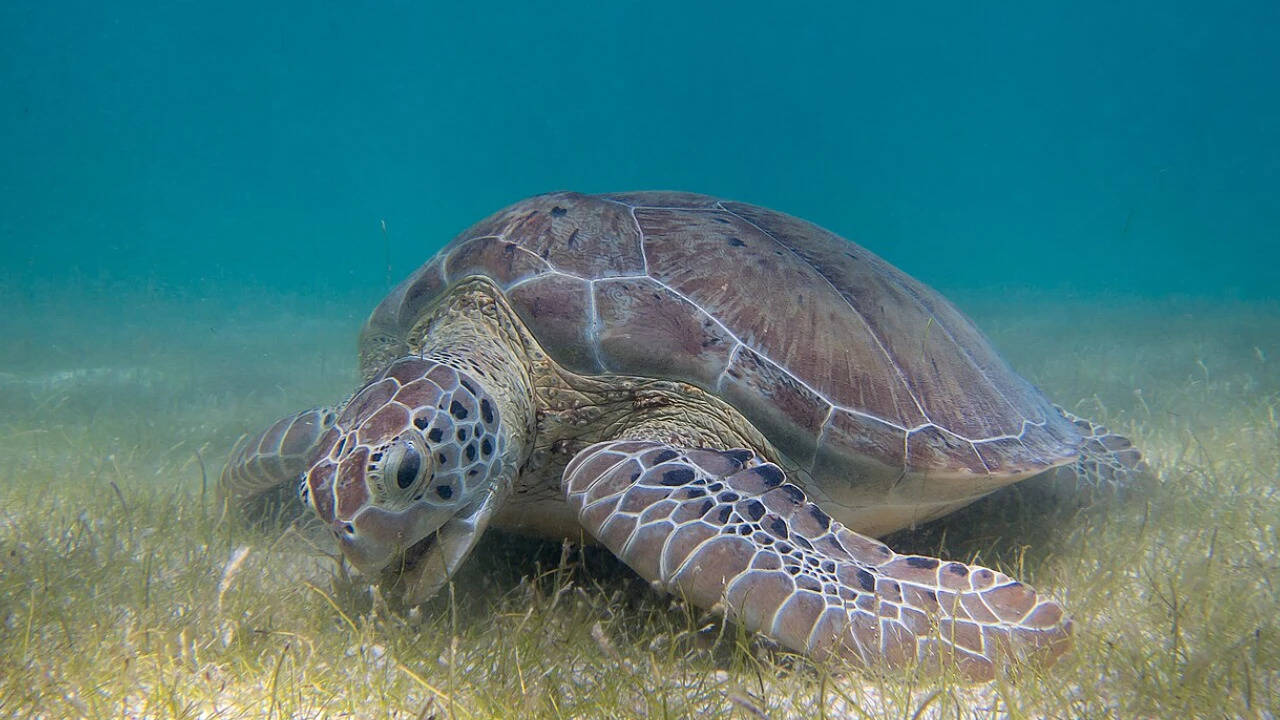
Limpus’s groundbreaking research enhanced our comprehension of nesting behaviours and migration routes, playing a pivotal role in crafting essential conservation strategies and safeguarding natural habitats. Image Credits: Wikimedia Commons
Tracking Premiere and the return of the hatchlingsOne of the most significant moments in Limpus’s research came on Boxing Day in 2003, when his team encountered a nesting loggerhead named Premiere at Mon Repos. The State of the World’s Sea Turtles profile notes that during the 1970s and 1980s, Limpus and his team notched the carapaces of around a quarter of a million loggerhead, green and flatback hatchlings. Premiere, encountered at Mon Repos on December 26, 2003, was the first confirmed return from that group. Because marine turtles can take decades to reach maturity, following an individual turtle from hatchling to breeding adult presented a major scientific challenge. Limpus used laparoscopy to confirm that Premiere had not produced eggs yet, suggesting that she had not previously nested. Satellite tracking later showed that her post-nesting migration took her 1,400 kilometres north to the Howick Reefs in the Northern Great Barrier Reef.Premiere has since returned to Mon Repos for five breeding seasons, and further tracking showed strong fidelity to both her home foraging area and chosen nesting beach. Her return, along with those of other tagged hatchlings, has helped researchers better understand the complex life history of marine turtles. Limpus began serving as the appointed scientific councillor for marine turtles for the United Nations Environment Programme Convention on Migratory Species in 1995. His research later contributed to national and international policy, threatened species listings, protected-area design and recovery plans. The profile also highlights his extensive research and his role in mentoring generations of researchers and conservation practitioners. From his first visit to Mon Repos as a five-year-old to more than five decades of marine turtle research, Limpus’s career has remained closely connected to the turtles he first encountered as a child.