
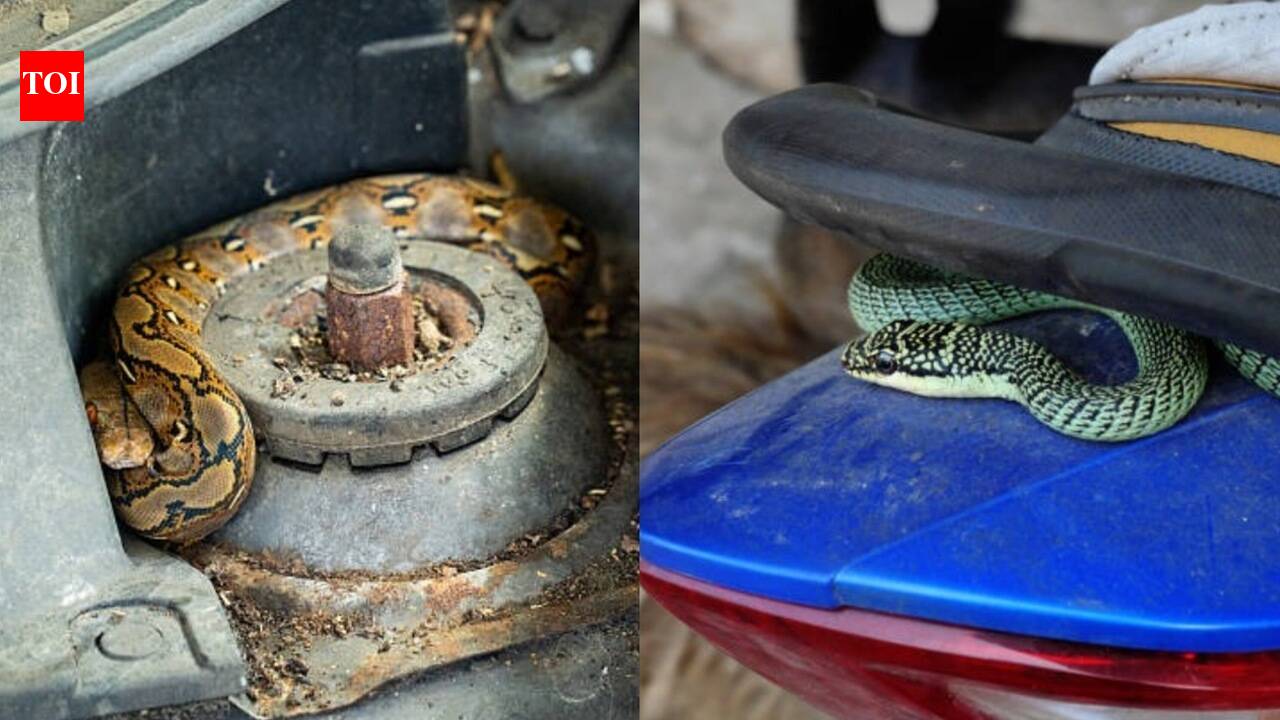
It sounds almost like an urban myth until it happens to someone you know: a car that “feels off” while driving turns out to have a python coiled around the engine, or a scooter parked outside a shop turns out to have a snake tucked into its bodywork. Cases like these get reported across India with surprising regularity, and once you understand what a snake is actually looking for, the pattern stops feeling random. Cars, scooters, and even toilets all happen to offer something specific that a snake genuinely needs, and it comes down to one simple piece of biology.
The one biological reason behind all of this
Snakes are cold-blooded, or ectothermic, meaning they can’t generate their own body heat the way mammals do and instead rely entirely on their surroundings to regulate their temperature. That single fact explains far more snake behaviour than most people realise. Cool bathrooms, damp pipelines, and shaded parking spaces often run noticeably cooler than the surrounding environment, while a warm engine bay works in the opposite direction, offering heat when a snake needs it. Depending on the season and the time of day, a snake might be hunting for warmth, shade, or moisture, and cars, scooters, and toilets all happen to offer one of those things exceptionally well.
Why cars and scooters specifically
An engine bay checks nearly every box a snake could want. It’s warm, especially soon after a drive, dark, and full of gaps, meshes, and openings that a flexible body can slip through with ease. Parked vehicles, particularly ones left sitting for a while near gardens, bushes, or open drains, essentially become dark, protected little caves. Rodents make the problem worse, since rats and mice frequently nest in engine bays too, chewing on wiring and insulation, and a snake hunting rodents will happily follow that food source straight into your bonnet. Monsoon season adds yet another layer, as heavy rain floods natural burrows and pushes displaced snakes toward exactly this kind of dry, sheltered space.
Why toilets and bathrooms specifically
This one sounds like an urban legend until you look at how it actually happens. Snakes don’t simply appear in a toilet bowl out of nowhere, they typically get there by first entering a sewer line, an uncapped drainage pipe, or a septic system opening outside the house, then navigating through the plumbing itself, often while following the scent of a rat or frog that went in ahead of them. Ground-floor bathrooms, older plumbing, and homes closer to open drains or septic tanks carry meaningfully higher risk than upper floors with well-sealed pipes. It’s worth being clear that this remains a genuinely rare occurrence in most Indian cities, far more likely during flooding, heavy monsoon rain, or peak summer heat than on an ordinary day.
The common thread: Rodents draw snakes in just as much as comfort does
Strip away the warmth and the shelter, and there’s a second explanation running underneath almost every one of these encounters: food. Wherever rats and mice go, snakes that hunt them often aren’t far behind, and both engine bays and drainage systems happen to be prime rodent real estate in most Indian cities. A car or a bathroom dealing with a rodent problem, even a minor one, is quietly at higher risk of a snake encounter too, since the snake isn’t really interested in your vehicle or your plumbing at all, it’s interested in whatever’s already living there.
What you can actually do about it
None of this means every parked car or every bathroom is at serious risk, but a few habits genuinely lower the odds. Parking in open, well-lit areas rather than tucked against overgrown bushes or garden edges makes a vehicle noticeably less appealing, and checking under the bonnet occasionally, especially after the car has sat unused for a few days, catches most problems early. At home, keeping drain covers in place, closing the toilet lid when not in use, and sealing any septic tank or exposed pipe openings closes off the main routes snakes actually use to get inside. And if you do find one in an engine bay or a toilet, the right move is always the same: don’t try to handle it yourself, keep people away from the area, and call a trained snake rescuer or the forest department.
Disclaimer:
This article is intended for general informational purposes only and is not a substitute for professional wildlife or pest control advice. If you encounter a snake in your vehicle or home, avoid handling it yourself and contact a local wildlife rescue service or forest department for assistance. In case of a snakebite, seek emergency medical attention immediately.