Kapadia expects the stronger tendering activity to benefit not just major defence names such as Hindustan Aeronautics (HAL) and Bharat Electronics (BEL), but also a wider ecosystem of companies involved in radar systems, aero structures and components. “We think the second half of this financial year will be far good for the defence companies,” he said.
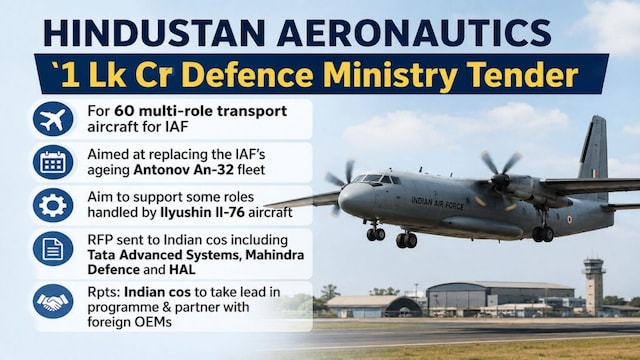
The Defence Ministry’s proposed ₹1 lakh crore tender for 60 multi-role medium transport aircraft for the Indian Air Force is another major opportunity for the domestic defence industry. Kapadia sees the move as part of the government’s broader strategy to reduce imports and encourage manufacturing in India through strategic partnerships.
The C-295 programme between Tata and Airbus is an example of this approach. Sixteen aircraft have already been received, while another 40 are expected to be built in India. Kapadia said the new transport aircraft programme could follow a similar model, allowing India to gain manufacturing capabilities and technology know-how.
Mahindra, Tata and HAL are among the three potential contenders for the aircraft programme. Mahindra has tied up with Embraer, while Tata has partnered with Lockheed Martin. HAL, meanwhile, is yet to announce a partner.
However, investors should not immediately add the ₹1 lakh crore opportunity to HAL’s order book estimates. Kapadia said the current proposal is still at the request-for-information stage and could take around two to three years to become an actual order.
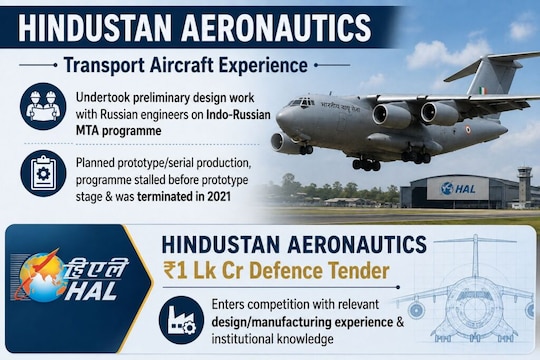
“We are not right now pencilling in this particular large deal because this is still an RFI which has been floated,” he said.
RFI is Request for Information
The aircraft opportunity could also create business for several companies supplying critical systems and components. Kapadia expects Bharat Electronics to benefit from electronics and radar requirements, while Dynamatic Technologies and BEML could participate in aero structures. Companies such as Azad Engineering, Aequs and Axiscades Technologies could also benefit from component manufacturing, creating a wider supply chain around the aircraft programme.
On HAL’s April-June quarter of 2026 (Q1FY27) results, Kapadia said revenue was broadly in line with expectations, while margins came in better than anticipated. Manufacturing growth was faster than repair and overhaul growth, while a favourable product mix and lower other expenses supported profitability.
Watch the full conversation here

Astra Microwave, meanwhile, remains a key beneficiary of India’s indigenous Uttam radar programme. The company has received a large order for 121 radar systems, including those for 97 Tejas aircraft, while further opportunities could emerge from QRSAM and other radar programmes.
Kapadia said the recent weakness in Astra Microwave was partly due to the uneven nature of defence order flows, where gaps between large orders can affect quarterly performance and estimates. However, he expects the sector’s order pipeline to strengthen significantly in the coming months as multiple defence programmes move towards tendering and order announcements, providing greater visibility for both large defence manufacturers and the growing network of domestic suppliers.

Catch all the latest updates from the stock market here