
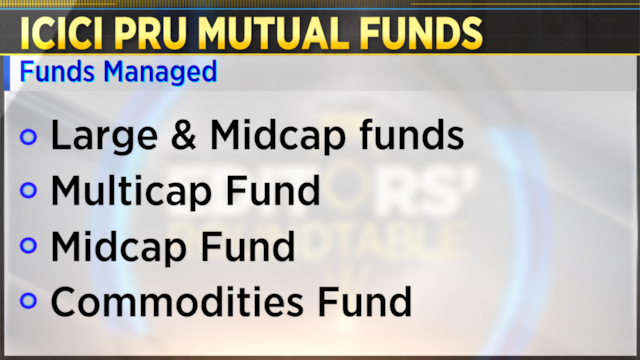
Beyond commodities, Kumar sees opportunities in textile and manufacturing exporters, supported by India’s currency advantage, geopolitics and diversification into new categories. He remains cautious about sectors where margins and valuations are near peaks, while advocating a selective approach to new-age companies based on their long-term moat.
This is an edited transcript of the interview.
Q: Is your heart in commodities? Is that something you are particularly passionate about?
A: I am passionate about commodities.
Q: From here, what are you more bullish on — the ferrous space or the non-ferrous space?
A: From here on, while I am positive on both, ferrous is better placed. I think their earnings before interest, taxes, depreciation and amortisation (EBITDA) per tonne for most of these companies has structurally gone up.
Cyclically also, it will improve. But structurally, what we saw in the last decade, from 2010 to 2020, I think this decade they will have much higher EBITDA per tonne on a mid-cycle basis.
Their capex per tonne will be low because most of these companies are doing brownfield expansions. Effectively, their incremental return on capital (ROC) will be high. They will have very strong earnings growth, and that is why they are getting re-rated.
Q: Will you lean more towards long steel or flat steel? Long steel prices have corrected sharply, while flat steel has not corrected as much. The gap between the two has widened and is expected to narrow after the monsoon. Would you tilt towards longs?
A: In commodities, it is very important to be counter-cyclical. Anything which has been corrected or prices have gone down, that is where I will bet on.
Q: So, longs now are preferred?
A: Long now is preferred because long prices will, I think, go up, and long steel stocks will do better than flat.
Q: Where are we in the commodity cycle — early, middle or somewhere else?
A: We are still below mid-cycle. Some of the facts to look at are, for example, 2015 was the bottom of the cycle for steel. At that point in time, China’s steel exports were around 120 million tonne. Their current export rate is around a similar number, 110-120 million tonne.
Chinese steel companies’ EBITDA per tonne is still below mid-cycle, and that is the difference. Despite being below mid-cycle, Indian steel companies, even if you look at their April-June quarter of 2026 (Q1FY27) results, had EBITDA per tonne much higher than what they made in 2015.
That is why we think that structurally their EBITDA per tonne has gone up, their capex pattern has gone down, and that is why they are going to make very big [returns].
Q: When you say we are below mid-cycle in commodities, how many more years do you think this rally can continue?
A: That is also dependent on what happens as far as global demand is concerned and what happens on China policy. So, there are a lot of macro variables. One has to keep track of them, and whenever we think that the cycle has peaked out, that is the time when one should get out.
Q: What are the broad markers to know when the cycle has peaked?
A: When the most inefficient steel company is making a profit, that is the time to get out.
Q: Would that be an Indian stock?
A: I think Indian companies will have much better [profitability] than that, but I think it is better to keep track of what is happening globally. Globally, when the most inefficient steel companies start to make a profit, that is the time.
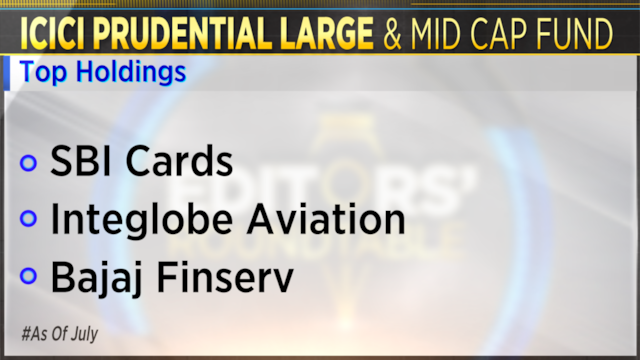
Q: You own some global names in the commodities fund. Are those mining companies?
A: They are mining companies. They are into copper and uranium.
Q: Are those holdings across your funds?
A: No, that is only in the commodities fund.
Q: Q1 earnings have been strong, with broad-based beats and upgrades. Can the 15% earnings growth expectation for 2026-27 (FY27) and 2027-28 (FY28) be extrapolated? Is that what you are working with at ICICI Prudential?
A: The beauty of the market, I think, is that the market does not work in a linear way, and it also does not work on Excel.
I think Q1 numbers have been very good across, but I will be a bit cautious in extrapolating these numbers. The reason for that is, in Q1, there was a lot of inventory gain that happened. Cost increases are yet to reflect in the numbers, and that, I think, will gradually catch up in coming quarters.
Even if you look at 2022-23, when oil prices went up during that time, for example, in the cement sector, oil prices started to increase from January onwards. Actual cement companies’ EBITDA per tonne bottomed out in the September quarter. So, there is always a lead-lag between an increase in cost and a fall in profitability.
I think Q1 will be too early to say that things are going to be good. We must watch the July-September quarter of 2026 (Q2FY27) and the October-December quarter of 2026 (Q3FY27) earnings.
At the same time, some of the tailwinds that were there in Q1 earnings, for example currency, that base will start to catch up from the October-December quarter of 2026 (Q3FY27) and the January-March quarter of 2027 (Q4FY27) onwards. So, with companies which are into exports, their earnings growth will start to normalise. Some of the sectors which benefited from the goods and services tax (GST) cut will also see the base start to catch up from Q3-Q4 onwards.
The point is that, now, it will be a bit early to extrapolate Q1 numbers.
Q: You sound a bit cautious. What are you expecting in Q2 and Q3?
A: I think growth will taper off from what we have seen in Q1 numbers. But at the same time, for markets, earnings are important. The market will also be focused on what happens to oil, what happens to geopolitics and what happens to midterm elections. These will be some of the other catalysts for the market.
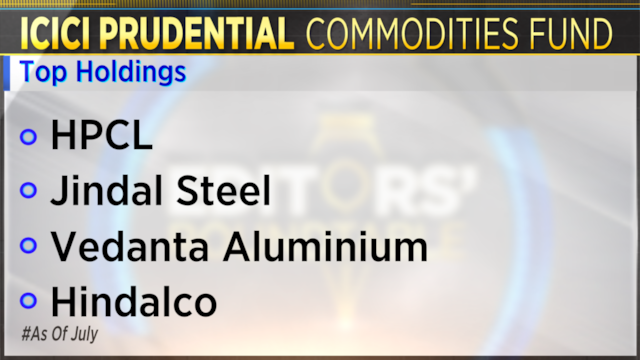
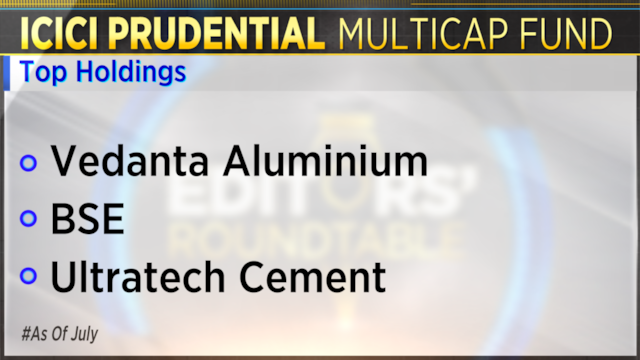
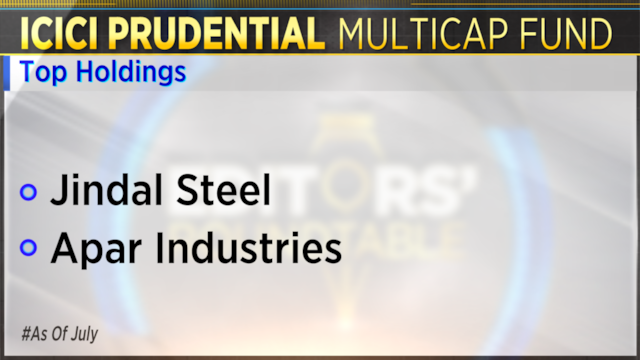
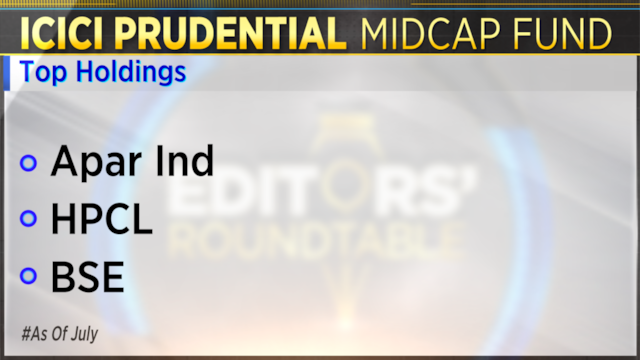
Q: One of your top holdings is Hindustan Petroleum Corporation (HPCL). What is the investment bet there?
A: If you look at oil prices, say, if I look at the last 15-year history of oil, that gives us a perspective that whenever there is extreme euphoria or extreme pessimism, that does not sustain in the commodities market and in the oil market as well.
Look at 2014. Oil prices did correct to $30-$35, but they did not sustain. That was extreme pessimism. In 2018, oil prices rallied from $55 to $85. That also did not sustain. In 2020, oil prices were corrected. There was a day when oil prices went negative. That did not sustain. That was also extreme. In 2022, oil prices went to $120-$130 because of geopolitics. That also did not sustain. And now we are in the next catalyst, where because of geopolitics, oil prices have gone up.
The point is that whenever oil prices go to an extreme, as a contrarian, as a counter-cyclical investor, we prefer to take a contrarian bet.
When oil is at an extreme peak, we prefer to play downstream. When oil is at an extreme bottom, we prefer to buy upstream. That is the context in which I think we will be constructive to downstream companies rather than upstream.
Q: You have experience managing the Business Cycle Fund and identifying cycles. What are the two or three cycles or themes you believe can sustain for the next three to five years?
A: Sure.
Q: Let us start with textiles. Why do you like textiles and what is the thesis there?
A: Textile is a sector which will do well because a lot of steps have been taken because of geopolitics. A lot of steps have been taken by the government to make sure that our textile exports do well.
Textile is one of the big sectors as far as employment is concerned. It can be big for us to earn foreign reserves, and that is why there is a lot of focus by the government to promote exports for the textile sector.
India has signed a lot of foreign trade agreements (FTAs), and that basically gives longevity of growth for these companies. In any sector, any company where longevity of growth keeps on increasing, generally those companies do well; they get re-rated.
So, I think this is a sector where—
Q: Is it a sector where every company will do well, or do you have to be selective?
A: Garment-based companies will be better positioned because they are the ones who will be exporting and can have better pricing power.
Q: So, Gokaldas Exports, those kinds of names?
A: Companies which are into garment exports, apparel exports.
Q: Apart from textiles, what are the other cycles or themes that are set up well and could do well from here?
A: I think manufacturers, particularly companies which are into exports, are going to do very well.
Q: Manufacturing exports?
A: Yes. That is because currency is a big advantage as far as India is concerned. Geopolitics is the second tailwind for the sector.
Most of the companies in India which are into manufacturing and exports are trying to diversify and get into new categories. Effectively, that means that they will have a much better outlook for growth.
Q: So, do auto and auto-ancillary companies that are getting into different businesses and diversifying beyond their traditional businesses?
A: Yes. Companies which are into exports, diversifying into new categories, trying to do joint ventures (JVs) and getting access to technologies, I think those companies will do very well from a long-term perspective.
Q: But how are they priced? Many manufacturing companies are trading at 50, 60 or 70 times one-year or two-year forward earnings. How do you get conviction on those names?
A: If we can identify companies where earnings growth is going to accelerate, where consensus is yet to factor in that opportunity, those are companies that will do well.
Q: Does that mean you should not look at valuations?
A: In those companies, if the consensus estimate is underestimated, then those stocks will look expensive. When consensus earnings estimates go up, then I think that is time to be cautious on that topic.
Q: Can you tell us about the names in your portfolio where you see this opportunity?
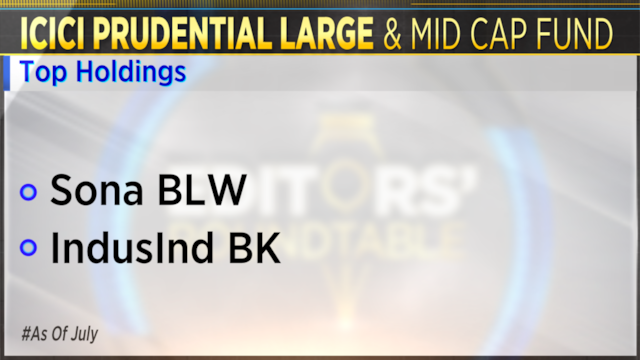
A: We cannot discuss stocks, but happy to discuss [the themes].
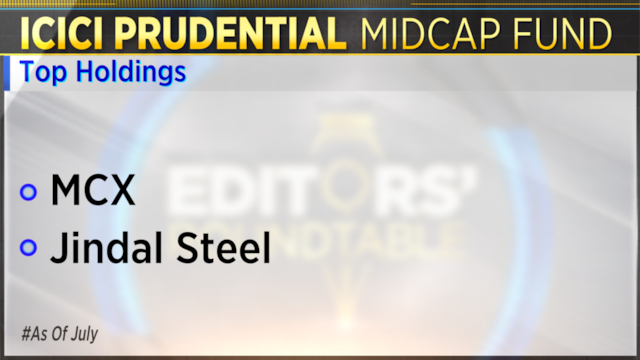
Q: You own both Bombay Stock Exchange (BSE) and Multi Commodity Exchange of India (MCX) in your portfolio. MCX is understandable given what is happening in commodities. What is the idea behind BSE? Capital markets is a consensus favourite.
A: When I construct a portfolio, I think both from a cycle perspective and a structural perspective, exchanges are businesses which are very good.
The industry structure is positive — monopoly, duopoly kind of structure, very good ROC — and they tend to do well from a long-term perspective.
These are some of the sectors or subcategories which are structurally very well placed to take advantage of the financialisation of savings that is going to happen.
I think these are structural businesses to own from a long-term perspective, because of industry structure and the compounding that they can generate.
Q: Are you excited about the new one coming in, the Nation Stock Exchange (NSE)? The initial public offering (IPO) should be around the corner.
A: We have to evaluate and see.
Q: Where are we now in the cement cycle? Could cement be the contra trade for the second half of the year, post monsoon?
A: If we look at their EBITDA pattern, and that is one of the metrics to identify where we are in the cycle, we are somewhere closer to mid-cycle in the sector.
But I think in coming quarters, maybe they will have some pressure on their profitability because of higher energy prices that we talked about.
At the same time, I think this is a sector which is under-earning as far as ROC is concerned. Of course, companies are going after volume and market share, because of which stocks have not done well.
But I think at some point in time, pricing discipline will come in. Companies will focus on ROC, and that is a time when I think cycles will come.
So, from a cycle perspective, the cement sector is well placed.
Q: The Nifty has given virtually zero returns over the past year. Is it time to look at large caps? If so, what is your preferred bet within large caps?
A: Of course, large caps have been corrected. Valuations are now at the lower end, but I would prefer to own sectors within large caps where companies can deliver growth.
Q: Where is that growth going to come from?
A: Cement will be one of the sectors that will do well. Airline will be another sector that can do well, and non-banking financial companies (NBFCs), I think, are also doing well.
Those are the spaces or sectors, some subcategories, that I think will do well.
Companies which are not able to grow, I think they will continue to struggle.
Q: So even within the Nifty, you have to identify which companies are going to grow?
A: I am a believer of sectors, and that is what I learned from the Business Cycle Fund. Identify sectors which will be in an upcycle. Identify sectors which I think will have good earnings growth. Those are the sectors to bet on.
Q: You have spoken about textiles, manufacturing and cement. Which are the sectors where you think margins have peaked or where investors should be cautious?
A: Some of the sectors where I think margins have peaked out — hospitals is one of the sectors where we are a bit cautious because margins are at an all-time high. Multiples are also closer to their peak.
From a counter-cyclical investing perspective, sectors where margins are at a peak, I will try to avoid those.
Watch the full conversation here

Q: But hospitals go through a phase of capacity addition, then they earn and then they go into another cycle. Isn’t that capacity addition phase coming to an end now?
A: You are right. The way the cycle plays out is that at the peak of the cycle, operating cash flow will be very high. Companies will invest, supply comes in and the cycle turns.
Then, at the bottom of the cycle, companies’ operating cash flow dries down; they will not add capacity. The cycle then turns.
In the case of hospitals, margins are at the peak. Companies are adding capacity. So, over the next three years, we will see significant capacity addition that is going to happen.
Q: What are your thoughts on new-age platform companies? Many in the industry believe these are high-growth areas and that investors must have exposure.
A: As a house, we are always open to ideas. We evaluate every company. A few companies will do very well, but one has to be cognizant of the fact that every company does not have a moat.
Within this pack of new-age companies, it is better to identify and play with companies which have a long-term moat, so that they can compound and do well.
Companies without a moat, I think they will struggle at some point in time.
Q: So, will it be selective rather than trying to buy the sector as a basket?
A: Yes, it will be selective rather than trying to buy as a basket.